Binoculars · Choose by your needs
Binoculars with a broad real scene field
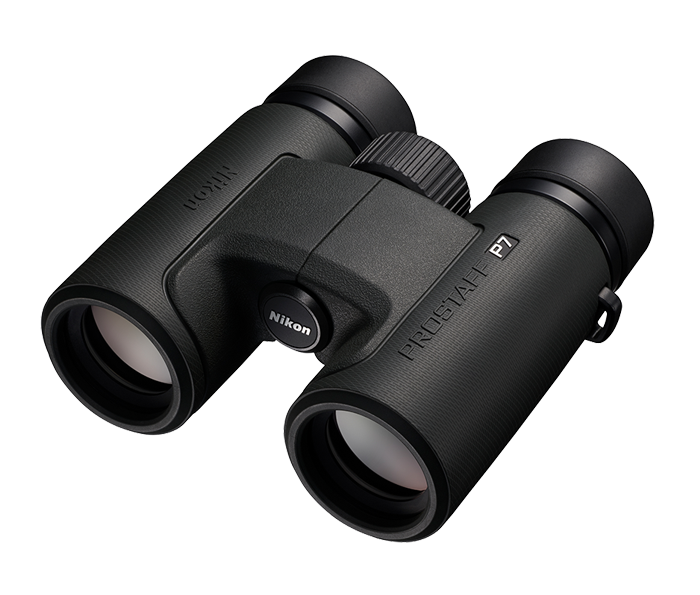
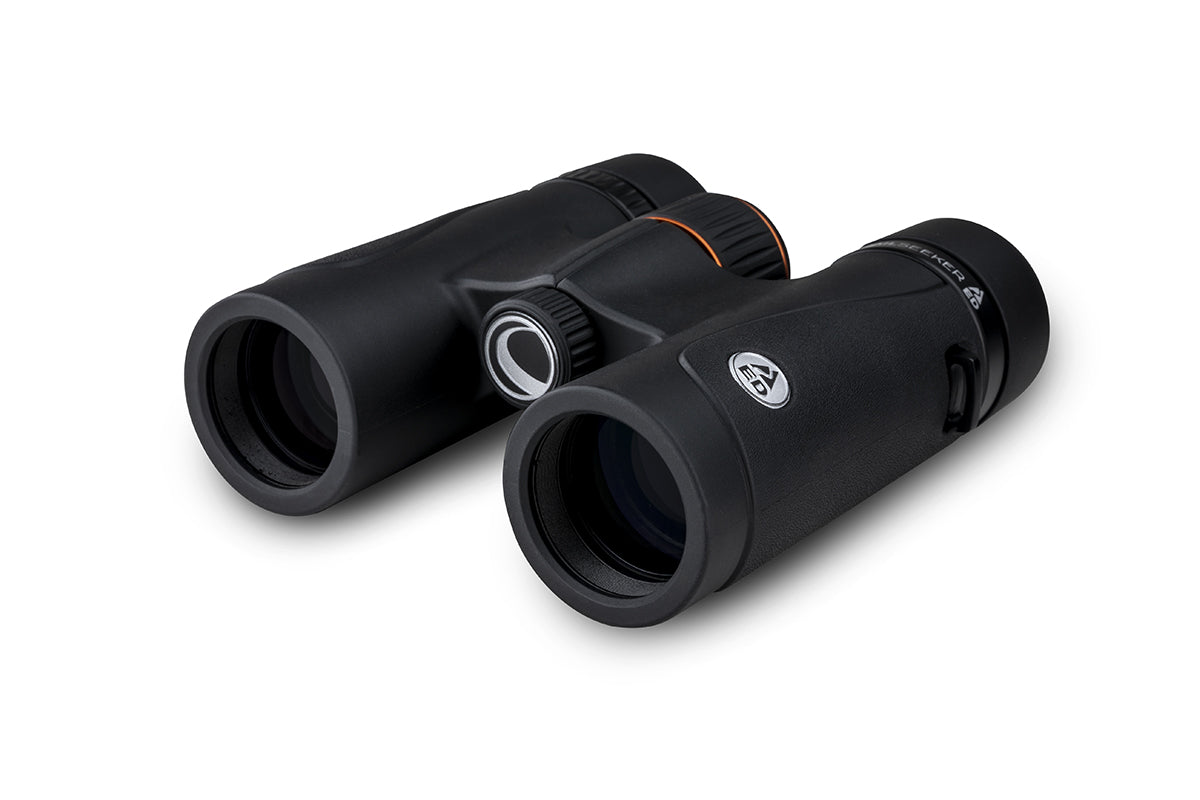
If a broad actual scene is your priority, choose the real-field option with a minimum of 6°. Nikon's PROSTAFF P7 8x30 publishes an 8.7° real field (456 ft at 1,000 yd); Celestron's TrailSeeker ED 10x32 publishes 6.2° (326 ft at 1,000 yd), just above the threshold. The first frames a wider scene on paper; the second keeps a 10x view and confirms ED glass. Compare the exact field, not a general “wide-angle” label.
- The chosen real-field boundary is at least 6°. A model listed exactly at 6.0° meets the threshold; one listed below it does not.
- Real field measures the angular width of the scene. It is not the same quantity as apparent field, which describes the eyepiece view.
- This option alone does not require a power, objective size, weight, waterproofing, ED glass or glasses-fit value.
Comparison updated 29 October 2026.
Read the scene-width number literally
A real field of 6° is the explicit threshold for this choice. A model at 8.7° covers a broader scene on paper than one at 6.2°, but this comparison alone does not establish image sharpness, ease of holding or what each viewer prefers. If the broadest view matters most, start with the P7's specification; if 10x is more important, the TrailSeeker ED remains above the stated field cutoff.
Do not substitute apparent field for real field
A manufacturer may also list an apparent field in degrees, but that number describes the eyepiece view, not the scene angle. Use the separate wide-apparent option if 60° apparent field is your actual preference. Do not convert between the two with a marketing label or treat one threshold as proof of the other.
Questions that change the choice
Does a 6.0° figure qualify?
Yes. The stated boundary is at least 6°, so 6.0° is included. Check the exact model's published real field rather than rounding a lower value upward.
Does a wide apparent field guarantee a wide scene?
No. Apparent and real field are separate quantities. A model can have a wide apparent eyepiece view but a narrower real scene, particularly when its magnification is high.
Does a 10x model automatically have a wider field than an 8x model?
No. Compare the exact real-field values. The P7 8x30 and TrailSeeker ED 10x32 examples have different configurations and published fields; power alone does not determine the number.
Sources for the comparison