Binoculars · Choose by your needs
Choosing among binoculars that show an 8x view
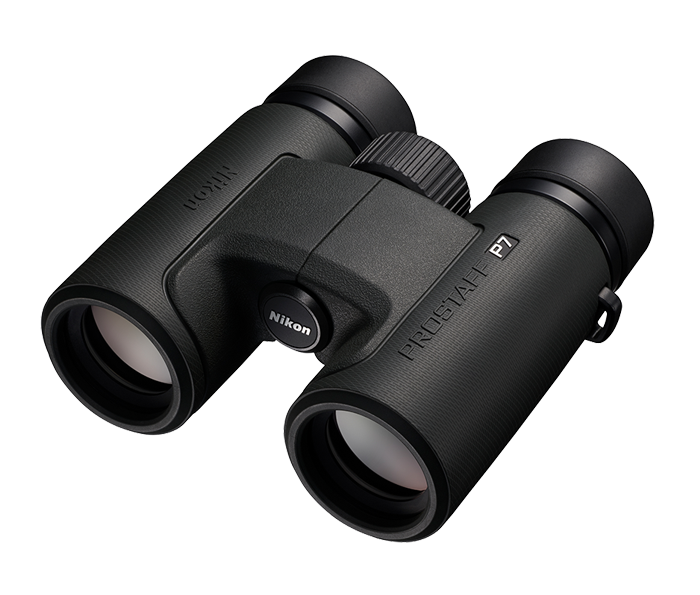
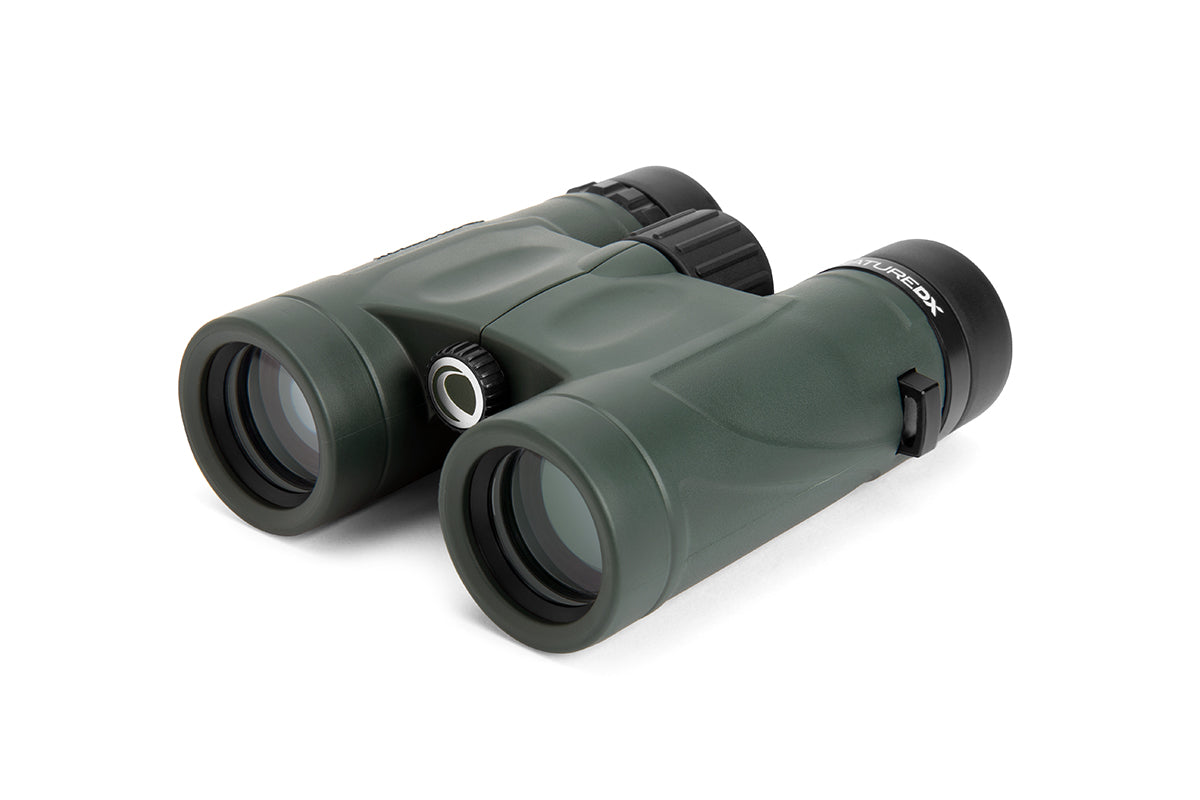
If you want an 8x view, the useful choice is often between a wider published field, longer stated eye relief, a smaller instrument, or a quantified water limit—not an assumed quality ranking. The Nikon PROSTAFF P7 8x30 publishes an 8.7° field and a 1 m / 10 minute waterproof limit; Celestron's Nature DX 8x32 publishes 17.5 mm eye relief and a 6.5 ft close-focus distance, but no immersion depth or time. Both are fixed 8x models, and the finder retains every qualifying 8x candidate rather than only these examples.
- This is the magnification option only: no objective-size, waterproof, weight, field, eye-relief or lifecycle restriction is added to the matcher conditions.
- An 8x answer includes different objective sizes and product families. Compare each exact configuration and do not treat objective diameter or a listed coating as a measured image-quality ranking.
- The examples are conventional binoculars for ordinary viewing, never for looking at the Sun. A published waterproof claim is not permission to use a binocular underwater.
Comparison updated 29 October 2026.
An 8x label does not make the configurations interchangeable
Both examples are fixed at 8x, but their specifications answer different practical questions. The P7 8x30 has the broader listed field and a numerical water limit; the Nature DX 8x32 gives longer stated eye relief and a closer listed focus. These differences are more useful for choosing than a generic claim that one is best. If the intended viewing is close-focus observation, check the Nature DX figure; if a stated immersion limit is a hard requirement, the P7 is the specific example here that supplies one.
Keep the condition broad unless you mean to narrow it
This page does not impose a 30, 32 or 42 mm objective size, waterproofing, a weight ceiling or a glasses-fit threshold. The full 8x result includes many other models, and the finder links those matches. For a waterproof 8x shortlist specifically, use the separate 8x-waterproof answer; that additional condition changes the candidate set.
Questions that change the choice
Does 8x automatically mean a wider field than 10x?
No. It may be common, but field of view is a model-specific specification. Compare the exact real-field figures; this page does not infer a field from power alone.
Is the Nature DX's waterproof claim equivalent to the P7's 1 m / 10 minute rating?
No. Celestron's exact Nature DX page calls it waterproof but does not give a depth or duration. Nikon's exact P7 8x30 record includes a numerical limit, and its manual says the binocular is not for underwater use.
Does choosing 8x restrict objective size?
No. The matcher condition here is 8x only; the result includes several objective sizes. Use the 8x-waterproof route if weather protection is also essential, or select a specific objective size in the finder if that is a real constraint.
Sources for the comparison