Binoculars · Choose by your needs
Ordinary binoculars for wildlife, travel and the night sky
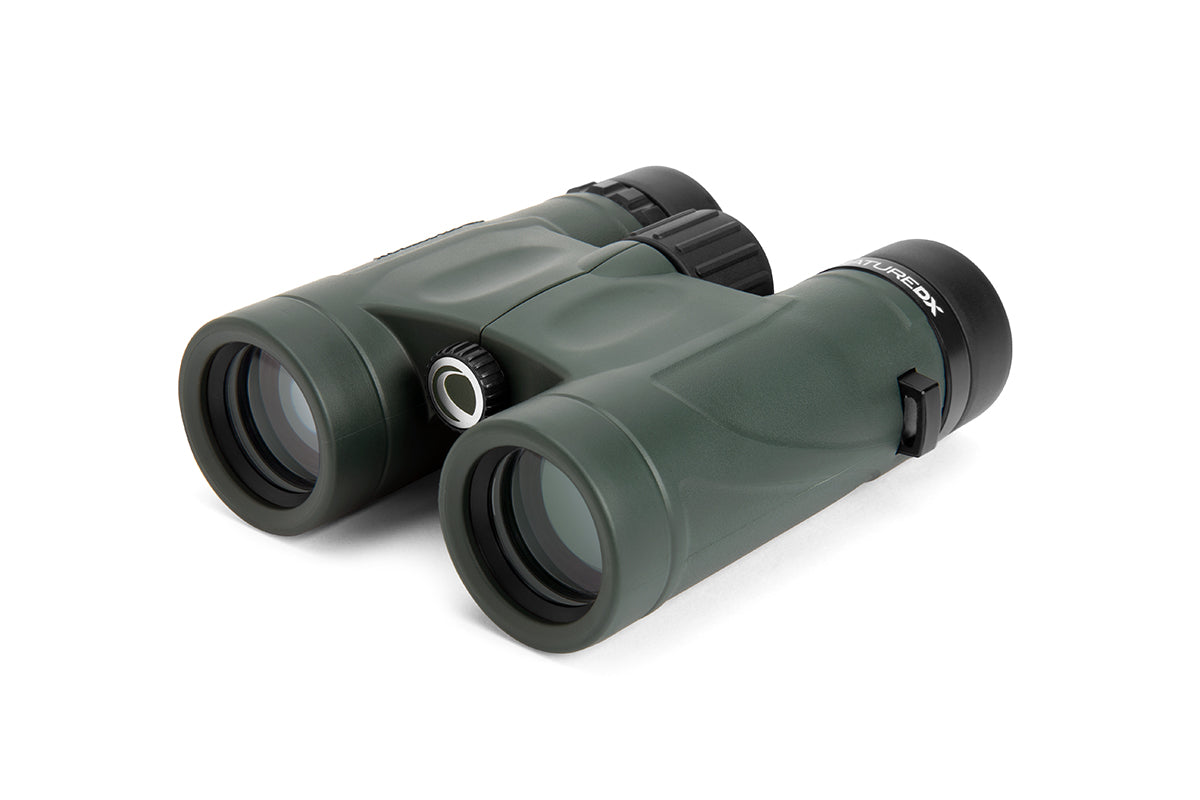
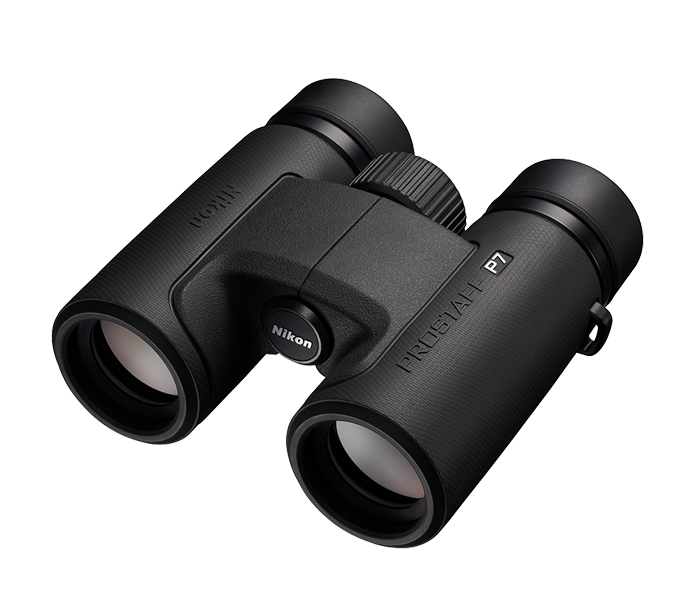
For ordinary viewing with a wider published scene and longer stated eye relief, consider the Celestron Nature DX 8x32: it lists a 7.4° field, 18 oz instrument weight and 17.5 mm eye relief. If you prefer 10x framing in a slightly lighter 30 mm model, Nikon's PROSTAFF P7 10x30 lists a 6.6° field and weighs 16.6 oz. Those are different working choices, not a quality ranking; neither ordinary binocular is made for direct-Sun viewing.
- This answer is for ordinary scenes, not direct-Sun use. Do not point an ordinary binocular at the Sun; the purpose-built solar choices are a separate task.
- No magnification, objective size, field, waterproofing or weight cutoff is added here. The finder keeps the full result for the ordinary-use option while the examples show two exact, contrasting configurations.
- The examples follow the questionnaire's default focus on current models. Choose “include earlier models for comparison” if you want to add the catalogued earlier candidates.
Comparison updated 29 October 2026.
Use the field and the actual subject, not a generic best label
At their published specifications, the Nature DX 8x32 gives a broader real field and longer stated eye relief, while the P7 10x30 offers higher fixed magnification and is 1.4 oz lighter. For walking or moving wildlife, the broader scene may be the more useful starting point; when you want the 10x framing and accept a narrower field, consider the P7. These model-specific facts do not establish brightness, sharpness or which instrument every viewer will find easier to hold.
Ordinary binoculars and the Sun are separate choices
The “ordinary scenes” option covers wildlife, events, travel and night-sky use; it is not a solar-safety setting. Never use either featured conventional binocular to look at the Sun. Direct-Sun viewing requires equipment made for that purpose with its proper front-mounted filter; follow the filter maker's safety instructions and use the separate direct-solar guide for that distinct task.
Questions that change the choice
Is the Nature DX 8x32 automatically better for birding because its field is wider?
Not automatically. It publishes a 7.4° field compared with 6.6° for the P7 10x30, which can make it easier to keep a moving scene in view on paper. The P7's 10x power frames a subject more tightly. Your use, stability and fit should decide between those tradeoffs; neither field figure is a quality ranking.
Can ordinary binoculars be used for direct sunlight?
No. Never look at the Sun through a conventional binocular. Use only equipment specifically made for direct solar observation with the proper undamaged front filter, and follow authoritative solar-viewing safety instructions. The direct-Sun need is different from this ordinary-use answer.
Does this answer narrow the finder to only 8x32 and 10x30?
No. Those are two examples selected to explain a real field-and-power tradeoff; this page adds no magnification or objective-size condition. The finder keeps every model that matches the ordinary-use option.
Sources for the comparison