Binoculars · Choose by your needs
Choosing 12x binoculars: stabilization or a larger objective
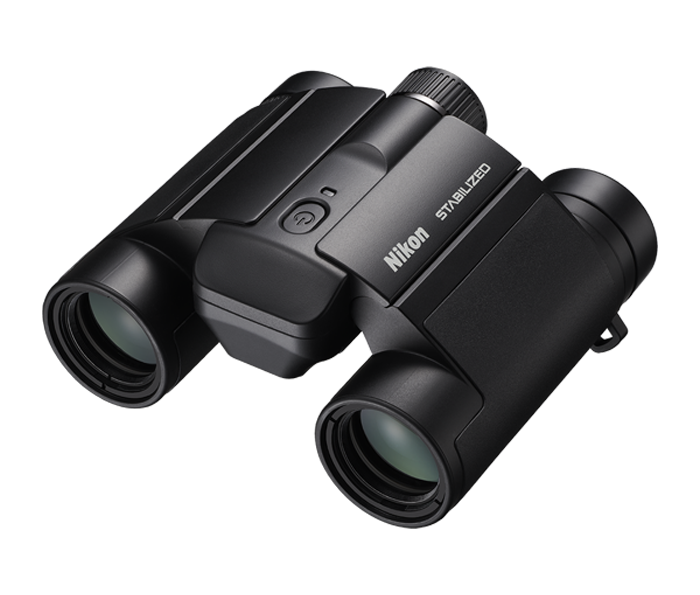
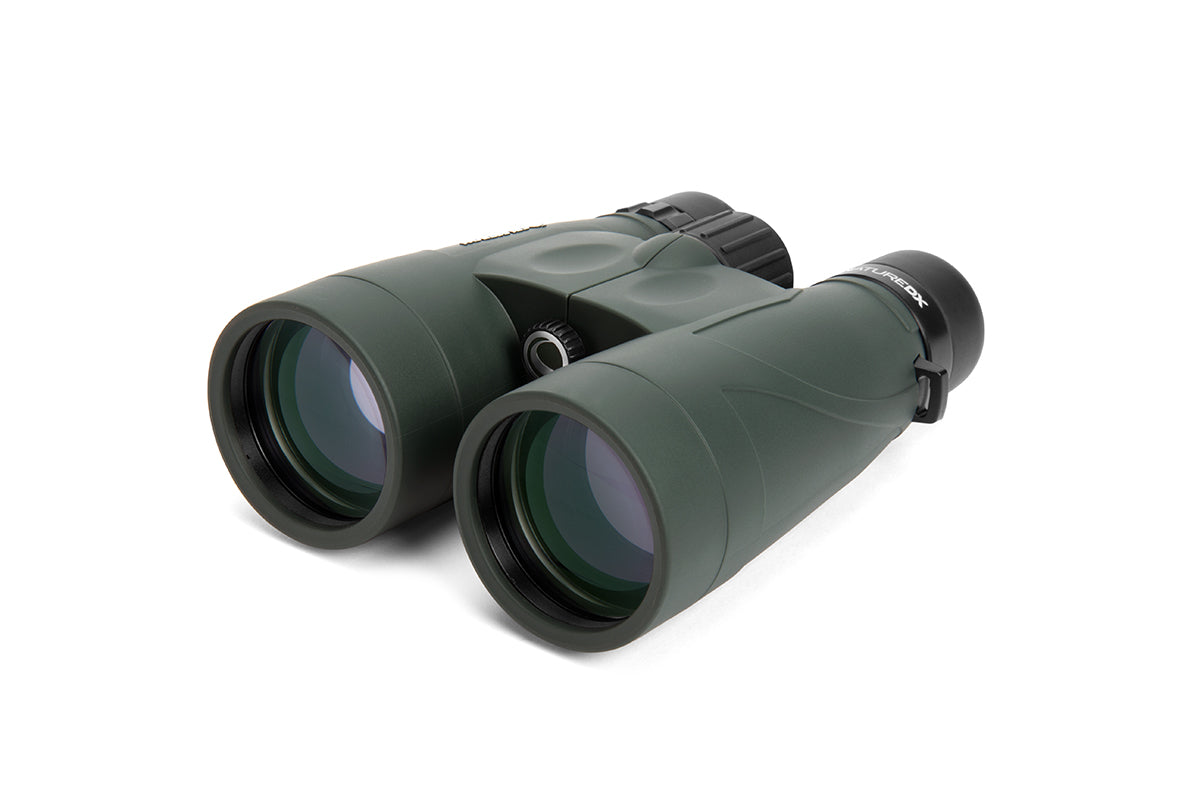
For a fixed 12x choice, compare what you need beyond power: Nikon's STABILIZED 12x25 S is a 13.9 oz body with confirmed lens-shift stabilization, while Celestron's Nature DX 12x56 is 36.2 oz, lists a 5.5° real field and carries a waterproof claim. The Nikon requires two AA cells and is non-waterproof; Celestron requires a separate tripod adapter and publishes no immersion depth or duration. Neither is a universal 12x winner.
- Fixed 12x magnification; ordinary viewing, not direct solar use.
Comparison updated 29 October 2026.
Keep field, stabilization and objective size separate
Both examples are fixed at 12x, but their operating plans differ. Nikon's 25 mm instrument uses powered lens-shift stabilization and has a 4.5° published real field; Celestron's 56 mm model lists 5.5° and requires an adapter for tripod mounting. Those numbers help frame a choice without establishing which produces the better image.
Power does not erase weather or support limits
The Nikon is non-waterproof and stabilization needs two AA cells. Nature DX is called waterproof, but the exact page gives no immersion depth or duration. Celestron's tripod route is confirmed, but the adapter is not listed in the standard package. Choose the additional requirement explicitly if any of these conditions is essential.
Questions that change the choice
Does stabilization make the Nikon waterproof?
No. Nikon lists the 12x25 S as non-waterproof. Stabilization and weather protection are separate features.
Which 12x choice publishes the wider real field?
Celestron lists 5.5° for the Nature DX 12x56; Nikon lists 4.5° for the STABILIZED 12x25 S. A field specification is not an image-quality ranking.
Is the Celestron adapter included?
No. The exact package record does not list the required adapter; the tripod is a separate item as well.
Sources for the comparison