Binoculars · Choose by your needs
Compact binoculars with image stabilization
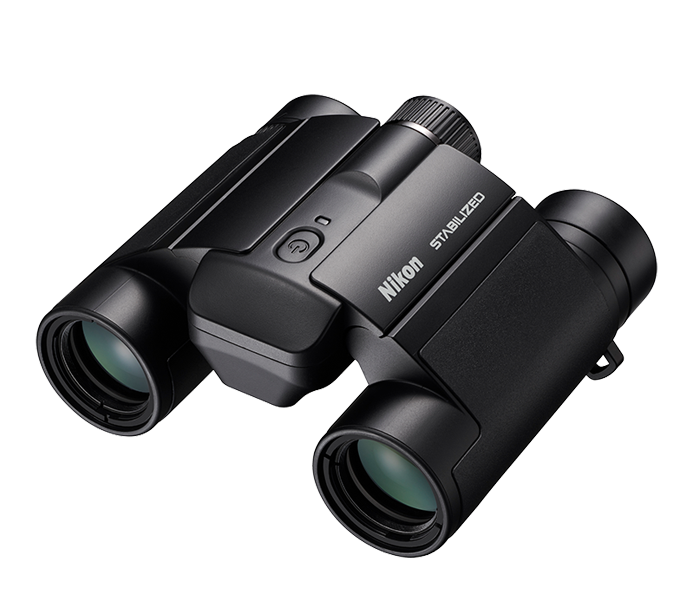
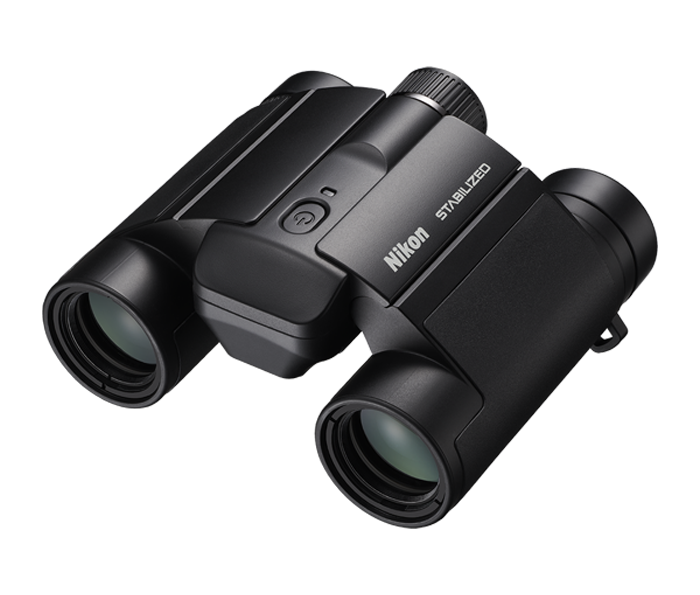
If image stabilization is essential in a compact binocular, compare Nikon's STABILIZED 10x25 S with the 12x25 S. The 10x model publishes a wider 5.4° real field and 14 mm eye relief; the 12x model raises power, narrows the field to 4.5° and is 0.4 oz lighter as a body. Both require two AA cells for stabilization, are dry-weather instruments, and list body weight without those batteries.
- Both exact Nikon models have manufacturer-confirmed image stabilization. The page compares two different fixed magnifications, not one interchangeable configuration.
- Stabilization requires two AA batteries; the stated instrument weights exclude battery mass. Nikon estimates approximately 12 hours with alkaline cells under its stated conditions, with actual life varying by environment.
- The exact models are not waterproof and should be kept dry. No separate waterproof requirement is added here.
Comparison updated 29 October 2026.
Choose between more scene width and more magnification
When stabilization is required but magnification is still open, choose the 10x25 S for its wider 5.4° published field and longer eye relief, or the 12x25 S for 12x power and a 0.4 oz lighter body; both require two AA cells. The 10x25 S publishes 14 mm eye relief; the 12x25 S publishes 4.5° field and 12.3 mm eye relief. The published body weights exclude the two AA cells both instruments need for stabilization. These exact differences support a conditional choice, not a claim that either one produces a steadier or sharper view in every user's hands.
Plan for batteries and dry conditions
The shared Nikon manual describes optical lens-shift image stabilization powered by two AA-size alkaline or rechargeable Ni-MH cells. Nikon's approximate 12-hour estimate is under stated alkaline-cell conditions near 20°C; the manual warns that actual life varies. The exact product pages do not confirm waterproof protection, so these models belong in a dry-weather use plan.
Questions that change the choice
Do the listed weights include batteries?
No. Nikon lists 14.3 oz for the 10x25 S and 13.9 oz for the 12x25 S without the two AA cells needed to power stabilization.
Which stabilized model has the broader real field?
The 10x25 S lists 5.4°, compared with 4.5° for the 12x25 S. Choose the 10x configuration if wider scene coverage and longer stated eye relief are more important than the 12x view.
Are the stabilized models waterproof?
No waterproof protection is confirmed for these exact models. Nikon identifies dry-weather use; the stabilization feature does not change that limit.
Does Nikon's battery estimate guarantee twelve hours?
No. The manual's estimate is approximate and tied to alkaline cells around 20°C. Actual run time varies with environmental conditions and battery type.
Sources for the comparison