
On this page
Your needs, this model
Does it fit your priorities?
Would a wider scene and lower handheld power help when tracking a moving subject?
The exact part 59220 page lists 8x power and 377 ft/6.4° at 1,000 yd, compared with the 10x25 sibling’s 294 ft/5.6°. This is a published field comparison, not a measured tracking test.
Explore this need in the finder →Can a 12.7 oz compact and published 15 mm eye relief meet your carry screen?
The exact manufacturer table lists 12.7 oz and 15 mm. That meets a 13 oz weight ceiling and 15 mm stated eye-relief floor, but does not prove glasses fit.
Explore this need in the finder →Do you want a waterproof-described 8x25 with a six-degree real-field minimum?
The exact page says waterproof/fogproof and lists a 6.4-degree real field. It meets those manufacturer-description and numeric screens; the page gives no immersion rating.
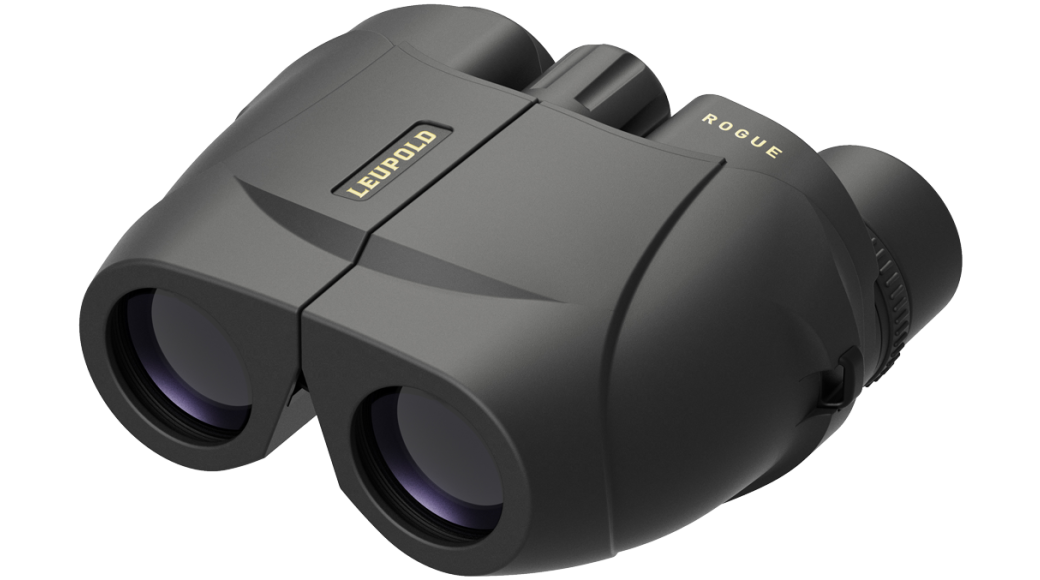
Explore this need in the finder →The Leupold BX-1 Rogue 8x25 Compact (part 59220) pairs a 25 mm objective with 8x magnification in a 12.7-ounce, 4.3-inch binocular. Its manufacturer-listed 377-foot field at 1,000 yards is appreciably wider than the 10x25 Rogue’s 294-foot field, while both share the same listed weight and length. That makes this the more natural member of the pair for reacquiring a moving subject or scanning a broad scene without carrying a full-size 42 mm binocular.
Why choose the 8x configuration?
Leupold lists a 6.4-degree real field, 15 mm eye relief, a 3.1 mm exit pupil and 14.1-foot close focus. Those are manufacturer specifications, not measurements made for this review. Compared with the 10x25 sibling, the 8x version gives up some apparent subject scale but shows more of the surrounding scene: its published field is 83 feet wider at 1,000 yards. That is a useful difference for finding a bird again after it moves, following activity at a field or stadium, and keeping bearings while walking. Lower magnification also generally makes hand movement less conspicuous than at 10x, although neither model is stabilized.
The 8x25’s 3.1 mm exit pupil is larger than the 10x25’s 2.5 mm because the two share a 25 mm objective. It is still a compact daytime format rather than a substitute for a 42 mm binocular when dusk viewing is a priority. The smaller front lenses help keep the body portable, but they do not make this a dedicated low-light or astronomy instrument. If you need a stable view of distant detail for long periods, compare a full-size 8x42 or consider whether a tripod-supported instrument better fits the outing.
Carry, focus and fit
At 12.7 ounces and 4.3 inches long, the published bare-instrument dimensions support an easy day-pack or jacket-pocket role. The 10x25 sibling weighs and measures the same, so moving to 8x does not add a carry penalty in Leupold’s table. The package is not just the binocular: the product description says a case, lens covers and lens cloth are included, and those items take extra space. Leupold describes a large central focus dial, rubber armor and twist-up eyecups. A close-focus figure of 14.1 feet is adequate for ordinary distant viewing, but it is not an especially close-focus choice for observing nearby insects, flowers or details on a museum label.
Published eye relief is 15 mm. Treat that as a useful comparison point, not a guarantee that you will see the full field while wearing glasses. Try your own frames with the eyecups in their viewing position if that matters. The exact page also contains conflicting interpupillary-distance language: its feature copy says 50–70 mm, while the specification table lists a 57 mm minimum and 71 mm maximum. Until Leupold clarifies whether the copy is a family range or a separate measurement, neither is a safe hard-fit promise. The hinge should be tried against the faces of everyone who will share the binocular.
Weather claims and construction
The exact product page identifies an inverted Porro-prism design, a fully multi-coated lens system and rubber armor. Leupold describes the model as waterproof and fogproof. Those are useful manufacturer claims for unpredictable outdoor use, but the page gives no immersion depth, duration or IP rating. Do not infer that the binocular can be submerged or treated like dive equipment. The source set also does not confirm ED glass, a specific prism coating, or a tripod port for this exact part. Keep those features as unknown rather than reading them into the Rogue name or a photograph.
For setup, the page-linked general Binocular Owner’s Manual explains how to set interpupillary distance, center focus and the right-eye diopter; it also gives eyecup and lens-care instructions. The manual is shared across Leupold binoculars and does not provide a part-specific optical test. The manual’s mention of a tripod screw is not confirmation that this exact model includes an adapter or package hardware, so ask the manufacturer if a fixed mount is essential.
Who should shortlist it?
Choose the 59220 when a compact 8x view and wider published field matter more than the extra magnification of a 10x pocket pair. It suits travel, events, casual wildlife watching and short walks where low weight and quick scene acquisition are priorities. Compare the BX-1 Rogue 10x25 if more subject scale is worth a narrower scene; compare a 42 mm model if twilight use is central. A known waterproof claim does not resolve the IPD mismatch or glasses comfort. If either is an essential fit condition, confirm it in person rather than assuming the catalog entry settles it.
Before choosing, decide whether you value width or reach: this 8x version has the broader field, while the 10x version has higher fixed power. Both carry the same stated mass and aperture. Search retailers using “Leupold BX-1 Rogue 8x25 binocular part 59220”; no verified exact ASIN or retail stock was established. No sample was tested and no independent brightness, resolution or waterproofing measurement was performed.
Manufacturer sources: BX-1 Rogue 8x25 exact page, part 59220 and its linked Binocular Owner’s Manual. Published specifications and protection descriptions are manufacturer claims, not independent test results.
Key specifications
Key details at a glance
| Magnification | 8× |
|---|---|
| Objective diameter | 25 mm |
| Real field of view | 6.4° |
| Eye relief | 15 mm |
| Exit pupil | 3.1 mm |
| Close focus distance | 14.1 ft |
More specifications and setup details
| Manufacturer-published weight | 12.7 oz |
|---|---|
| Lens and prism coatings | Exact manufacturer page describes a fully multi-coated lens system. It does not specify every optical surface, ED glass or a prism phase/dielectric coating for part 59220. |
| Water and fog protection | Manufacturer waterproof/fogproof description; no numeric immersion/IP specification located. |
| Tripod use | The exact product page/manual sources do not confirm tripod compatibility, an adapter or adapter inclusion for part 59220; do not infer the BX-3/BX-4 mounting setup. |
| Published weight note | Exact manufacturer-listed bare binocular weight; case, covers, cloth and carry system add weight. No independent weighing was performed. |
| Manufacturer-rated waterproof | Yes |
| Built-in image stabilization confirmed | No |
| Integrated laser rangefinder | No |
| Onboard ballistic solution display | No |
Use the exact model’s instructions for operating limits, supplied equipment and version differences.
Sources for this review
Sources for this assessment
- Leupold exact U.S. BX-1 Rogue 8x25mm Compact product page, part 59220
- Leupold Binocular Owner’s Manual linked from the exact part 59220 page; general rather than SKU-specific
- Manufacturer gallery image linked from exact part 59220 page
- Previously archived Leupold U.S. binocular directory page 1, position 1
- Dated exact-name U.S. CPSC SaferProducts query for BX-1 Rogue 8x25

Choose your optical trade-off first.
Choose viewing purpose first, then magnification, objective size, scene width and any fit, weather or mounting constraint. A direct-Sun requirement is separate: only exact manufacturer-confirmed solar binoculars can pass it.