
On this page
Your needs, this model
Does it fit your priorities?
Do you want a fixed 10x42 rather than another power or objective size?
The exact CPH-1042 page lists 10x magnification and 42 mm objectives.
Explore this need in the finder →Is the listed 22.9-ounce instrument within your carry limit?
The exact page lists 22.9 oz for the binocular itself; harness, strap and accessories are additional carried items.
Explore this need in the finder →Must the binocular focus at 16 feet or closer?
Vortex lists the Copperhead HD 10x42 closest focus as 15.3 feet. It meets a 16-foot ceiling but not a 15-foot ceiling.
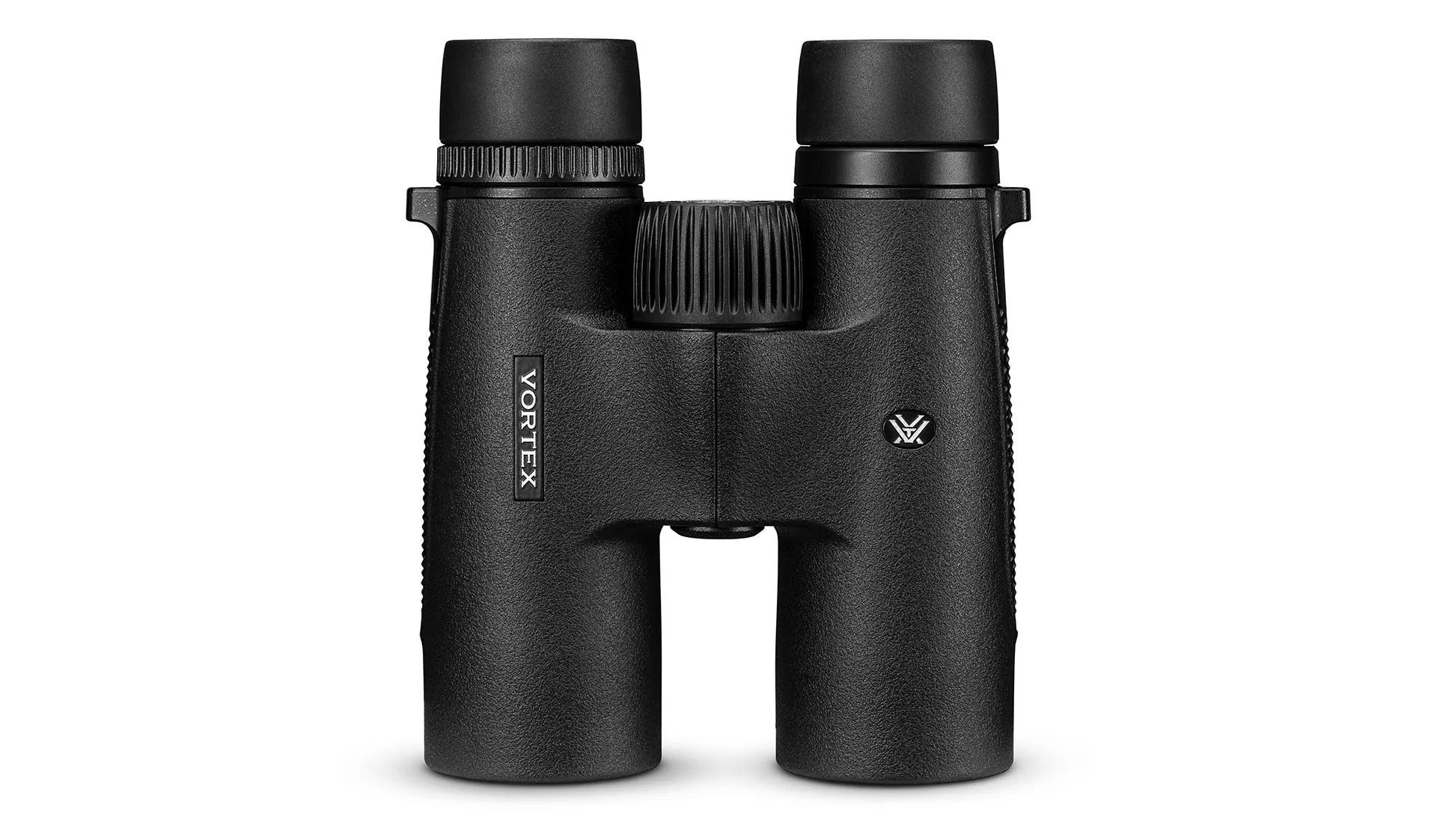
Explore this need in the finder →The Vortex Copperhead HD 10x42 is the exact Limited Distribution binocular SKU CPH-1042, not one of Vortex's similarly named Copperhead riflescopes. Its product page lists a fixed 10x42 optical format, 6.4-degree field, 334 feet at 1,000 yards, 17 mm eye relief, 15.3-foot close focus and 22.9-ounce instrument weight. It is an ordinary passive binocular for wildlife observation or hunting, not an electronic rangefinder or a solar-viewing instrument.
A familiar full-size 10x42 profile
Ten power can make distant subjects easier to inspect than an 8x pair, but more magnification also reveals more hand shake and gives you less scene width for finding a bird or following motion. The Copperhead's specified 6.4-degree field is 334 feet at 1,000 yards. That gives you a concrete comparison with other fixed 10x42 models, though it is not a measured side-by-side result. If you spend more time scanning for movement than inspecting a distant target, try an 8x model before deciding that the extra power is worth the narrower view.
With 42 mm objectives at 10x, the exit-pupil ratio is 4.2 mm. That figure is useful context, not a low-light guarantee. Vortex calls the optical system HD and says selected glass is used to support resolution, color fidelity and edge-to-edge sharpness; the page also identifies fully multi-coated lenses. Neither phrase supplies a controlled comparison or establishes a specific ED-glass formulation for CPH-1042, so this review does not infer one.
Comfort and carrying weight
The page lists 17.0 mm eye relief, adjustable eyecups and a right-side diopter. That is promising information for comparing fit, but frame shape, eye position and facial anatomy decide whether you can see the whole field comfortably with glasses. The exact page lists an interpupillary range of 55–75 mm, body height of 6.1 inches and width of 5.0 inches. There is no published claim here that every person can obtain a full-field view. Try the actual binocular if possible, and check both eyes rather than judging only the central image.
Vortex lists the binocular at 22.9 ounces. That number is for the instrument, not a weighed total of binocular, harness, strap and covers. A full-size 42 mm body can be a sensible compromise for a general outing, but someone counting every ounce should compare 32 mm or compact 28 mm models and set a realistic carry cap. The close-focus listing of 15.3 feet also matters if you often look at nearby subjects; it is not a close-focus specialist by compact binocular standards.
Weather claims and the box
The Copperhead page describes rubber armor, nitrogen gas purge, waterproofing, fogproofing and shockproofing. The manufacturer gives no IP code, immersion depth or timed submersion limit on the captured exact page. These are weather-protection claims, not a license to leave the binocular underwater or to assume that damage is impossible. After wet use, sensible care still means wiping the exterior dry and keeping grit off the lenses before cleaning.
The exact in-box list names a GlassPak binocular harness and case, comfort neck strap, tethered objective covers, eyepiece covers and a lens cloth. It does not list a tripod adapter. More importantly, the page does not state that CPH-1042 is tripod-adaptable or identify a compatible adapter. That is unknown, not proof that the body cannot be mounted. If tripod use is essential, select a model whose exact product page confirms it or get a direct compatibility answer from Vortex before purchasing.
How it compares with Triumph HD
The Copperhead HD and Triumph HD 10x42 are unusually close on the published numbers: both list 6.4 degrees/334 feet at 1,000 yards, 17 mm eye relief, 15.3-foot close focus, 55–75 mm interpupillary spacing, 6.1 by 5.0 inches and 22.9 ounces. Both exact pages describe an HD optical system, fully multi-coated lenses and nitrogen-purged waterproof/fogproof/shockproof bodies. Do not turn matching specification lines into a claim that the view, ergonomics or durability are identical.
The Triumph is the clearer choice when support and instructions matter: its page expressly says tripod-adaptable and links a Triumph HD family manual. That manual explains focus, diopter, eyecups, harness setup, lens care and a warning not to look at the Sun. The page-listed tripod adapter is not included. The Copperhead page reviewed here has no visible manual/parts section, and no exact CPH-1042 manual was established in this source pass. I therefore leave its tripod compatibility and manual-specific operating steps unknown instead of borrowing the Triumph instructions. The product page still documents adjustable eyecups and a diopter, so there is a basis for basic fit consideration but not for asserting identical mechanisms.
Vortex's Viper HD 10x42 offers another exact 10x42 reference: its page gives a 6.5-degree field and a listed weight of 24.9 ounces, compared with the Copperhead's 6.4 degrees and 22.9 ounces. Those differences may matter if you value a slightly wider published field or lower instrument weight, but no article here claims measured brightness, resolution, or superior image quality.
Who should shortlist it
Shortlist CPH-1042 if your priorities fit a conventional fixed 10x42, the listed 17 mm eye relief and 334-foot field appeal, and you value the page's specific harness-and-case kit. Check the finder against your own weight and close-focus limits, and be comfortable with a 22.9-ounce body. Look elsewhere if you require verified tripod support, an exact manual, a confirmed ED-glass claim, stabilization, zoom or a built-in laser; this source record does not establish those capabilities.
The official page links a “Where to Buy” route, but that does not establish stock at any particular retailer. Retail availability and an exact retailer item number were not verified here. The image shown in this review is linked from the exact CPH-1042 page; it shows a black-bodied Vortex binocular, while the manufacturer does not disclose whether the image is a photograph or a render. For safety, do not point ordinary binoculars at the Sun. Solar viewing requires equipment purpose-built and used according to its own instructions.
Key specifications
Key details at a glance
| Magnification | 10× |
|---|---|
| Objective diameter | 42 mm |
| Real field of view | 6.4° |
| Eye relief | 17 mm |
| Exit pupil | 4.2 mm |
| Close focus distance | 15.3 ft |
More specifications and setup details
| Manufacturer-published weight | 22.9 oz |
|---|---|
| Lens and prism coatings | The exact page identifies an HD optical system with selected glass elements and fully multi-coated lenses. It does not identify the exact SKU as using ED glass or publish a controlled optical test. |
| Water and fog protection | Vortex describes this exact configuration as waterproof, fogproof and shockproof, and says it is nitrogen-gas purged and O-ring sealed. The exact page publishes no IP code, immersion depth or duration; underwater use is not established. |
| Tripod use | The exact Copperhead page does not confirm tripod compatibility and its included-in-box list does not include an adapter. Compatibility remains unknown; no exact CPH-1042 manual/parts link was visible on the captured page. |
| Published weight note | Vortex lists 22.9 oz for this binocular. This is the manufacturer specification for the instrument, not a separate weighed sample or complete carried kit. |
| Manufacturer-rated waterproof | Yes |
| Integrated laser rangefinder | No |
| Onboard ballistic solution display | No |
| Tripod adapter in package | No |
Use the exact model’s instructions for operating limits, supplied equipment and version differences.
Sources for this review
Sources for this assessment

Choose your optical trade-off first.
Choose viewing purpose first, then magnification, objective size, scene width and any fit, weather or mounting constraint. A direct-Sun requirement is separate: only exact manufacturer-confirmed solar binoculars can pass it.