
On this page
Your needs, this model
Does it fit your priorities?
Is this exact fixed 10x42 configuration the power and objective you want for ordinary outdoor observation?
The exact page identifies fixed 10x42mm and lists 314 ft / 6.0° field at 1,000 yd. It matches the requested format; the field figure is a published specification, not a tracking test.
Explore this need in the finder →Will the 25-ounce body and 17 mm listed eye relief meet your numeric fit screen?
The exact specification table lists 25 oz, 17 mm eye relief and 56–74 mm interpupillary distance. These are screening figures, not a glasses-fit or comfort guarantee.
Explore this need in the finder →Do you require an exact-page-confirmed weather claim and standard tripod port?
Leupold describes this exact configuration as waterproof/fogproof and confirms a built-in rotatable 1/4-20 port. Adapter inclusion is not confirmed, so the port does not satisfy a need for an adapter in the box.
Explore this need in the finder →The Leupold BX-4 Pro Guide HD Gen 2 10x42mm (part 184761) is the middle-ground option when you want more reach than 8x but do not want a 50 mm objective body. The exact U.S. page lists a 314-foot field at 1,000 yards, 6.0-degree real field, 17 mm eye relief, and 25-ounce weight. It is a fixed-power, passive binocular; those published specifications are not an independent sharpness or low-light test.
What the 10x42 is for
Ten power gives more subject scale than the 8x42, useful when a bird or animal remains distant and a closer approach is not practical. Its six-degree field retains more scene than either 50 mm configuration in this family. The 42 mm objectives also keep the tube length to 5.7 inches and weight at 25 ounces, nearly four ounces below the 10x50. For a mixed outing with both walking and stationary glassing, those proportions make this the balanced choice if the observer is comfortable holding 10x steady.
Against the 8x42, the important exchange is not weight—the models differ by only half an ounce. It is reach versus scan width: the 10x42 lists 314 feet of field against 376 feet for 8x42, while the exit pupil drops from 5.25 to 4.2 mm. Against 10x50, it keeps the same power but is shorter and lighter. The 10x50’s larger 5 mm exit pupil is a geometric difference; transmission and actual visual brightness are not established by those figures alone.
Fit and controls
The page lists 17 mm eye relief and an interpupillary range of 56–74 mm. Seventeen millimeters is not a promise of full-field viewing with glasses. Check the eye position using your own eyewear, and adjust the hinge until the two circles merge without dark crescents. Leupold describes three interchangeable Form-Fit eyecup styles—winged, medium and low—and twist-up eyecups. Low cups are intended for glasses, but the eye relief and facial geometry still need to work together.
The published close focus is 9.3 feet. That suits normal field observation but does not make the binocular a close-up instrument. A central focus control and locking diopter are described on the exact page. A general owner manual linked from this page explains how to set interpupillary spacing, focus both barrels, and establish the right-eye diopter. Complete those adjustments before judging comfort or the view; they are user setup steps, not factory optical tests.
Construction claims and limits
Leupold lists phase-coated roof prisms and fully multi-coated lenses; it describes DiamondCoat 2 on exterior lens surfaces and Guard-Ion hydrophobic coating. Those feature names come from the manufacturer. The page does not confirm ED glass, an exact prism glass type, or an independently measured transmission figure. Do not infer those attributes from “HD” in the model name.
The product page calls the configuration waterproof and fogproof but does not state an IP code, submersion depth or test duration. That is useful outdoor-protection information, not evidence for diving use. The exact page also confirms a rotatable 1/4-20 tripod port. If a tripod is important for long sessions, confirm the adapter and support hardware separately: a threaded port does not demonstrate that the adapter is part of the package.
Who should keep it on the list
Choose this size for broad general observation when 10x power is a priority and the 42 mm body matters for carry. Choose the 8x42 for a wider scene and a larger exit pupil; choose 10x50 for the same power with more objective aperture and stated eye relief if its longer, heavier housing is acceptable; choose 12x50 only when its additional magnification justifies a narrower field and more careful handholding.
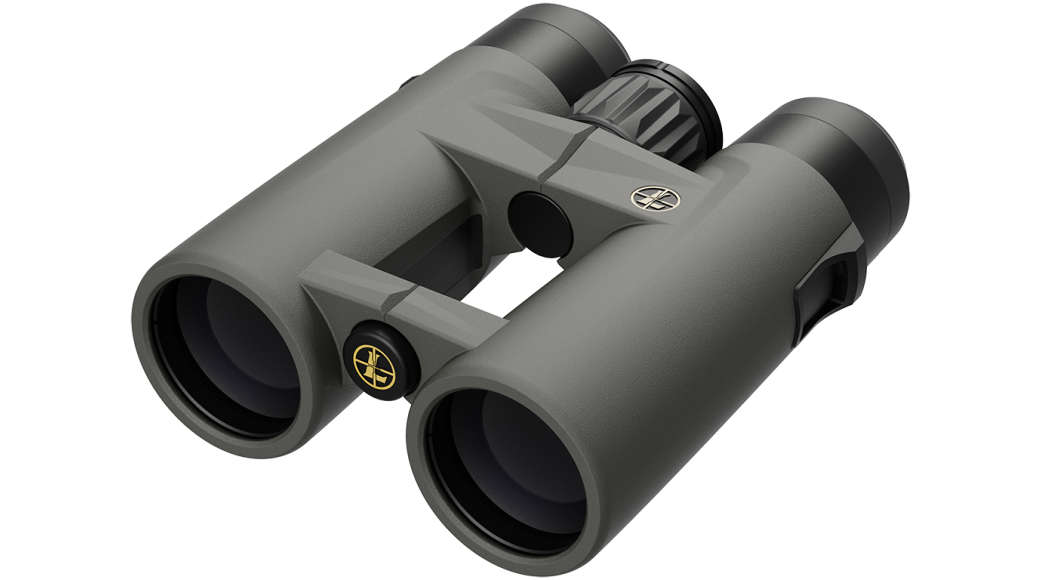
The image linked by Leupold from the exact part page is a gray binocular cutout, but its pixels do not identify the 10x marking. It is presented as a page-linked product image, not visual proof of configuration; photo-versus-render method and republishing permission are undisclosed. Current retailer stock, price and exact ASIN were not verified. Search by “BX-4 Pro Guide HD Gen 2 10x42 part 184761” and recheck that the listing identifies this exact configuration.
Manufacturer sources: 10x42mm part 184761 exact U.S. page and its linked general owner manual.
Key specifications
Key details at a glance
| Magnification | 10× |
|---|---|
| Objective diameter | 42 mm |
| Real field of view | 6° |
| Eye relief | 17 mm |
| Exit pupil | 4.2 mm |
| Close focus distance | 9.3 ft |
More specifications and setup details
| Manufacturer-published weight | 25 oz |
|---|---|
| Phase coatings confirmed | Yes |
| Locking diopter ring confirmed | Yes |
| Lens and prism coatings | Leupold lists phase-coated roof prisms and fully multi-coated lenses, DiamondCoat 2 exterior lens treatment, and Guard-Ion hydrophobic coating. The exact page does not identify ED glass or every technical detail of the coating stack; no independent transmission measurement is claimed. |
| Water and fog protection | Manufacturer waterproof/fogproof description; no numeric immersion/IP specification located. |
| Tripod use | The exact product page confirms a built-in rotatable 1/4-20 tripod port, but does not establish an adapter model or that an adapter is included. Confirm mounting hardware separately. |
| Published weight note | Exact manufacturer-listed binocular weight; any carry accessories add weight. No independent weighing was performed. |
| Manufacturer-rated waterproof | Yes |
| Built-in image stabilization confirmed | No |
| Integrated laser rangefinder | No |
| Onboard ballistic solution display | No |
| Direct 1/4-20 tripod thread confirmed | Yes |
Use the exact model’s instructions for operating limits, supplied equipment and version differences.
Sources for this review
Sources for this assessment
- Leupold exact U.S. product page, part 184761
- Leupold Binocular Owner’s Manual (2023 artwork 56116P), linked from exact product page; generic setup/care guidance, not SKU-specific optical evidence
- Exact manufacturer product-page-linked primary image URL for part 184761
- Previously archived Leupold U.S. binocular directory page 1, observed row 7
- Dated exact-name public CPSC recall search; a narrow empty result only

Choose your optical trade-off first.
Choose viewing purpose first, then magnification, objective size, scene width and any fit, weather or mounting constraint. A direct-Sun requirement is separate: only exact manufacturer-confirmed solar binoculars can pass it.