
On this page
Your needs, this model
Does it fit your priorities?
Does a 10x42 with a broad six-degree-plus scene fit the outing?
The exact 188793 page lists 10x42 and a 342 ft/6.5° field at 1,000 yd. That meets this field and format screen; it is a published specification, not a tracking test.
Explore this need in the finder →Will 22 oz, 15 mm listed eye relief and the 56 mm minimum IPD meet your fit screen?
The exact page lists 22 oz, 15 mm eye relief and a 56–74 mm interpupillary range. These are numeric checks only; 15 mm is not a glasses-fit promise and the hinge should still be tried.
Explore this need in the finder →Do you need a weather-described 10x42 with a confirmed tripod port?
Leupold describes this exact configuration as waterproof/fogproof and confirms a built-in 1/4-20 rotatable tripod adapter port. It lists a chest harness, lens covers and cloth, but does not establish an adapter in the box.
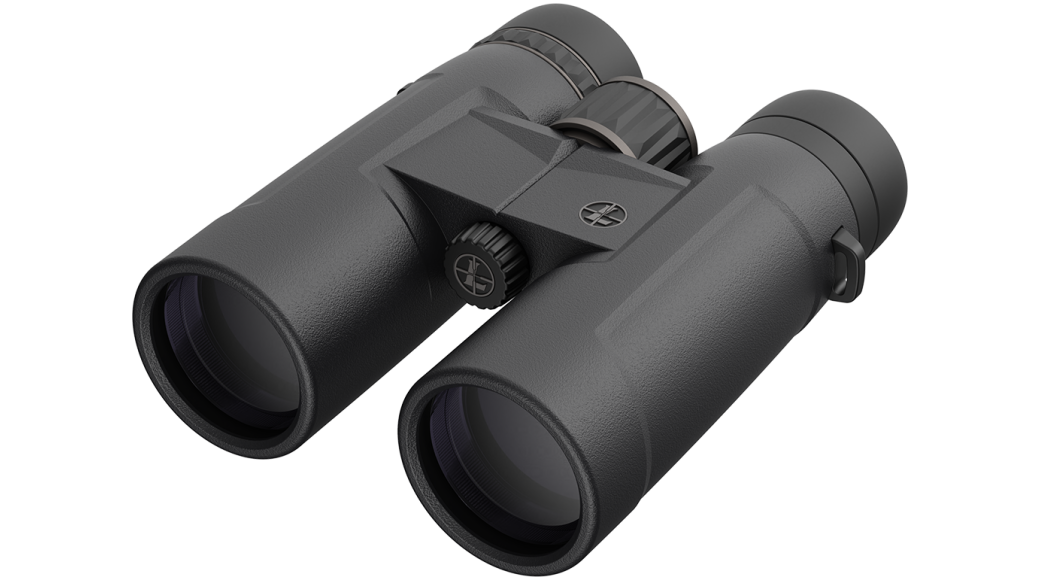
Explore this need in the finder →The Leupold BX-2 Timberline HD 10x42mm (part 188793) is a fixed-power outdoor binocular with a 342-foot field at 1,000 yards, a listed 22-ounce weight and a 1/4-20 tripod port. It is the lighter, wider-view member of the Timberline HD pair; its 10x magnification and standard 42 mm objective make it the more flexible choice when you will carry the binocular and scan by hand rather than leave it on a support.
What the 10x42 numbers mean in practice
Leupold lists this configuration at 10x magnification, with a 42 mm objective, a 6.5-degree real field, 342 feet of width at 1,000 yards, 15 mm eye relief, a 4.2 mm exit pupil and a 7.7-foot close-focus distance. These are specifications from the manufacturer’s exact part page, not independently measured results. The 10x view gives more subject scale than an 8x pair, while a 6.5-degree field leaves enough of the surrounding scene to keep bearings during a scan. For following wildlife or locating birds in brush, that combination is more forgiving than the narrower 12x50 sibling.
The 4.2 mm exit pupil is a useful comparison point, but it should not be mistaken for a brightness score. The 12x50 model also lists a 4.2 mm exit pupil. Its larger objective alone therefore does not prove that it will show a brighter delivered image: magnification, optical transmission, eye position and viewing conditions matter too, and the manufacturer has not published an independent brightness test here. If dawn or dusk viewing is a major requirement, compare both in person under the light in which you use them instead of relying on the “low-light” wording in product copy.
Carry, field width and support
The 188793 page lists a 5.6-inch length and a 22-ounce instrument weight. It is not pocket-sized, but it is the more manageable Timberline HD configuration for a day in the field. Leupold describes a large, tactile central focus dial and field-replaceable twist-up eyecups, useful details when you adjust focus with gloves or share the binocular. The listed 7.7-foot close focus is a separate strength for inspecting a nearby subject, although it does not turn this into a macro optic.
A built-in, rotatable 1/4-20 tripod-adapter port is confirmed on the exact page. That makes the binocular tripod-compatible, but it does not establish that an adapter or tripod comes in the box. Leupold lists a GO Afield chest harness, lens covers and a lens cloth among the supplied accessories. If you need a fixed setup, budget and verify the adapter and support hardware separately. For quick glassing while walking, the hand-held plan is simpler; for prolonged viewing, a tripod can reduce movement at 10x.
Compared with the 12x50 version, this 10x42 is 4.6 ounces lighter and 0.9 inch shorter according to the two product tables. It also shows a wider published scene: 342 feet versus 262 feet at 1,000 yards. Choose the 12x50 only if the extra two powers of magnification and larger objective are worth its narrower field, greater weight and more demanding handheld view. Greater power does not automatically mean a steadier or brighter view.
Fit and weather limits
The manufacturer’s table gives 15 mm eye relief and a 56–74 mm interpupillary range. The eye-relief figure is a screening value, not a guarantee that eyeglasses will leave the entire field visible. The manual explains how to set the hinge to merge the two images and how to focus each eye; a try-on with your own glasses remains the dependable check. The 12x50 sibling lists a 60 mm minimum IPD, so the 10x42 has the wider stated hinge range for viewers who need a narrower setting, though individual comfort still varies.
Leupold calls the lenses High-Definition and describes its Advanced Optical System, but the exact page does not establish ED glass, the prism design, or a complete coating stack. The word “HD” should not be treated as a substitute for those details. The manufacturer describes this configuration as waterproof and fogproof, but gives no numerical immersion depth, duration or IP rating on the page. Treat that as an outdoor protection claim, not permission to submerge the binocular.
Setup and who should shortlist it
The page links a general two-page Leupold Binocular Owner’s Manual. It covers hinge spacing, center focus, the right-eye diopter, eyecup adjustment and gentle lens care. It is useful setup guidance rather than a test of part 188793. Start by adjusting the barrels until you see one circular image, then set focus for each eye as the instructions describe. Use a soft brush or air to remove grit before wiping glass; the manual says to put cleaning fluid on a cloth, not directly on the lenses.
Shortlist the BX-2 Timberline HD 10x42 if you want a conventional 10x outdoor view, a field wider than six degrees, a 42 mm front end and confirmed tripod-port compatibility. It suits wildlife, birding, hiking and hunting where you may carry the optic but also want the option of a supported view. Choose the 12x50 Timberline HD for more subject scale and accept the field and weight tradeoff. Compare the BX-3 Alpine HD 10x42 if you want to assess another Leupold 10x42, but compare only exact documented differences rather than assuming the shared format means shared optics.
For a purchase search, use “Leupold BX-2 Timberline HD 10x42 binocular part 188793.” No exact retailer ASIN, live price or retail inventory was verified for this review. The specifications and protection statements above are manufacturer claims; no sample was tested and no laboratory or field measurements were made.
Manufacturer sources: BX-2 Timberline HD 10x42mm, part 188793 and its linked Binocular Owner’s Manual. The manual is general setup and care guidance rather than a model-specific performance report.
Key specifications
Key details at a glance
| Magnification | 10× |
|---|---|
| Objective diameter | 42 mm |
| Real field of view | 6.5° |
| Eye relief | 15 mm |
| Exit pupil | 4.2 mm |
| Close focus distance | 7.7 ft |
More specifications and setup details
| Manufacturer-published weight | 22 oz |
|---|---|
| Lens and prism coatings | The manufacturer describes a High-Definition performance/Advanced Optical System, but the exact page does not specify ED glass, prism type, or a complete coating stack. |
| Water and fog protection | Manufacturer waterproof/fogproof description; no numeric immersion/IP specification located. |
| Tripod use | The exact product page confirms a built-in rotatable 1/4-20 tripod adapter port, but does not name an adapter model or confirm one is included. The port confirms compatibility; confirm adapter and tripod hardware separately. |
| Published weight note | Exact manufacturer-listed binocular weight. Carry accessories add weight; no independent weighing was performed. |
| Manufacturer-rated waterproof | Yes |
| Built-in image stabilization confirmed | No |
| Integrated laser rangefinder | No |
| Onboard ballistic solution display | No |
Use the exact model’s instructions for operating limits, supplied equipment and version differences.
Sources for this review
Sources for this assessment
- Leupold exact U.S. product page, part 188793
- Leupold Binocular Owner’s Manual (2023 artwork 56116P), linked from the exact product page; shared setup/care guidance, not SKU-specific optical evidence
- Exact manufacturer product-page-linked primary image URL for part 188793
- Previously archived Leupold U.S. binocular directory page 1, observed row 3
- Dated exact-name CPSC SaferProducts query; not a universal or future recall-clearance claim

Choose your optical trade-off first.
Choose viewing purpose first, then magnification, objective size, scene width and any fit, weather or mounting constraint. A direct-Sun requirement is separate: only exact manufacturer-confirmed solar binoculars can pass it.