
On this page
A larger 15x astronomy configuration with filter threads
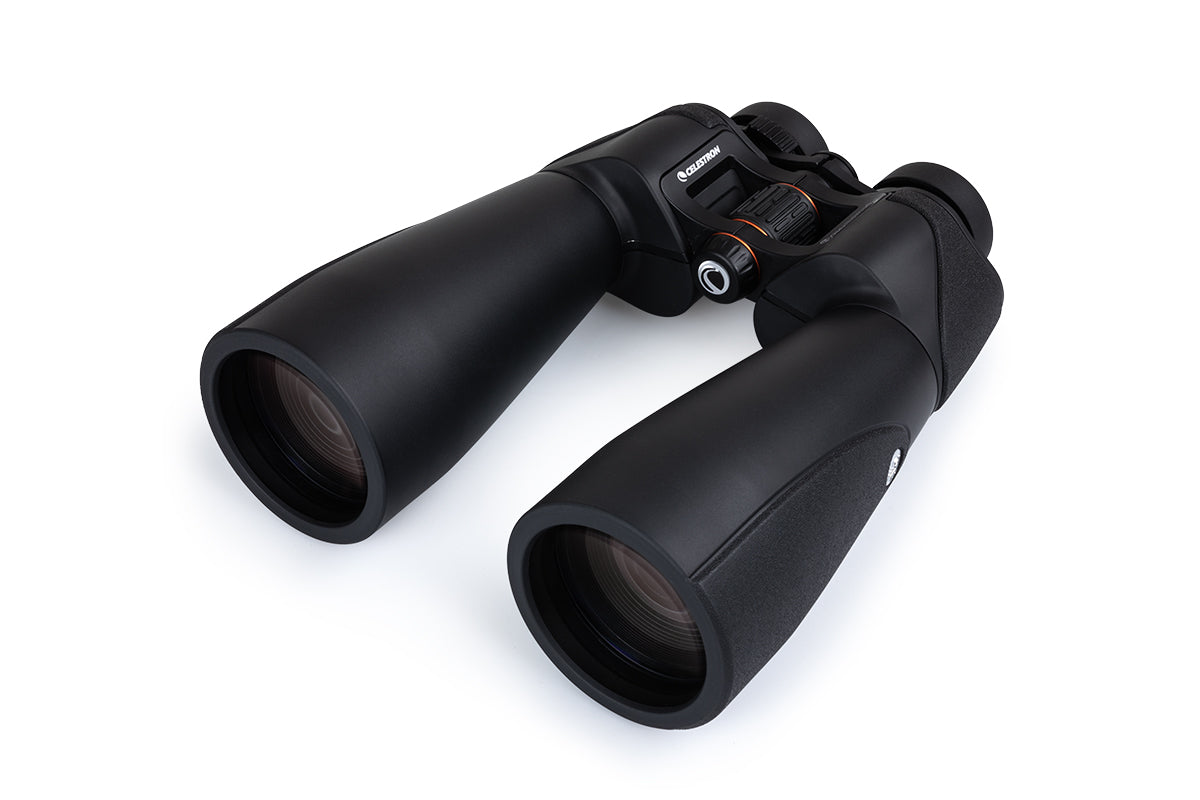
The SkyMaster Pro ED 15x70 is the larger fixed 15x option when a 70 mm objective, confirmed ED glass and standard 1.25-inch astronomy-filter threads matter. It weighs 73.7 oz, and its required tripod adapter is separate; it is not the low-carry alternative to the Vulture 15x56.
Your needs, this model
Does it fit your priorities?
Is the 15x70 the family’s middle reach and aperture choice?
Yes. Item 72034 combines 15x, 70 mm objectives and a 4.4° / 230 ft at 1,000 yd real field, between its 7x50 and 20x80 siblings.
Explore this need in the finder →Can a 15.7 mm eye-relief listing prove full-field glasses fit?
No. It is a useful threshold but a personal fit check is still needed with your eyecups and glasses. A 15.5 mm minimum keeps it in the candidate set; 16 mm does not.
Explore this need in the finder →Does the standard 15x70 package include a tripod adapter?
No. The 93524 adapter is a separate accessory. Tripod adaptability does not mean a ready-to-use adapter is in the model box.
Explore this need in the finder →The Celestron SkyMaster Pro ED 15x70 (item 72034) occupies the middle of the family: 15x magnification with 70 mm objectives, a 4.4° real field and 73.7 ounces of instrument weight. It brings more reach than the 7x50 without the 20x80’s size, but a 15.7 mm eye-relief figure, 42.7-foot close focus and separate tripod adapter make it a deliberate long-distance or astronomy choice rather than an easy everyday birding pair.
The middle size changes both reach and steadiness
Compared with the 7x50, the 15x70 more than doubles the nominal magnification and uses larger objectives. The scene narrows from 7.8° to 4.4° (230 feet at 1,000 yards), so finding a fast-moving subject takes more care. Celestron says this configuration can be used handheld and is commonly used that way, but also describes it as a size often mounted on a tripod. The 73.7-ounce body is over four pounds; even if a brief hand-held view works for you, holding that mass steady for a long session is a separate question. A stable bench, car window or tripod may suit the use better.
The 4.4 mm exit pupil and listed 21.78 relative-brightness figure are manufacturer specifications, not independent evidence of a brighter image than another binocular. The 70 mm aperture is useful when a large objective is part of the intended astronomical setup, but it does not excuse a poor support plan. If your outing involves walking between observations, compare a lighter 8x or 10x model first. If your priority is a stationary sky view, the 15x70 gives more apparent reach than its 7x50 sibling while keeping a wider real field than the 20x80.
Test fit rather than assuming the eye-relief number is enough
Celestron publishes 15.7 mm eye relief and twist-position eyecups. It sits between the 7x50’s 20.8 mm and the 20x80’s 15.4 mm, a difference that can matter if you keep glasses on. Listed eye relief is a measurement to compare, not a promise of full-field access. Set the eyecups to the correct position and check with your glasses. The interpupillary range is 56–72 mm, and both eyes need to see a single image after you adjust the hinge.
The central wheel focuses for ordinary far-to-near changes; a separate diopter ring compensates for the difference between your eyes. The shared manual covers all three item numbers and explains the sequence. The product sources do not confirm that this diopter locks, so treat that feature as unknown rather than a reason to choose it. With 42.7 feet of close focus, nearby subjects remain outside its practical range; a feeder or close woodland observation calls for a different focus specification.
Its astronomy features are unusually specific
Like its siblings, this is a Porro design with BaK-4 prisms, ED objective glass, fully multi-coated XLT optics and standard 1.25-inch astronomy-filter-compatible eyepieces. Celestron says its ED glass is intended to reduce chromatic aberration. That is a design claim, not a laboratory comparison, and it does not establish edge sharpness, contrast under a particular sky or how the view will look to your eyes. A useful shopping plan is to decide whether filter threads, a large objective and 15x power are actually important before treating the Pro ED label as a quality score.
The maker lists IPX7 waterproofing and nitrogen filling. That is reassuring for outdoor use, not a license to use the binocular underwater or to leave wet grit on the optics. The manual recommends storing it in its case, protecting the lenses with the caps, and removing dust gently before cleaning. It also warns never to look at the Sun or project sunlight through the instrument.
Plan for the adapter separately
The 15x70 has a tripod-adaptable port, not a built-in tripod adapter. Celestron’s exact FAQ says adapter 93524 is offered separately and is not included in the normal model package. The tripod-specific plan therefore has two real pieces: item 72034 plus that separate adapter and a compatible tripod. If you require an adapter in the standard package, this model fails that requirement; the 20x80 instead has an integrated sliding adapter, although it weighs 123.2 ounces. The questionnaire’s adapter requirement should change the answer accordingly.
Choose the 15x70 when you want an intermediate magnification for distant land or astronomy and accept the weight, narrower scene and accessory planning. Choose the 7x50 for wide scanning, longer listed eye relief and lower-power handheld sky search. Choose the 20x80 when the fixed, mounted view and highest reach matter more than carrying weight or field width. For active wildlife observation, a lighter 8x42 or 10x42 roof binocular may be a more suitable alternative than any of these 70–80 mm instruments.
What the U72034 condition listing adds—and does not add
The Used Outlet version uses SKU U72034 and refers buyers to original Pro ED item 72034 for the full 15x70 model information. Celestron’s exact page marked that used listing out of stock when checked on October 24, 2026. Its general inspected/working and same-warranty statement is the manufacturer’s assurance, not an independent report on the alignment, coating condition, or cosmetics of a particular unit. The review’s distinction between this 15x70 Pro ED and the standard SkyMaster 15x70 remains about the optics and operating plan; a used condition code does not create a new specification set or a second recommendation.
Exact-model details: Celestron SkyMaster Pro ED 15x70 item 72034, its Used Outlet SKU U72034 listing; shared SkyMaster Pro ED manual for items 72033, 72034 and 72035.
Key specifications
Key details at a glance
| Magnification | 15× |
|---|---|
| Objective diameter | 70 mm |
| Real field of view | 4.4° |
| Field width at 1,000 m | 77 m |
| Eye relief | 15.7 mm |
| Exit pupil | 4.4 mm |
More specifications and setup details
| Close focus distance | 42.7 ft |
|---|---|
| Manufacturer-published weight | 73.7 oz |
| ED glass confirmed for this exact model | Yes |
| Lens and prism coatings | Celestron lists fully multi-coated optics with XLT coatings. Its exact product page describes ED objective lenses and says ED glass is formulated to reduce chromatic aberration; that is a manufacturer feature statement, not a comparative independent image test. Prism-coating status is shown as N/A in the specification table; phase/dielectric coatings are not established. |
| Water and fog protection | Celestron labels the model waterproof to IPX7 and nitrogen-filled. It does not publish a model-specific depth/duration in the table reviewed; do not infer a diving use. Keep the binocular dry before storage and follow its care instructions. |
| Tripod use | Celestron exact product FAQ says tripod adapter 93524 is not included; the manual shows adapter threads for 7x50/15x70 and requires the separate adapter. |
| Manufacturer-rated waterproof | Yes |
| Tripod adapter in package | No |
Use the exact model’s instructions for operating limits, supplied equipment and version differences.
Sources for this review
Sources for this assessment
- Celestron US SkyMaster Pro ED 15x70mm Porro Binoculars product page (item 72034)
- Celestron US binocular collection page 2
- Celestron SkyMaster Pro ED manual, English section; cover lists 72033, 72034, 72035
- Celestron SkyMaster Pro ED quick setup guide, cover lists 72033, 72034, 72035
- CPSC Recalls API exact product-name query for model number 72034
- Celestron Used Outlet exact US product page for U72034
Choose your optical trade-off first.
Choose viewing purpose first, then magnification, objective size, scene width and any fit, weather or mounting constraint. A direct-Sun requirement is separate: only exact manufacturer-confirmed solar binoculars can pass it.
Your needs, this model
Binoculars with confirmed 1.25-inch astronomy-filter threads
Choose it when: The 15x70 is the middle-size, middle-power choice, with more reach than the 7x50 and a wider field and lower mass than the 20x80.
Binoculars with confirmed 1.25-inch astronomy-filter threads →15x binoculars: 56 mm field pair or 70 mm astronomy format
Choose it when: This is the larger fixed 15x alternative when the 70 mm objective and documented 1.25-inch astronomy-filter support are important. It publishes a 4.4° real field, confirms ED glass, and is waterproof by manufacturer claim.
15x binoculars: 56 mm field pair or 70 mm astronomy format →70 mm binoculars: fixed 15x or a zoom range
Choose it when: This exact 15x70 is the feature-specific option among the 70 mm examples when ED glass and standard 1.25-inch astronomy-filter threads matter.
70 mm binoculars: fixed 15x or a zoom range →