Binoculars · Choose by your needs
Choosing a 120 mm fork-mounted binocular telescope
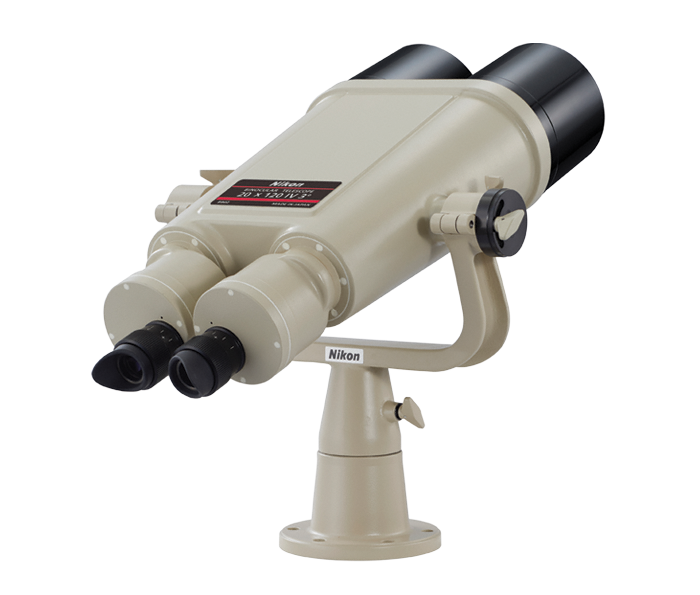
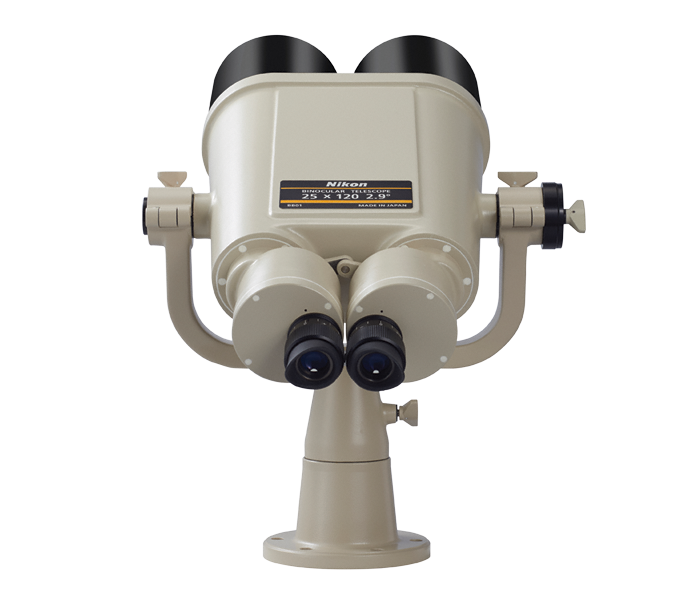
For a 120 mm binocular telescope with a supplied fork mount, compare Nikon's 20x120 IV with the 25x120. The 20x version publishes a 3.0° real field and 55.3° apparent field; the 25x version publishes 2.9° real and 64.7° apparent. Both list a 493.8 oz binocular body before the 194 oz fork, require a prepared base, and are not portable tripod binoculars.
- Both exact Nikon models have 120 mm objectives and are listed with a fork mount. The mount must be bolted to a prepared base; it is not equivalent to a conventional binocular tripod adapter.
- The 493.8 oz figure is the binocular telescope body only. The separately listed 194 oz fork and a suitable base add to the installed system mass; the optional pillar stand is separate.
- Nikon specifies waterproofing to 2 m for 10 minutes, but these instruments are not intended for underwater viewing. The eyecups are not compatible with eyeglasses in the manual's described setup.
Comparison updated 29 October 2026.
The power choice changes framing, not the base requirement
For a 120 mm instrument, the 20x120 IV is the lower-power, slightly wider-real-field choice; the 25x120 is the higher-power option with the wider apparent-field figure. Both share the same 120 mm objective, body mass, fork and base-installation requirement. Their published real fields are 3.0° and 2.9°, while their apparent fields are 55.3° and 64.7°; these are different field conventions, so compare like with like and do not infer optical quality from field width.
A fork mount is not an ordinary tripod adapter
If a supplied fork mount is essential, choose between these two Nikon 120 mm binocular telescopes only if a fixed prepared base suits your installation; neither is simply a tripod-adapted handheld pair. The shared manual requires six matching 12 mm fastening holes and bolts or nuts; the optional pillar stand is separate. Include the fork's mass and installation in the plan, and confirm the exact purchased package before assuming the fork is in the box.
Questions that change the choice
Is the 493.8 oz number the complete mounted weight?
No. It is the body mass of the binocular telescope. Nikon lists the fork mount separately at 5.5 kg (194 oz), and a base or optional pillar stand adds further system mass.
Can I use the fork-mounted telescope like normal handheld binoculars?
No. The 20x120 and 25x120 are designed for a secured fork mount on a prepared base. The manual's six-hole fastening requirement is different from an ordinary tripod-adapter connection.
Which one works with glasses?
The shared Nikon manual says the attached horn eyecups require eyeglasses to be removed. The listed eye-relief values should not be treated as a glasses-compatibility guarantee.
Does waterproofing allow underwater use?
No. Nikon's specified 2 m / 10 minute limit is protection information, not approval for underwater viewing or strong running-water pressure.
Sources for the comparison