
On this page
A 15x56 with a confirmed adapter in the box
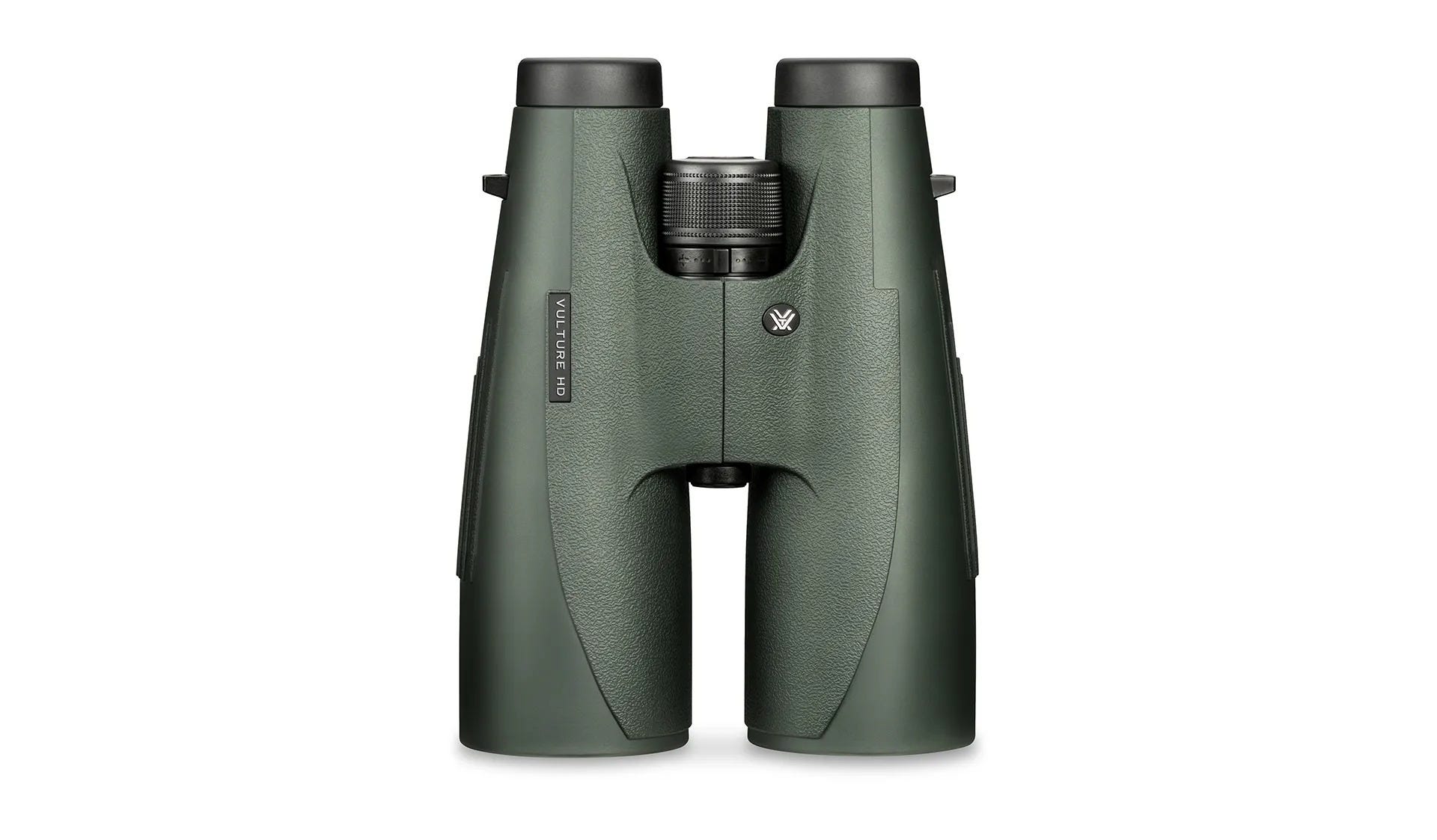
The Vulture HD 15x56 is a 43.6 oz fixed 15x choice with a 4.3° real field and a SKU-specific tripod adapter in the box. It is smaller and lighter than the SkyMaster Pro ED 15x70 but does not provide the same astronomy-filter threads; its waterproof claim has no stated immersion limit.
Explore the needs this model fits
Your needs, this model
Does it fit your priorities?
Are you looking for this exact fixed 15x56 Vulture rather than a lower-power or other objective size?
The exact VR-1556 page and SKU sheet identify 15x56. It is a high-power, large-objective configuration, not an 8x/10x walking-pair substitute.
Explore this need in the finder →Must tripod adaptability and an in-box tripod adaptor be confirmed?
Vortex recommends a tripod for this model, and the exact VR-1556 sheet lists a 400 Tripod Adaptor. A tripod itself is separate.
Explore this need in the finder →Can you accept the listed weight and short 15 mm eye relief?
The exact page lists 43.6 oz and 15 mm. Those values fit a 44-ounce maximum and a 15 mm eye-relief floor but not a strict 16 mm eye-relief minimum.
Explore this need in the finder →The Vortex Vulture HD 15x56 is a high-power binocular built around distant, deliberate viewing rather than quick scanning. Its 15x magnification, 56 mm objectives and included tripod adapter make the most sense when you can brace or mount it; the 43.6-ounce instrument and narrow 226-foot field are meaningful costs if you plan to walk with it all day.
A distant-viewing tool, not a general walking pair
Vortex lists this fixed 15x56 configuration under Limited Distribution as SKU VR-1556. The page gives a 4.3-degree real field, or 226 feet at 1,000 yards, 15 mm eye relief and a 15-foot close-focus distance. The large objectives do not make the field wide: high magnification keeps the view comparatively narrow, so locating a fast bird or sweeping nearby brush is less natural than with an 8x or 10x binocular. Once you have found a distant subject, the higher power can make it occupy more of the view.
The listed 3.7 mm exit pupil is the objective diameter divided by magnification. It is a geometric specification, not a lab measurement of brightness or a promise about dawn performance. Light conditions, eye placement and the observer all matter. The 15 mm eye-relief figure also deserves a real try with your own glasses; the number cannot guarantee that a particular frame lets you see the whole field.
Plan to support it
Vortex specifically recommends tripod use for the Vulture HD and says a tripod adapter is included. Its box list also names a rainguard, tethered objective covers, comfort neck strap and padded case. The separate one-page SKU-specific parts and in-box sheet identifies the model as VR-1556, confirms 15x magnification and lists a 400 Tripod Adaptor in the package. The tripod itself is not listed as included. This is useful support equipment, but do not read the accessory listing as proof that a tripod will be compatible with every head or that support is mandatory for every glance.
At 43.6 ounces before the strap, case or any other carry items, the binocular is not especially light. At 15x, small hand movements are also conspicuous. For fixed overlooks, long glassing sessions or careful inspection of distant terrain, the adapter gives you a sensible way to stabilize the view. For casual sideline use, travel, birding in motion or subjects that move quickly across a wide scene, a lighter 8x or 10x model with a wider field will usually be easier to deploy. The Vulture's high power is a deliberate specialization, not a free upgrade.
Optics and protection, with limits on what the labels prove
The exact page identifies a roof-prism design and lists phase correction, XR Plus anti-reflective coatings, ArmorTek exterior-lens protection, rubber armor and an HD optical system. Vortex describes that HD system as selected glass elements intended to improve resolution, reduce chromatic aberration and support color fidelity. The page does not explicitly identify extra-low-dispersion (ED) glass for this SKU, so do not assume that the “HD” label alone meets a strict ED-glass requirement. These are manufacturer-described features, not independent measurements of contrast, sharpness or low-light performance.
Vortex describes the binocular as waterproof, fogproof and shockproof. No IP code, immersion depth or duration appears on the reviewed page, so those terms should not be turned into an underwater-use claim. The supplied manual is a general binocular operation manual rather than a model-specific optical specification table. It explains eyecup and interpupillary adjustment, focus and diopter setup, lens care, and warns against pointing binoculars at the Sun. Use the model page and the SKU-specific sheet for the 15x56 figures and package identity.
How it compares with other high-power choices
If you are deciding between 15x56 and the Vortex Kaibab HD 18x56, both are large-objective, high-power binoculars and both are better considered as supported instruments than carefree pocket carry. The Kaibab raises magnification to 18x but its exact page lists a 194-foot field and 19.8-foot close focus, compared with the Vulture's 226 feet and 15 feet. That trade may be useful for a stationary distant target but is not automatically better for scanning. Compare the Vulture with a 10x50 or 10x42 when a broader scene, easier handheld use or a smaller carry matters more than enlargement. These are choices about configuration and use, not a claim that one model has been independently tested as sharper.
Who should choose the Vulture HD 15x56?
Choose it when your priority is a strong fixed view for far subjects, you can use steady support, and you accept a heavy, narrow-field instrument. It can fit a long-range wildlife or hunting glassing routine where stopping to study a selected patch of ground is normal. In the finder, a 15x preference, 56 mm objective, waterproof requirement, confirmed tripod adaptability, an included adapter and a weight limit of at least 43.6 ounces describe the documented configuration. If you require an included adapter but cannot accept the separate tripod or heavier carry, use those constraints to look at lighter alternatives instead.
Pass if you need a wide scanning field, close-focus flexibility, very light carry, long eye relief, a laser rangefinder, or manufacturer-confirmed ED glass. It has no documented laser distance measurement or reticle in the exact page. Vortex's Limited Distribution label and Where to Buy route are not a promise of retailer stock. This assessment makes no claim about independent field testing, current street price or a verified retailer listing. Search the exact Vulture HD 15x56 name and VR-1556 rather than relying on “Vulture” alone.
Identity, specifications, manufacturer feature claims, protection language and package contents come from the Vortex Vulture HD 15x56 product page and its linked VR-1556 parts and in-box sheet. Basic setup and lens care follow the page-linked Vortex binocular product manual. Never use binoculars to view the Sun.
Key specifications
Key details at a glance
| Magnification | 15× |
|---|---|
| Objective diameter | 56 mm |
| Real field of view | 4.3° |
| Eye relief | 15 mm |
| Exit pupil | 3.7 mm |
| Close focus distance | 15 ft |
More specifications and setup details
| Manufacturer-published weight | 43.6 oz |
|---|---|
| Phase coatings confirmed | Yes |
| Lens and prism coatings | Exact page lists XR Plus anti-reflective lens coatings, phase correction for the roof prism, ArmorTek exterior protection and an HD optical system using selected glass elements. The page does not explicitly confirm ED glass for this SKU. |
| Water and fog protection | Vortex describes the model as waterproof, fogproof and shockproof. No IP code, immersion depth or duration is listed; underwater use is not established. These are manufacturer claims, not independent testing. |
| Tripod use | Vortex recommends tripod use and states an adapter is included; the exact VR-1556 XVIEW sheet lists part 400 as the Tripod Adaptor. The tripod itself is not listed as included. |
| Published weight note | Vortex lists 43.6 oz for the binocular. This is the published instrument figure, not an independently weighed sample or a full carry-system weight. |
| Manufacturer-rated waterproof | Yes |
| Built-in image stabilization confirmed | No |
| Integrated laser rangefinder | No |
| Onboard ballistic solution display | No |
| Tripod adapter in package | Yes |
Use the exact model’s instructions for operating limits, supplied equipment and version differences.
Sources for this review
Sources for this assessment
- Exact Vortex U.S. product page for Vulture HD 15x56, SKU VR-1556; optical specifications, Limited Distribution status, feature and package claims
- Official U.S. Limited Distribution page 4: positions 37–48 of displayed 131; VR-1556 at row 7, directory position 43
- Page-linked Vortex binocular product manual; exact linked filename contains M-00024-2; downloaded PDF footer reads M-00024-2
- VR-1556 SKU-specific one-page parts and in-box sheet; version 1 dated 2020-08-25
- Official image file linked from the exact VR-1556 page gallery; raw JPEG bytes retrieved and viewed

Choose your optical trade-off first.
Choose viewing purpose first, then magnification, objective size, scene width and any fit, weather or mounting constraint. A direct-Sun requirement is separate: only exact manufacturer-confirmed solar binoculars can pass it.
Your needs, this model
15x binoculars: 56 mm field pair or 70 mm astronomy format
Choose it when: This exact 15x56 is the lighter fixed-power example, with a 4.3° real field, manufacturer waterproof/fogproof claims and a confirmed included tripod adapter. It is the field-binocular configuration to consider when the 70 mm astronomy body is more size than needed.
15x binoculars: 56 mm field pair or 70 mm astronomy format →