
On this page
Your needs, this model
Does it fit your priorities?
Is 10x50 the right fixed-power, longer-relief Pro Hunter?
The exact SKU is fixed 10x50 and page/manual both list 23 mm eye relief; this is the line’s longest published relief but not a fit guarantee.
Explore this need in the finder →Does its 18-foot close focus meet a 20-foot maximum distance?
The exact official guide lists 18 ft close focus; this clears a 20 ft maximum-distance screen but is not a close-focus tool for very nearby subjects.
Explore this need in the finder →Can you supply the separate tripod adapter for supported viewing?
The guide confirms a covered socket and adapter-based tripod/monopod mounting, but the listed kit omits the adapter.
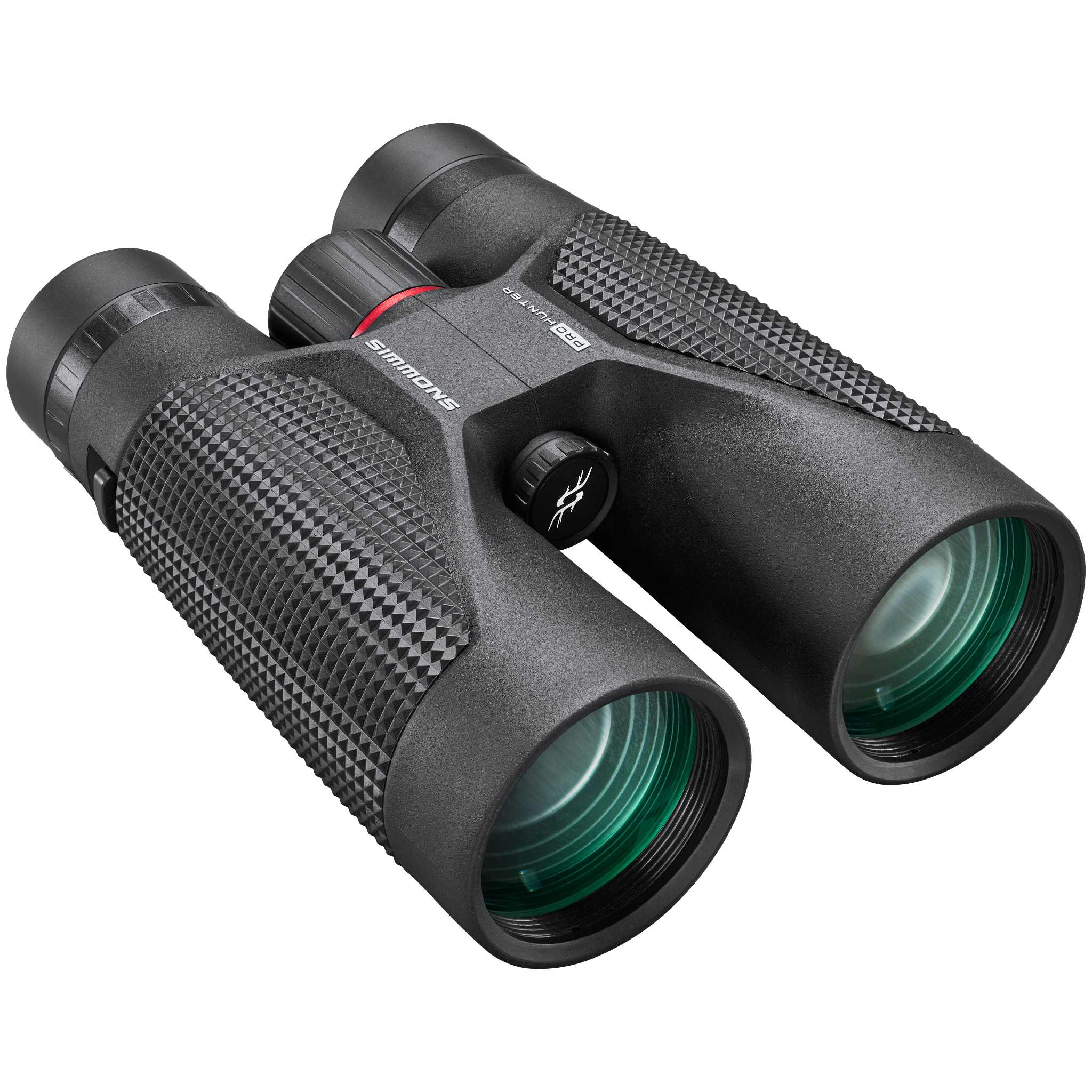
Explore this need in the finder →The Simmons Pro Hunter 10x50 keeps the family's 10x magnification but moves from the 42 mm to the 50 mm objective and has its longest listed eye relief, 23 mm. Bushnell's exact U.S. product page identifies SKU SI-SPH1050 and lists a 275-foot field at 1,000 yards; the shared owner guide gives the same field and eye-relief figures. This is the Pro Hunter to consider when you want a larger objective at 10x and longer stated relief, not when low carry weight or a wide sweep is the priority. I have not tested the optics in person.
More objective diameter, not a free brightness upgrade
Compared with the 10x42, this version keeps the same nominal power and uses a 50 mm objective. Bushnell publishes a 4.6 mm exit pupil, against 3.6 mm for the 10x42. Those are manufacturer specifications, not measurements from this review. The bigger lens and the stated exit-pupil difference may matter when your eyes can use the additional light, but a larger objective by itself does not guarantee a brighter or sharper image. Glass, coatings, your eye pupil, focus, atmospheric conditions and the specific sample all affect the view. Bushnell's claim of sharper low-light viewing is not a substitute for an independent test.
The extra aperture also changes what you carry. The page lists 6.8 inches long and 29.9 ounces; the official guide gives the same length but 29.3 ounces (831 g). That half-ounce-plus discrepancy is small in use but important if your questionnaire has a strict weight ceiling, so the exact weight stays unknown for hard filtering. It is roughly a two-pound class full-size optic either way, clearly heavier than the 24.5-ounce 10x42. The 275-foot field is narrower than the 10x42's 300 feet and the 8x42's 340 feet, so this is not the family's easiest version for sweeping quickly across nearby branches.
Eyeglass fit and near focus
At 23 mm, the 10x50 has the longest eye-relief figure in this family. That makes it the first Pro Hunter I would physically try if glasses are part of your viewing setup, but relief figures cannot guarantee a full field through every frame. The manual says to roll the twist-up eyecups down when wearing glasses and to set the hinge so the two images merge; test it with your normal eyewear before relying on the published number. Bushnell does not provide an IPD range for this variant in the reviewed guide.
The listed close focus is 18 feet. That covers ordinary wildlife observation, not detailed viewing of close plants or insects. The 8x42's 21-foot close focus is even longer; a close-detail use should steer you toward another exact model with a verified closer specification. The 10x50 is fixed power, so there is no zoom to adjust if a subject is too close or too wide to frame comfortably.
What the protection and tripod details establish
Both the manufacturer listing and guide describe IPX7 waterproofing and fogproof construction. The page also specifies a roof prism, BK-7 glass, fully coated lenses and a textured exterior. The available sources do not confirm ED glass, a phase-correcting roof coating, dielectric prism treatment, or nitrogen/argon fill for this exact configuration. The manual's separate mount socket accepts a compatible tripod adapter; its example is Bushnell #161002CM. The adapter is not listed in the standard package. That is useful for a stationary watch, but it adds setup and cost outside the included case, strap, lens covers and cleaning cloth.
IPX7 is not a license to leave optical equipment submerged. Keep the covers on in transit, clear grit before wiping, and follow the guide's recommendation to use a soft brush or blower rather than abrasive fabric or household glass cleaner. A rated body can protect against water ingress; it cannot prevent impact damage, scratched coatings or a poor fit to your eyes.
Where it sits in the four-model line
Against the 10x42, the 10x50 trades weight and field width for a larger objective, a wider published exit pupil and longer stated eye relief. Against the 12x50, it has the same objective size but less magnification, a slightly wider field (275 versus 270 feet) and more eye relief (23 versus 20 mm), which is a more forgiving handheld compromise. The 8x42 remains the simplest choice for finding movement. Choose the 10x50 if the specific 10x/50 mm/23 mm combination fits your observation and glasses needs; do not choose it solely on the generic promise of “low-light” brightness.
The U.S. page showed Add to Bag during this capture, but stock is not permanent. Use the exact SKU SI-SPH1050 in any retailer lookup so you do not accidentally compare the lighter 10x42. If strict mass, phase coating, ED glass, or included tripod hardware is an essential condition, this documentation does not provide all of those confirmations. As with any standard binocular, never look at the Sun through it.
Key specifications
Key details at a glance
| Magnification | 10× |
|---|---|
| Objective diameter | 50 mm |
| Eye relief | 23 mm |
| Exit pupil | 4.6 mm |
| Close focus distance | 18 ft |
| Water and fog protection | Manufacturer describes IPX7 waterproof and fogproof construction; no underwater use should be inferred. Exact instructions do not state immersion depth or duration. |
More specifications and setup details
| Tripod use | Manual confirms a covered threaded socket at the center hinge and a compatible separate 90-degree binocular adapter for a standard tripod or monopod. It does not state a direct 1/4-20 thread size; no adapter or tripod is listed in the package. |
|---|---|
| Published weight note | Exact page lists 29.9 oz; official guide table lists 29.3 oz / 831 g. Preserve both and leave strict matching weight unknown; no independent weighing was performed. |
| Manufacturer-rated waterproof | Yes |
| Built-in image stabilization confirmed | No |
| Integrated laser rangefinder | No |
| Onboard ballistic solution display | No |
| Tripod adapter in package | No |
Use the exact model’s instructions for operating limits, supplied equipment and version differences.
Sources for this review
Sources for this assessment
- Simmons Pro Hunter Binoculars | 10x50mm | Bushnell; SKU SI-SPH1050
- Simmons Pro Hunter Binocular Owner Guide revision 04-24; exact model table includes four SKUs
- Official Shopify product JSON for four Simmons Pro Hunter variant IDs, SKUs, GTINs, availability and featured-image URLs
- Bushnell/Simmons official image URL linked to SI-SPH1050 selected product variant
- Bushnell U.S. Hunt binoculars collection row; Simmons Pro Hunter family

Choose your optical trade-off first.
Choose viewing purpose first, then magnification, objective size, scene width and any fit, weather or mounting constraint. A direct-Sun requirement is separate: only exact manufacturer-confirmed solar binoculars can pass it.