
On this page
Your needs, this model
Does it fit your priorities?
Is a fixed 12x50 with a tripod port the right long-distance setup?
Leupold lists 12x50, a 262 ft/5.2° field and a built-in 1/4-20 rotatable tripod adapter port for exact part 188795. The narrow field and higher power favor a stable stance and distant subjects over quick broad scanning.
Explore this need in the finder →Do the published five-foot close-focus and 15 mm relief figures meet your screen?
The exact page lists 5 ft close focus and 15 mm eye relief. The former passes a six-foot close-focus ceiling; the latter is not a guarantee of full-field viewing with glasses.
Explore this need in the finder →Is the 26.6 oz 12x50 within your carry limit if extra reach matters?
The exact 188795 page lists a 26.6 oz weight, 12x50 format and 15 mm stated eye relief. A 27 oz ceiling passes the manufacturer-listed weight; this says nothing about glasses comfort or field steadiness.
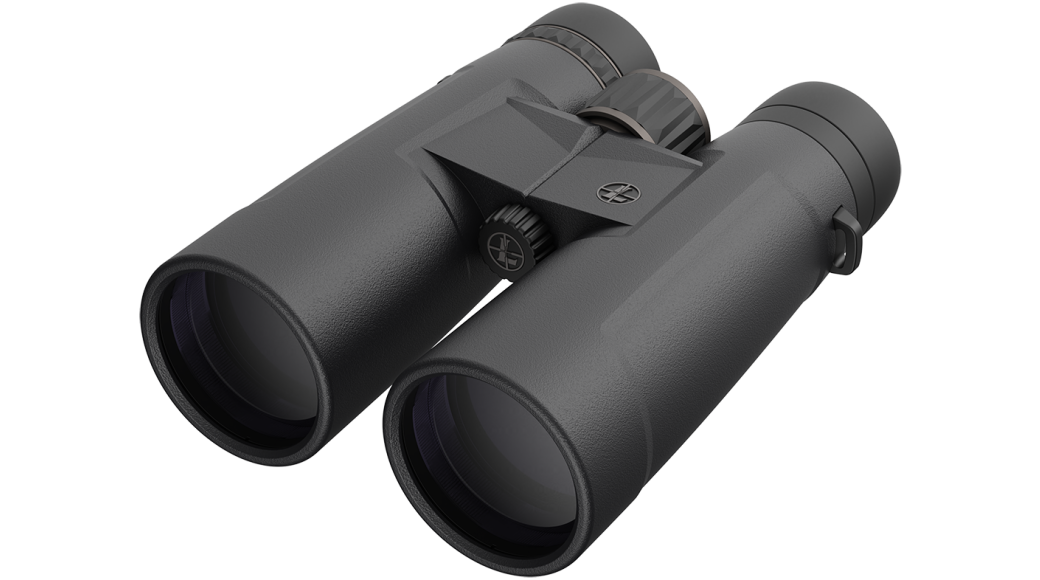
Explore this need in the finder →The Leupold BX-2 Timberline HD 12x50mm (part 188795) is the long-reach option in the two-model Timberline HD family. Its manufacturer table lists 12x magnification, a 50 mm objective and a 262-foot field at 1,000 yards, with a rotatable 1/4-20 tripod port. It is best considered when extra subject scale is a priority and you can accept a narrower scene and a 26.6-ounce instrument.
Choose reach with eyes open
Leupold lists a 5.2-degree real field, 262 feet at 1,000 yards, 15 mm eye relief, a 4.2 mm exit pupil and a 5-foot close-focus distance for exact part 188795. The 12x image scale can help when distant detail matters, but the narrower field makes it harder to reacquire a moving subject and gives you less scene around the target. At 12x, hand movement is also more visible than at lower magnification. A stable stance helps; for long observation sessions, use the confirmed tripod port with the appropriate separately selected adapter.
The 50 mm objective sounds larger than the 42 mm front end of the 10x42 sibling, but both products list a 4.2 mm exit pupil. That number is not a full measure of image quality or low-light performance, and no independent brightness or transmission test is available here. The 12x50’s larger lenses do not automatically make its image brighter in every condition. If evening viewing is essential, compare the two under your real lighting rather than letting objective diameter alone decide.
Size, field and mounting
The product page lists a length of 6.5 inches and a weight of 26.6 ounces. Against the 10x42, the 12x50 is 4.6 ounces heavier and 0.9 inch longer, while its field shrinks from 342 to 262 feet per 1,000 yards. Those are meaningful changes if you carry the binocular for hours or scan woodland edges. The 12x50 is the more specialized choice: extra magnification for a distant subject, in exchange for a heavier body and a tighter view.
Leupold confirms a built-in rotatable 1/4-20 tripod-adapter port. The listing does not identify a particular adapter or establish that one is included, so do not assume you can attach the bare binocular directly to every tripod head. The product description also lists a GO Afield chest harness, lens covers and a lens cloth. Those accessories support carrying and protection but do not replace mounting hardware. The large focus dial is described as easy to find with gloves; the removable twist-up eyecups can be replaced if damaged.
The close-focus specification is unusually short at 5 feet, compared with 7.7 feet for the 10x42. That can be helpful when a nearby subject matters, though a close-focus number does not guarantee a comfortable viewing position for every user. Try the actual focus travel and eye position if close observation is central to the purchase. For ordinary field scanning, the 10x42’s wider scene is likely the more convenient starting point.
Fit, optics and weather claims
Leupold lists 15 mm eye relief and a 60–74 mm interpupillary range. The 60 mm minimum is narrower in range than the 10x42’s listed 56 mm minimum; viewers with closely spaced eyes should check the hinge before buying. Fifteen millimeters is a useful stated value but not a promise of full-field viewing with eyeglasses. The linked manual gives general instructions for setting the interpupillary distance, eyecups and focus, but try the binocular with your own glasses if eye relief is a hard requirement.
The exact page describes High-Definition lens performance and Leupold’s Advanced Optical System, and calls the binocular waterproof and fogproof. It does not specify ED glass, prism type, every lens coating, an immersion depth or an IP rating. Keep those as unknowns instead of borrowing details from another product in the BX line. “Waterproof” is the manufacturer’s description; it is not a rating for underwater use.
Setup and best-fit buyer
The linked Binocular Owner’s Manual is general guidance, not a part-specific image-quality report. It explains setting the hinge for one circular image, using center focus and the right-eye diopter, adjusting eyecups, and cleaning lenses carefully. Remove loose grit with air or a soft brush before wiping; do not put cleaning fluid directly on the glass. A quick setup at home makes it easier to judge whether the smaller listed eye-relief and IPD limits suit you.
Shortlist the BX-2 Timberline HD 12x50 if you chiefly glass distant subjects and accept that 12x needs a steadier hold than 10x. Its tripod port provides an option for supported viewing, while the 5.2-degree field and 26.6-ounce weight are the main reasons not to choose it for fast broad scanning or a lightweight day carry. Prefer the 10x42 Timberline HD if a wider view and lower weight matter more. You can also compare the BX-3 Alpine HD 12x50, but make the decision from that exact model’s verified features rather than assuming a shared magnification and objective guarantee identical optics.
Search retailers by “Leupold BX-2 Timberline HD 12x50 binocular part 188795.” No exact retailer ASIN, current retail price or stock was verified. All numerical specifications and weather descriptions cited here come from Leupold; no sample or independent optical measurement was available.
Manufacturer sources: BX-2 Timberline HD 12x50mm, part 188795 and its linked Binocular Owner’s Manual.
Key specifications
Key details at a glance
| Magnification | 12× |
|---|---|
| Objective diameter | 50 mm |
| Real field of view | 5.2° |
| Eye relief | 15 mm |
| Exit pupil | 4.2 mm |
| Close focus distance | 5 ft |
More specifications and setup details
| Manufacturer-published weight | 26.6 oz |
|---|---|
| Lens and prism coatings | The manufacturer describes a High-Definition performance/Advanced Optical System, but the exact page does not specify ED glass, prism type, or a complete coating stack. |
| Water and fog protection | Manufacturer waterproof/fogproof description; no numeric immersion/IP specification located. |
| Tripod use | The exact product page confirms a built-in rotatable 1/4-20 tripod adapter port, but does not name an adapter model or confirm one is included. The port confirms compatibility; confirm adapter and tripod hardware separately. |
| Published weight note | Exact manufacturer-listed binocular weight. Carry accessories add weight; no independent weighing was performed. |
| Manufacturer-rated waterproof | Yes |
| Built-in image stabilization confirmed | No |
| Integrated laser rangefinder | No |
| Onboard ballistic solution display | No |
Use the exact model’s instructions for operating limits, supplied equipment and version differences.
Sources for this review
Sources for this assessment
- Leupold exact U.S. product page, part 188795
- Leupold Binocular Owner’s Manual (2023 artwork 56116P), linked from the exact product page; shared setup/care guidance, not SKU-specific optical evidence
- Exact manufacturer product-page-linked primary image URL for part 188795
- Previously archived Leupold U.S. binocular directory page 1, observed row 4
- Dated exact-name CPSC SaferProducts query; not a universal or future recall-clearance claim

Choose your optical trade-off first.
Choose viewing purpose first, then magnification, objective size, scene width and any fit, weather or mounting constraint. A direct-Sun requirement is separate: only exact manufacturer-confirmed solar binoculars can pass it.