Binoculars · Choose by your needs
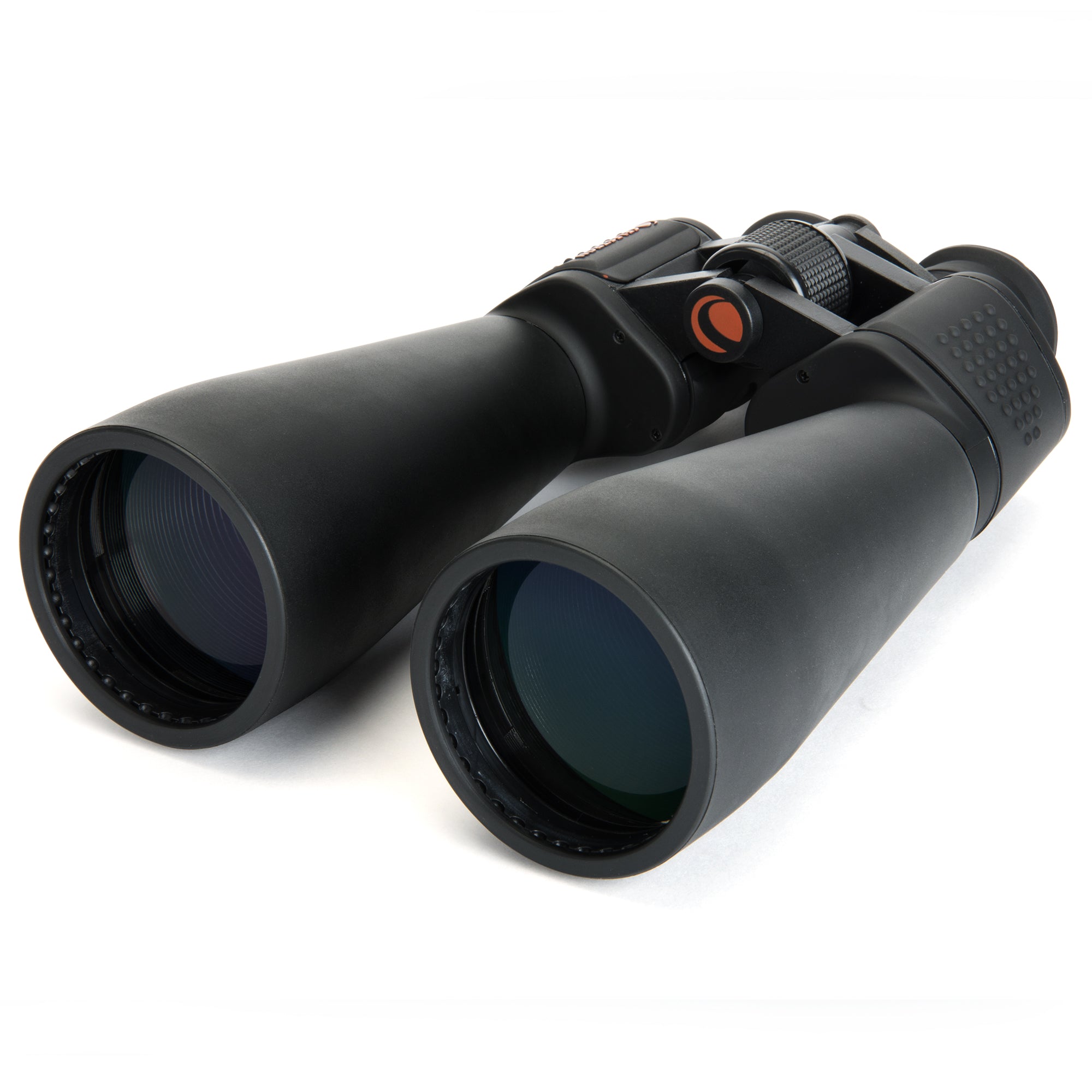
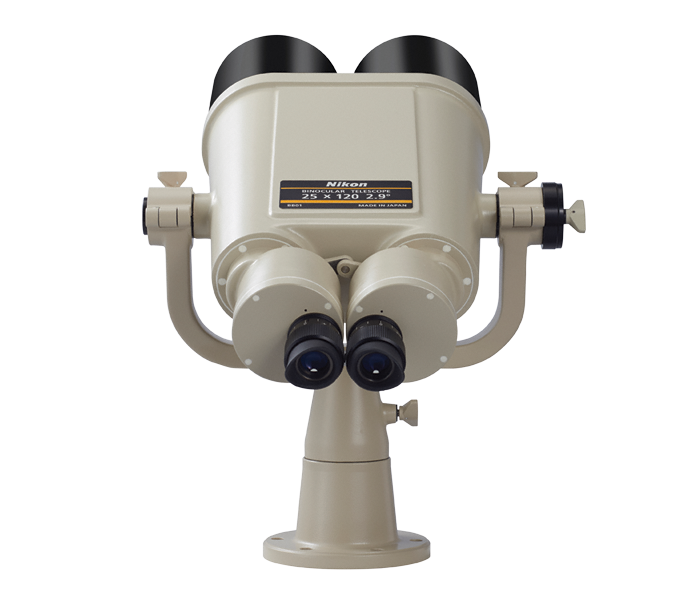
25x binoculars: portable tripod setup or fixed fork base
For exact 25x, the Celestron SkyMaster 25x70 is the lighter supported option at 52 oz and includes a binocular adapter; the Nikon 25x120 is a 493.8 oz binocular-telescope body with a separately listed 194 oz fork and prepared-base installation. Their published real fields are 2.7° and 2.9°, respectively. The Celestron still weighs more than 3 lb and lists 75 ft close focus, while Nikon's mount is not an ordinary tripod adapter.
- Fixed 25x magnification; ordinary viewing, not direct solar use.
Comparison updated 29 October 2026.
Account for the mount and base, not only the 25x label
The SkyMaster's included adapter is a connection to a user-supplied tripod. Nikon's 25x120 is a binocular telescope that uses a dedicated fork; the fork then bolts to a substantial prepared base. Those arrangements are not substitutes, and the 25x120's body and fork mass should be budgeted separately.
The same magnification does not mean the same field or use
Celestron lists a 2.7° real field and 75 ft close focus for the 25x70. Nikon lists 2.9° real field for the 25x120; its individual-focus setup and fixed base point to a stationary plan. Compare these exact specifications with your subject distance and installation, not as a ranking of optical quality.
Questions that change the choice
Does the Celestron adapter include its tripod?
No. The package includes a binocular adapter; the tripod itself is separate.
Can the 25x120 mount use an ordinary tripod adapter?
No. The Nikon manual specifies a fork mount bolted to a prepared base through six matching 12 mm holes.
Which 25x example can focus closer?
Celestron lists 75 ft for its 25x70. Nikon lists 436.4 ft for the 25x120. These are exact-model specifications, not close-range observing distances.
Sources for the comparison