
On this page
Your needs, this model
Does it fit your priorities?
Are you comparing the older VPR-5012-HD specifically, rather than current V203?
Choose earlier models only when identifying or comparing this exact inactive VPR-5012-HD SKU. It is a different model record from current-reference V203 despite the shared Viper HD 12x50 name.
Explore this need in the finder →Do you require a real field of at least six degrees for broad scanning?
No: VPR-5012-HD is listed at 4.8° and 252 ft at 1,000 yd, below this threshold; the newer V203 is listed at 5.5°/288 ft, also below six degrees. Neither meets a strict six-degree request.
Explore this need in the finder →Do your glasses require at least 16 mm of stated eye relief?
The older VPR-5012-HD page lists 15 mm, so it fails a strict 16 mm numeric screen. Try the actual eyecup/eye position; the later V203 states 16 mm, which still does not guarantee fit.
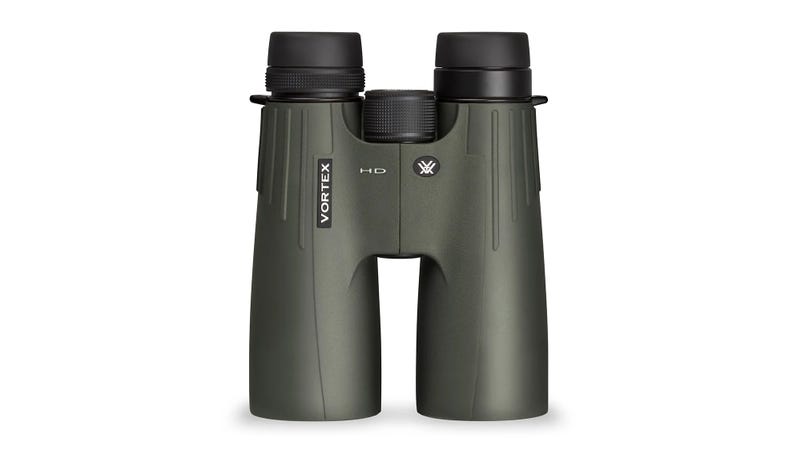
Explore this need in the finder →This is the earlier Vortex Viper HD 12x50 with U.S. SKU VPR-5012-HD—not the later current-reference V203 that has the same Viper HD 12x50 name. The exact VPR product page marks it INACTIVE and lists 12x50, a 4.8° angular field (252 feet at 1,000 yards), 15 mm eye relief and 28 ounces. Use this assessment to identify an existing or specifically encountered older unit; current stock, used condition and price were not verified.
Read the SKU before comparing the name
The model identity matters because two generations/configurations share the broad Viper HD 12x50 name. The earlier VPR-5012-HD page lists a narrower 4.8° field and 252 feet at 1,000 yards, 15 mm eye relief, an 8.5-foot close-focus distance and 28 ounces. The separate V203 page lists 5.5°/288 feet, 16 mm eye relief, 8-foot close focus and 28.8 ounces. Those are manufacturer-published figures, not independent measurements; neither establish a test winner. Check the exact label and SKU on a listing, instrument or service document rather than transferring one version’s specifications to the other.
At twelve power, distant subjects look larger than with an 8x or 10x pair, but hand movement is more visible and the 4.8° scene is comparatively narrow. It is a reach-oriented size, not the easy way to sweep for birds in motion. A six-degree real-field requirement rules it out. The 50 mm objectives create an exit-pupil ratio of about 4.2 mm (50 divided by 12); this arithmetic is not a brightness rating or promise of low-light performance. The published 28-ounce instrument weight is distinct from the case, strap and other carried equipment.
Fit, focus and the included kit
The VPR-5012-HD page gives 15 mm eye relief and the linked Viper HD manual explains that eyecups twist up and down; its instructions say to lower them for viewing through glasses. That makes the numeric figure a useful screening value, not a guarantee that your frames show the complete field. Test the exact instrument with your normal glasses if eye relief is essential. The page’s 59–75 mm interpupillary range is also a screening range: adjust the hinge until you see one unshaded image.
For initial focus, the shared seven-page M-00170-1 manual instructs setting interpupillary spacing, focusing the left eye with the center wheel, then adjusting the right-eye diopter and pushing the ring down to lock it. Once set, ordinary refocusing uses the center wheel. Keep the eyepiece and objective covers on between views, let wet optics dry before putting them away, and remove loose grit before wiping. The manual explicitly warns not to look at the Sun through ordinary binoculars.
The exact inactive page lists a rainguard, tethered objective covers, comfort neck strap and deluxe padded carry case in the box. That is a useful distinction from the later V203 page’s GlassPak harness/case listing; do not assume the same package. The manual diagram shows a tripod-adapter socket, but the inspected page does not identify an included adapter or its exact model. If you need supported viewing, verify and obtain a compatible adapter rather than assuming it came in the box. The sources reviewed here do not establish an IP rating, immersion depth, fogproof rating or image stabilization for VPR-5012-HD; those unknowns should not be treated as satisfied needs.
When the earlier version makes sense
Choose the earlier-model filter only when the exact VPR-5012-HD matters—for example, you are identifying an instrument you own, checking a particular seller offer or comparing the earlier configuration with the V203. The inactive page is not evidence of present inventory, working condition or a seller’s warranty. If considering a secondhand pair, inspect both optical paths, hinge movement, center focus and diopter lock in person; source-based specifications cannot establish an individual sample’s alignment or condition.
If you are choosing a current Viper 12x50 rather than identifying an older unit, compare the V203 page and its current family listing as a distinct configuration. If you want a broader real scene, lower-power 10x50 or 10x42 alternatives are more natural to compare than either 12x model; if long handheld viewing is essential, try the actual weight and steadiness before committing. None of these comparisons establishes measured optical superiority.
Exact earlier identity, Inactive state and specifications: Vortex Viper HD 12x50 SKU VPR-5012-HD. The linked operation document is Viper HD manual M-00170-1. For the same-name but distinct configuration, see Viper HD 12x50 SKU V203. No ownership test, independent optical measurement, used-item inspection, or retailer-stock check is claimed.
Key specifications
Key details at a glance
| Magnification | 12× |
|---|---|
| Objective diameter | 50 mm |
| Real field of view | 4.8° |
| Eye relief | 15 mm |
| Exit pupil | 4.17 mm |
| Close focus distance | 8.5 ft |
More specifications and setup details
| Manufacturer-published weight | 28 oz |
|---|---|
| ED glass confirmed for this exact model | Yes |
| Locking diopter ring confirmed | Yes |
| Lens and prism coatings | The exact VPR-5012-HD page describes HD (High Density) extra-low dispersion glass; it does not establish other coatings or a measured resolution/transmission level. |
| Water and fog protection | The exact inactive product page does not supply an IP code, immersion depth/duration or a waterproof/fogproof rating in the reviewed specifications; no underwater or weather-resistance promise is made here. |
| Tripod use | The M-00170-1 operation manual diagram identifies a tripod adapter socket. The exact page/manual do not identify an included adapter or a specific adapter model; support requires a compatible separately sourced adapter. |
| Published weight note | Exact Inactive VPR-5012-HD page lists 28 oz; manufacturer specification, not independently weighed instrument or total carry kit. |
| Integrated laser rangefinder | No |
| Onboard ballistic solution display | No |
| Tripod adapter in package | No |
Use the exact model’s instructions for operating limits, supplied equipment and version differences.
Sources for this review
Sources for this assessment
- Official U.S. Viper HD 12x50 exact page; SKU VPR-5012-HD and Inactive label; structured web extraction retained because a direct raw HTML GET returned 406
- Manufacturer manual VTX_M-00170-1 linked from the exact VPR-5012-HD page; byte-identical to the previously archived Viper HD family manual; English sections individually inspected
- Official front-view image link opened from exact VPR-5012-HD product page; original 800x450 JPEG bytes archived and visually inspected
- Separate current-reference Viper HD 12x50 U.S. SKU V203 product page; consulted only to prevent alias-merging with VPR-5012-HD

Choose your optical trade-off first.
Choose viewing purpose first, then magnification, objective size, scene width and any fit, weather or mounting constraint. A direct-Sun requirement is separate: only exact manufacturer-confirmed solar binoculars can pass it.