
On this page
Your needs, this model
Does it fit your priorities?
Are you looking to identify or compare this exact inactive Viper 15x50 SKU?
The exact U.S. page identifies VPR-150-VX and marks it INACTIVE. Include it only when earlier models are enabled; do not treat it as a current offer.
Explore this need in the finder →Do you need the exact fixed 15x50 mm configuration?
The exact page identifies 15x power and 50 mm objectives. A different objective class is a different configuration.
Explore this need in the finder →Can you accept its listed field, or is a six-degree real field essential?
Vortex lists 4.0° for this exact SKU, below the six-degree wide-real-field threshold. Without that essential requirement it can remain in an earlier comparison; with it, reject this configuration.
Explore this need in the finder →Does the listed 16.0 mm eye relief meet your minimum?
Vortex lists 16.0 mm for this exact SKU. It meets that numeric minimum but not a stricter 17.0 mm threshold; frame fit still needs an actual try-on.
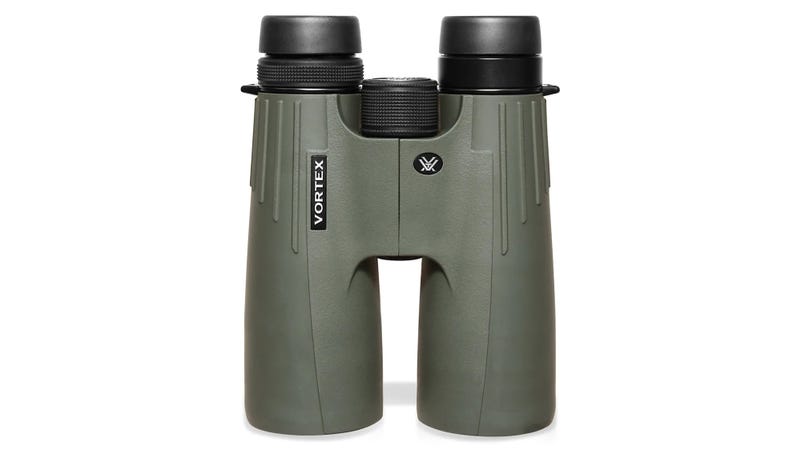
Explore this need in the finder →The Vortex Viper 15x50, U.S. SKU VPR-150-VX, is an earlier binocular for identifying a particular unit or comparing its specification set with another model. Vortex labels the exact page INACTIVE. This is not a current buying offer; stock, seller, and the condition of any used pair are unknown.
What the extra magnification buys—and costs
The fixed 15x setting is for pulling a distant subject closer in the view, not for sweeping quickly across a broad scene. Vortex lists a 4-degree real field, or 210 feet at 1,000 yards. That is the narrowest field among the three standard Viper 50 mm configurations covered here: the 10x50 lists 5.3 degrees/278 feet and the 8.5x50 lists 5.8 degrees/305 feet. If a bird disappears behind brush or a boat moves across the scene, reacquiring it through the 15x50 takes more deliberate pointing. At the same time, higher magnification makes hand movement look larger. Do not choose it just because “more power” sounds like better general-purpose binoculars.
The 50 mm objectives have a calculated 3.33 mm exit pupil at 15x, and Vortex publishes that same figure. The aperture is large, but the high power reduces the exit-pupil diameter compared with the 5 mm 10x50 and 5.88 mm 8.5x50. Those geometry figures do not establish transmission, contrast, or how bright an image will look in a particular observer’s conditions. They do explain why the 15x50 is not automatically the best of these three for dim scenes simply because its front lenses are large.
Fit the eye position and carry plan
The exact page lists 16 mm eye relief, interpupillary spacing from 59 to 75 mm, and a close-focus distance of 8.2 feet. Sixteen millimeters is the shortest listed eye relief in the standard Viper trio, so an eyeglass wearer should try the exact binocular with their own frames rather than assume they can see the full field. The 8.2-foot near-focus figure is for subjects beyond arm’s reach, not a close nature-detail tool.
Vortex lists the instrument at 27.2 ounces and 6.7 by 5.2 inches. That is a full-size carry item; the stated mass is not a complete kit with the included deluxe padded case and contoured neck strap. The package listing also names a rainguard and tethered objective covers. A serious 15x handheld view can be demanding over a long stationary look. This source does not confirm a tripod socket, an adapter model, or an adapter in the box, so check those details before planning a supported setup instead of assuming it will mount.
Who should keep this exact model in view?
It makes sense as a reference if you already own a VPR-150-VX, are identifying one in a collection, or specifically want to compare the older 15x50 specification. It is less compelling for a walking birding kit, a broad landscape scan, or a buyer whose strict glasses comfort depends on generous eye relief. If the real priority is a broad real field at high magnification, the separately reviewed current-reference Viper HD 10x50 (SKU V202) lists a wider 6.6-degree field, but it is 10x rather than 15x and is not the same optical configuration. If more field and easier aiming matter more than reach, compare this model’s inactive 10x50 and 8.5x50 siblings by their own figures; those are earlier references too, not substitutes with verified live availability.
There is no verified water-resistance rating, immersion limit, fog-proof claim, or independent optical measurement in the material supporting this profile. Treat weather protection and performance promises as unknown. The official page lists an included kit, but it does not establish what accessories remain with any particular used pair. Before considering one secondhand, confirm the VPR-150-VX marking, check the lenses and hinge for damage, and verify focus operates smoothly; no inspection of a specific unit is claimed here.
Exact name, INACTIVE status, listed specifications, and box contents: Vortex Viper 15x50, SKU VPR-150-VX. The exact page does not supply an environmental protection rating or verify an adapter package; keep those details separate from its listed optical specifications.
Key specifications
Key details at a glance
| Magnification | 15× |
|---|---|
| Objective diameter | 50 mm |
| Real field of view | 4° |
| Eye relief | 16 mm |
| Exit pupil | 3.33 mm |
| Close focus distance | 8.2 ft |
More specifications and setup details
| Manufacturer-published weight | 27.2 oz |
|---|---|
| Lens and prism coatings | The exact VPR-5010-HD page describes HD (High Density) extra-low dispersion glass. It does not establish other coatings or measured resolution/transmission. |
| Water and fog protection | The exact manufacturer page does not give an IP code, immersion limit, or confirmed water/fog-protection rating; these remain unknown. |
| Tripod use | The exact page lists no adapter in the box contents; this research does not establish adapter compatibility or model. |
| Published weight note | Vortex lists 27.2 oz for the binocular instrument only, not the case/strap/carry kit. |
| Built-in image stabilization confirmed | No |
| Integrated laser rangefinder | No |
| Onboard ballistic solution display | No |
Use the exact model’s instructions for operating limits, supplied equipment and version differences.
Sources for this review
Sources for this assessment
- Official Vortex U.S. inactive binocular directory page 2, card row 7 of items 13–24 of 56; exact Viper 15x50 link.
- Exact U.S. Vortex page identifies Vortex Viper 15x50, SKU VPR-150-VX, and marks it INACTIVE; page-linked description/specs/package reviewed individually.
- Exact standard Viper page links VTX_VPR-32-50_VPR_BIN_P_PM_WEB.pdf; attempted retrieval preserved only the HTML viewer response, not manual contents.
- Exact product page-linked Vortex image response; archived and personally viewed. Image pixels do not establish the magnification/SKU.

Choose your optical trade-off first.
Choose viewing purpose first, then magnification, objective size, scene width and any fit, weather or mounting constraint. A direct-Sun requirement is separate: only exact manufacturer-confirmed solar binoculars can pass it.