
On this page
Your needs, this model
Does it fit your priorities?
Do you prefer 12x magnification with a 50 mm objective, or a different power/field balance?
The exact inactive SKU RZR-5012-HD is 12x50; its listed real field is 278.3 feet at 1,000 yards. A current-scope request should use a different exact SKU.
Explore this need in the finder →Will the manufacturer's listed 39.5 oz instrument weight fit your carry limit?
The exact page lists 39.5 ounces; the body is a substantial full-size binocular, and any lower hard limit should reject it rather than rounding.
Explore this need in the finder →Is confirmed tripod-adapter compatibility essential, even when the adapter is an additional accessory?
The linked manual shows a tripod-adapter socket, but the exact box list has no adapter. Optional supported mounting requires the compatible adapter as an extra; the inactive reference remains excluded from buying matches.
Explore this need in the finder →The Vortex Razor HD 12x50, SKU RZR-5012-HD, is the highest-power member of this older Razor HD group. Its manufacturer page lists a 278.3-foot field at 1,000 yards, 39.5-ounce weight and 19 mm eye relief. Those numbers describe a full-size binocular for deliberate distant viewing, not a light all-day carry choice. Vortex lists this exact product as inactive; this page is a model-identification reference, not a current purchase recommendation.
More reach, a tighter scene
Twelve power makes distant detail appear larger than with the 10x50 or 8.5x50 versions, but the stated field narrows to 5.3 degrees, or 278.3 feet at 1,000 yards. That is the tightest view among the five older Razor HD configurations covered here. When you are following birds in flight, scanning a tree line, or panning across a hillside, the narrower scene can make it harder to find and keep a moving subject. A support or a patient stationary viewing position helps make the higher magnification useful; it does not change the field width.
The 50 mm objectives give this configuration a calculated 4.17 mm exit pupil (50 divided by 12). That is optical geometry, not a brightness measurement. Actual perceived brightness also depends on transmission, your eye, fit, contrast and conditions; the archived product page gives no measured transmission result. A larger front lens is not a guarantee of a bright image in every dawn or dusk situation. If your priority is a larger exit pupil and easier scanning, the same page family’s 8.5x50 lists 5.9 mm and a much broader 362.3-foot field. The 10x50 falls between those viewing styles.
Full-size handling and eye fit
At 39.5 ounces and 7.4 by 5.6 inches, this is a substantial instrument. A chest harness may make carrying it more manageable, but the listed bare binocular weight remains the relevant starting point for a hard pack limit. The published 19 mm eye relief and 54–75 mm interpupillary range help screen for fit; neither can guarantee that your glasses or face shape will show the full field comfortably. Try the eyecups while wearing the eyewear you actually use. The 8.5x50 has a longer listed 20 mm relief, while the 42 mm models weigh 29.5 ounces and have shorter stated close focus.
The exact page lists close focus at 14 feet. That is adequate for ordinary distant wildlife observation but not the best match for viewing nearby insects or flowers; the 42 mm siblings list 8 feet. The product page does not identify an ED-glass designation, transmission value or numerical environmental rating. “HD” in the product name is not a substitute for a documented ED-glass requirement. Keep those characteristics unknown rather than treating the name as proof.
Set the binocular up before judging it
The five-page Razor HD operation manual linked from the product page explains how to set the two eyepiece barrels to your interpupillary distance so the view merges into one image without shading. It also describes the center-focus and locking-diopter sequence: focus for the left eye, set the right-eye diopter, then lock it. That setup matters especially when you compare configurations, because a mismatched diopter or barrel spacing can make a sharp image feel poor. The manual recommends protecting the lenses with the supplied rainguard and tethered objective covers, removing grit before wiping, and using a lens-safe brush or cloth instead of clothing.
The manual diagram shows a tripod-adapter socket, so a tripod-supported plan is possible with a compatible adapter. The product page’s “Included in the Box” list contains the rainguard, tethered objective covers, comfort neck strap and deluxe padded carry case; it does not list the adapter. Treat that accessory as separate unless the particular used package is independently verified. This is passive optical glass: it is not a stabilized image system and does not measure range.
Who should compare this reference
This older SKU is most useful when identifying a used Razor HD 12x50 or comparing a historical specification sheet. Its 12x view can suit a stationary observer who puts fine distant detail ahead of a broad scan and accepts a heavy body. It is a poor fit for a strict under-30-ounce carry cap, a wide-field requirement, close-focus viewing, or anyone who needs a current-model recommendation. The newer Razor HD 12x50 uses a different RZB-series SKU and its own published figures; do not assume a similar name means interchangeable specifications. For a current, lower-power 50 mm option, compare that current 10x50; for an even wider scan, consider an 8x42 configuration. Neither alternative is the old RZR-5012-HD.
This assessment is based on the exact Vortex U.S. product page and the linked Razor HD operating manual, not a lab test or ownership report. For comparison with the later generation, see the current Razor HD model review. See the Razor HD 12x50 page and Razor HD operation manual.
Key specifications
Key details at a glance
| Magnification | 12× |
|---|---|
| Objective diameter | 50 mm |
| Real field of view | 5.3° |
| Eye relief | 19 mm |
| Exit pupil | 4.17 mm |
| Close focus distance | 14 ft |
More specifications and setup details
| Manufacturer-published weight | 39.5 oz |
|---|---|
| Locking diopter ring confirmed | Yes |
| Tripod use | The linked manual diagram identifies a tripod-adapter socket. The exact page box list does not include an adapter; the compatible adapter model is not established in the reviewed sources. |
| Published weight note | Manufacturer-published instrument weight on the exact archived U.S. product page; no independent specimen weighing was performed. |
| Tripod adapter in package | No |
Use the exact model’s instructions for operating limits, supplied equipment and version differences.
Sources for this review
Sources for this assessment
- Vortex exact U.S. Razor HD 12x50 product page identifying SKU RZR-5012-HD; specifications and box contents inspected.
- Vortex linked five-page Razor HD operating manual; it documents fit, focusing, lens protection and a tripod-adapter socket, but no per-SKU numerical specifications.
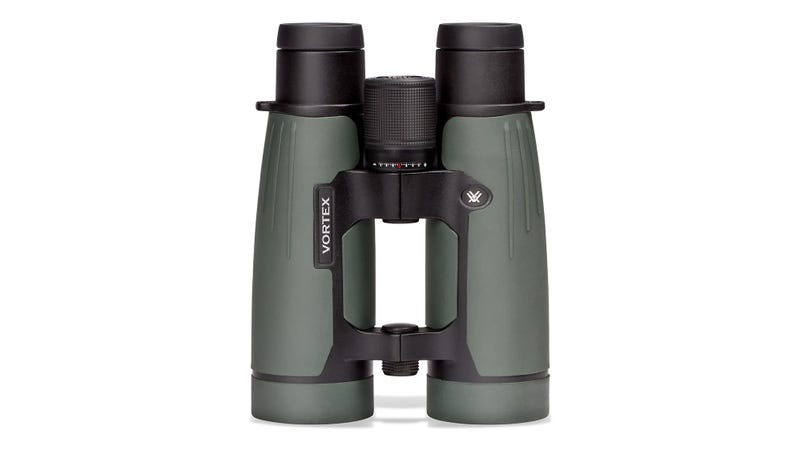
- Official image file linked by this exact manufacturer product page; local original is archived and personally inspected. The power marking is not legible in the shared front view.
- Vortex U.S. inactive Razor-family snapshot; individually resolved exact SKU card and page link.
- Vortex U.S. exact product page, Razor HD 12x50, SKU RZB-2104

Choose your optical trade-off first.
Choose viewing purpose first, then magnification, objective size, scene width and any fit, weather or mounting constraint. A direct-Sun requirement is separate: only exact manufacturer-confirmed solar binoculars can pass it.