
On this page
Your needs, this model
Does it fit your priorities?
Do you prefer 10x magnification with a 42 mm objective, or a different power/field balance?
The exact inactive SKU RZR-4210-HD is 10x42; its listed real field is 330.8 feet at 1,000 yards. A current-scope request should use a different exact SKU.
Explore this need in the finder →Will the manufacturer's listed 29.5 oz instrument weight fit your carry limit?
The exact page lists 29.5 ounces; the body is a substantial full-size binocular, and any lower hard limit should reject it rather than rounding.
Explore this need in the finder →Is confirmed tripod-adapter compatibility essential, even when the adapter is an additional accessory?
The linked manual shows a tripod-adapter socket, but the exact box list has no adapter. Optional supported mounting requires the compatible adapter as an extra; the inactive reference remains excluded from buying matches.
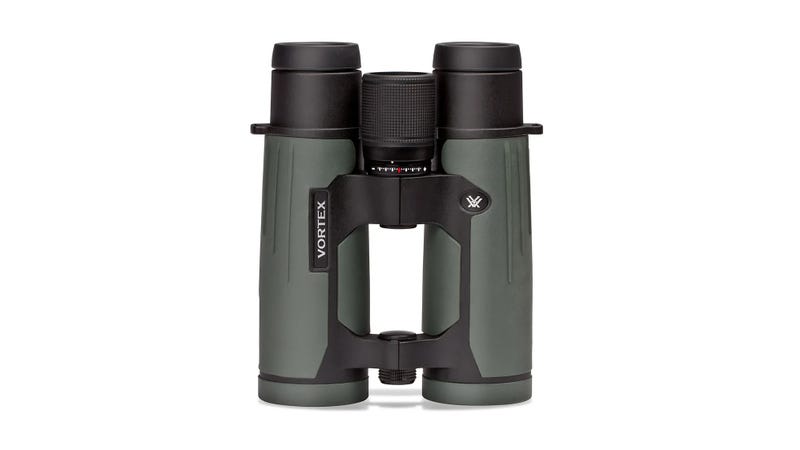
Explore this need in the finder →The older Vortex Razor HD 10x42, SKU RZR-4210-HD, is a full-size roof binocular with ten-power magnification and 42 mm objectives. Its official U.S. page lists 330.8 feet at 1,000 yards, 29.5 ounces, 18 mm eye relief and an 8-foot close-focus distance. The exact RZR-series product is marked inactive and should remain a historical reference, separate from the later RZB-series Razor HD 10x42.
Ten-power reach in a less heavy body
The 10x42 keeps the nominal 10x magnification of the older 10x50 but weighs nine ounces less by the manufacturer’s listed figures. It also gives up the larger objectives: a 42 mm front lens yields a calculated 4.2 mm exit pupil at 10x, compared with 5 mm for the 10x50. Those are geometric ratios, not measures of transmission or a controlled brightness result. The 42 mm option may make more sense when pack weight and size matter more than the potential light-gathering aperture; it does not promise a particular dawn, dusk or low-light view.
The field figures for the 10x42 and 10x50 are both 330.8 feet at 1,000 yards, and both list a 6.3-degree angular field. That means choosing the 50 mm version does not buy a wider published scene in this older pair. The larger model is 38.5 ounces and physically longer and wider, while this 10x42 lists 6.5 by 5.1 inches. Ten power makes distant detail appear larger than through the 8x42, but it also makes hand movement more apparent and presents a tighter scanning experience than the lower-power 8x42’s 414.8-foot field.
Fit before you commit to the numbers
The manufacturer lists 18 mm eye relief and a 54–75 mm interpupillary range. Those specifications help narrow a search, particularly for a glasses wearer, but usable eye relief is individual: frame shape, eyecup position and the way the binocular sits against your face matter. The manual says the eyecups twist up and down; it explains setting the barrels until you see one unshaded image. Try the configuration with the eyewear you actually wear rather than treating 18 mm as a comfort guarantee.
At 8 feet, the listed close focus is closer than the 50 mm siblings’ 14 feet. It is still not a macro device, but it provides a more useful minimum for nearby flowers or a bird on a close feeder. If those close subjects are routine, include that specification in your choice rather than selecting by magnification alone. Vortex’s exact page does not provide a measured transmission figure or name ED glass; the “HD” branding is not enough to satisfy an essential ED-only filter.
Focus and practical maintenance
The linked Razor HD manual makes the first setup straightforward: center the barrels for your eye spacing, set the eyecups for glasses or bare eyes, focus the left eye with the center wheel, and use the right-eye diopter before locking it. Once adjusted, ordinary focusing should use the center wheel. That setup can prevent unnecessary refocusing and makes a comparison with the later RZB-4210 more meaningful. For care, the manufacturer tells owners to lift dust or grit before wiping a lens, then use optical-safe tools instead of rough clothing. The manual also warns that binoculars are not for direct observation of the Sun.
The manual diagram shows a tripod-adapter socket. The body is therefore adaptable to a support with a compatible adapter, but neither that adapter nor stabilization is included as a confirmed feature. The exact page’s box list names a rainguard, tethered objective covers, comfort neck strap and deluxe padded case, not an adapter. It can be used handheld, with optional tripod support for prolonged stationary viewing.
Who should use this as a reference
The RZR-4210-HD is useful for identifying an older 10x42 Razor HD and understanding why it differs from a current model with the same plain-language name. For broad, fast scanning, compare the older 8x42; for larger objectives, compare the older 10x50 while accounting for its nine-ounce penalty. If you want a current model, consult the exact current RZB-series entry instead of carrying this SKU’s numbers forward. Inactive status does not prove that no used unit exists, but a used listing’s condition, completeness and service history require separate verification. No price or stock claim belongs to this comparison.
This review is based on the exact Vortex U.S. page and its linked general Razor HD operation manual, not physical testing. For comparison with the later generation, see the current Razor HD model review. See the Razor HD 10x42 page and Razor HD operation manual.
Key specifications
Key details at a glance
| Magnification | 10× |
|---|---|
| Objective diameter | 42 mm |
| Real field of view | 6.3° |
| Eye relief | 18 mm |
| Exit pupil | 4.2 mm |
| Close focus distance | 8 ft |
More specifications and setup details
| Manufacturer-published weight | 29.5 oz |
|---|---|
| Locking diopter ring confirmed | Yes |
| Tripod use | The linked manual diagram identifies a tripod-adapter socket. The exact page box list does not include an adapter; the compatible adapter model is not established in the reviewed sources. |
| Published weight note | Manufacturer-published instrument weight on the exact archived U.S. product page; no independent specimen weighing was performed. |
| Tripod adapter in package | No |
Use the exact model’s instructions for operating limits, supplied equipment and version differences.
Sources for this review
Sources for this assessment
- Vortex exact U.S. Razor HD 10x42 product page identifying SKU RZR-4210-HD; specifications and box contents inspected.
- Vortex linked five-page Razor HD operating manual; it documents fit, focusing, lens protection and a tripod-adapter socket, but no per-SKU numerical specifications.
- Official image file linked by this exact manufacturer product page; local original is archived and personally inspected. The power marking is not legible in the shared front view.
- Vortex U.S. inactive Razor-family snapshot; individually resolved exact SKU card and page link.
- Vortex U.S. exact product page, Razor HD 10x42, SKU RZB-2102

Choose your optical trade-off first.
Choose viewing purpose first, then magnification, objective size, scene width and any fit, weather or mounting constraint. A direct-Sun requirement is separate: only exact manufacturer-confirmed solar binoculars can pass it.