
On this page
Your needs, this model
Does it fit your priorities?
Do you prefer 8x magnification with a 42 mm objective, or a different power/field balance?
The exact inactive SKU RZR-4208-HD is 8x42; its listed real field is 414.8 feet at 1,000 yards. A current-scope request should use a different exact SKU.
Explore this need in the finder →Will the manufacturer's listed 29.5 oz instrument weight fit your carry limit?
The exact page lists 29.5 ounces; the body is a substantial full-size binocular, and any lower hard limit should reject it rather than rounding.
Explore this need in the finder →Is confirmed tripod-adapter compatibility essential, even when the adapter is an additional accessory?
The linked manual shows a tripod-adapter socket, but the exact box list has no adapter. Optional supported mounting requires the compatible adapter as an extra; the inactive reference remains excluded from buying matches.
Explore this need in the finder →The older Vortex Razor HD 8x42 carries model number RZR-4208-HD. It is easy to confuse with the current Razor HD 8x42 because the names and power match, but the SKU and specifications do not. The older U.S. page lists a 414.8-foot field at 1,000 yards, 29.5-ounce weight, 19 mm eye relief and an 8-foot close-focus distance; the later RZB-series model has a different identity and its own figures. Vortex marks the RZR version inactive, so this assessment is for model recognition and comparison only.
Wide scanning is the reason to choose 8x
At eight power, the RZR-4208-HD is the broad-scene option in its older four-model comparison. Its listed 7.9-degree angular field and 414.8 feet at 1,000 yards are wider than the 10x42’s 330.8 feet. That can help when locating a bird in brush, following a moving subject, or scanning a broad landscape without constantly panning. The trade is less apparent reach: if a small distant detail is the main target, the 10x42 shows a larger image, while the 8x42’s lower power is less demanding of a steady hand. Neither result should be interpreted as built-in stabilization.
The 42 mm objective divided by 8x gives a calculated 5.25 mm exit pupil. This is the geometry of the eyepiece beam, not a measured brightness score. Coatings, transmission, your own pupil, fit and viewing conditions matter, and the exact page does not publish a controlled transmission test. The 50 mm 8.5x model lists a still larger calculated exit pupil, but weighs 38.5 ounces rather than 29.5. The 8x42 thus offers a useful compromise in the older family: broad field and lower mass, without the full-size 50 mm body.
Carry and viewing fit
At 29.5 ounces, it is lighter than the 50 mm Razor HDs but remains a full-size binocular rather than a pocket travel model. For a long walk, consider whether the difference between the manufacturer-listed weight and a lighter 8x32 or compact matters more than the 42 mm objective. A chest harness can distribute weight, but the bare instrument figure is still the starting point for your carry limit.
The page lists 19 mm eye relief, 54–75 mm interpupillary distance and an 8-foot close focus. The manual’s twist-up eyecup guidance provides a starting adjustment for glasses, and its IPD procedure helps avoid a shaded or doubled view. Still, published eye relief does not guarantee every glasses wearer sees edge to edge. Check fit wearing your usual glasses or sunglasses. If close observation of very near subjects is important, the 8-foot limit is more useful than the 14-foot close focus on the older 50 mm models, but it is not a macro capability.
Setup, care and support
The linked five-page Razor HD manual describes a practical two-eye focus setup: adjust the left eye with the center wheel, set the right-eye diopter separately, then lock that diopter so the center wheel handles ordinary changes in distance. It also explains how to adjust the eyecups and interpupillary spacing. These steps are worth doing before judging image clarity or whether the older model feels comfortable. The included rainguard and tethered objective covers protect the optics between views. The manual recommends removing grit before wiping and using an optical brush or soft lens-safe cloth.
The manual drawing shows a tripod-adapter socket, so optional tripod support is possible with the compatible adapter. The page’s listed box contents are a rainguard, tethered objective covers, comfort neck strap and deluxe padded carry case; an adapter is not on that list. It is not stabilized and is not an electronic ranging binocular. Do not view the Sun through it; the manual explicitly warns against aiming ordinary binoculars at intense light.
Distinguishing the older and current 8x42
Use the RZR-4208-HD model number when reading a used listing or locating the right historical manual. It is not the later RZB-2101, despite both being called Razor HD 8x42. The older page lists 414.8 feet and 29.5 ounces; the current page has its own field and lower published weight. Those numbers are generation-specific, not evidence that one page is wrong. If you want a present-day 8x42 recommendation, use the current SKU’s review. If you are deciding among the older references, move to the 10x42 for extra apparent reach, or the 8.5x50 for a larger objective and longer listed eye relief at the cost of considerable carry weight.
This source-based review does not report ownership, live availability or lab results. For comparison with the later generation, see the current Razor HD model review. See the Razor HD 8x42 page and Razor HD operation manual.
Key specifications
Key details at a glance
| Magnification | 8× |
|---|---|
| Objective diameter | 42 mm |
| Real field of view | 7.9° |
| Eye relief | 19 mm |
| Exit pupil | 5.3 mm |
| Close focus distance | 8 ft |
More specifications and setup details
| Manufacturer-published weight | 29.5 oz |
|---|---|
| Locking diopter ring confirmed | Yes |
| Tripod use | The linked manual diagram identifies a tripod-adapter socket. The exact page box list does not include an adapter; the compatible adapter model is not established in the reviewed sources. |
| Published weight note | Manufacturer-published instrument weight on the exact archived U.S. product page; no independent specimen weighing was performed. |
| Tripod adapter in package | No |
Use the exact model’s instructions for operating limits, supplied equipment and version differences.
Sources for this review
Sources for this assessment
- Vortex exact U.S. Razor HD 8x42 product page identifying SKU RZR-4208-HD; specifications and box contents inspected.
- Vortex linked five-page Razor HD operating manual; it documents fit, focusing, lens protection and a tripod-adapter socket, but no per-SKU numerical specifications.
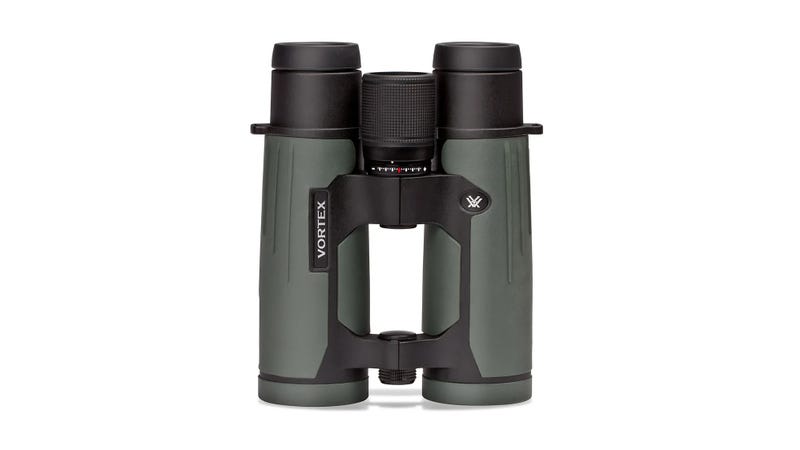
- Official image file linked by this exact manufacturer product page; local original is archived and personally inspected. The power marking is not legible in the shared front view.
- Vortex U.S. inactive Razor-family snapshot; individually resolved exact SKU card and page link.
- Vortex U.S. exact product page, Razor HD 8x42, SKU RZB-2101

Choose your optical trade-off first.
Choose viewing purpose first, then magnification, objective size, scene width and any fit, weather or mounting constraint. A direct-Sun requirement is separate: only exact manufacturer-confirmed solar binoculars can pass it.