
On this page
Identify the earlier LRF300 by its own evidence
The Fury HD 10x42 LRF300 is an inactive, earlier configuration whose exact page confirms angle-compensated ranging. Its named range modes and target-class ceilings are not established in the reviewed evidence, so do not transfer the LRF301 or LRF302 display features to it.
Explore the needs this model fits
Your needs, this model
Does it fit your priorities?
Do you want an integrated rangefinder in this 10x42, and are you including earlier models?
Yes. Exact U.S. page for SKU LRF300 describes the Fury HD 10x42 as a binocular paired with an angle-compensated rangefinder; its inactive listing means you must opt in to earlier models.
Explore this need in the finder →Does the listed 31.8-ounce instrument weight fit your carry ceiling?
Vortex lists 31.8 oz for the instrument. That can fit a 32-ounce ceiling, but does not include an asserted full carry-system weight.
Explore this need in the finder →Is an undocumented range mode or ballistic display essential?
The exact page confirms angle-compensated ranging but does not name HCD/LOS/BAL modes or confirm profile-based ballistic output. If ballistic display is essential, this profile cannot pass that requirement on the available evidence.
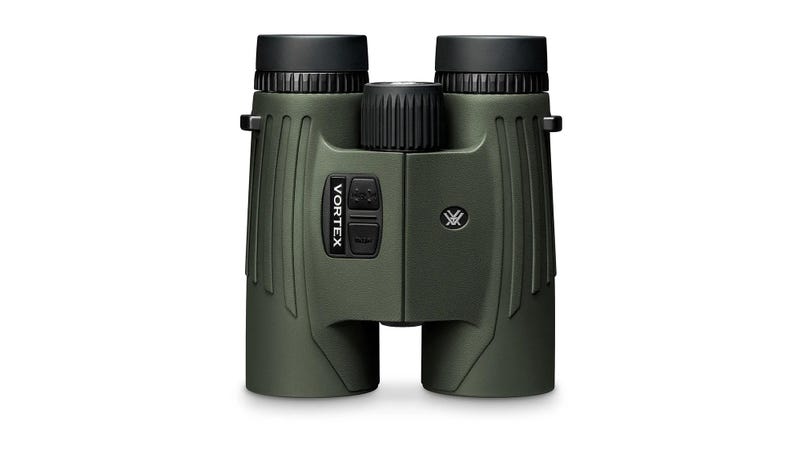
Explore this need in the finder →The Vortex Fury HD 10x42, SKU LRF300, is an earlier 10x42 binocular with an integrated angle-compensated laser rangefinder. Its appeal is the two-function format: observe through the optics and measure distance without carrying a separate rangefinder. Vortex places the model in its Inactive category, so treat this as an identification and comparison review, not a current buying recommendation.
What the LRF300 actually confirms
The exact U.S. product page identifies the Fury HD 10x42 and gives a useful optical baseline: fixed 10x magnification, 42 mm objectives, a 6.1-degree angular field (321.6 feet at 1,000 yards), 16 mm eye relief, 18.5-foot close focus, 58–72 mm interpupillary adjustment, and a listed 31.8-ounce instrument weight. The body is 5.75 inches high and 5 inches wide. Those are manufacturer figures, not a measured sample or the weight of a complete carry kit.
That combination makes this a long-viewing instrument first, with ranging added. Ten power brings distant subjects closer but narrows hand-held view compared with many 8x binoculars. The published field gives a practical comparison point, while the 18.5-foot close-focus limit makes the LRF300 a poor choice for nearby details. If glasses are part of your normal viewing, 16 mm is a finite eye-relief allowance; check whether you can see the full field with your own eyewear rather than assuming the specification guarantees it.
Rangefinding is the selling point—and a documentation limit
Vortex describes the LRF300 as a high-definition binocular paired with an angle-compensated rangefinder, and says the right-side controls can be operated with one hand. That supports the core reason to choose it: keeping optical observation and a distance reading in one body. A CR2 battery is listed in the box, along with a rainguard, tethered objective covers and a deluxe padded case.
The exact product page does not state a target-class maximum range, named HCD/LOS/BAL modes, display behavior, battery runtime, or a profile-based ballistic workflow. Those omissions matter more than a headline range number would: this evidence does not let a buyer compare target returns, setup steps or output conventions. Do not assume the LRF300 shares the later Fury HD 5000’s 5,000-yard advertised reflective-target ceiling or its documented HCD/LOS modes. Nor should it be assumed to offer the ballistic display of the Fury HD 5000 AB. If a particular ranging mode, ballistic output, or minimum reliable distance is essential, choose only a configuration whose own documentation confirms it.
Keep the Fury names and SKUs separate
LRF300 is not the same identity as Fury HD 5000 LRF301 or Fury HD 5000 AB LRF302. The later LRF301 has published HCD and line-of-sight modes; the LRF302 AB adds an HCD/BAL workflow and is itself an earlier model. Similar-looking 10x42 bodies do not make their electronics interchangeable. In this review the LRF300’s precise optical specifications and included CR2 are documented, but unlisted electronic behavior stays unknown.
If you need named HCD/LOS modes rather than an angle-compensated rangefinder with unspecified modes, compare the Fury HD 5000 LRF301 or the Ranger HD 3000 10x42 and check their exact operating requirements. If an onboard ballistic solution is essential, compare a documented BAL model such as the Talon HD 10K; the LRF302 is useful as an earlier reference when you explicitly want discontinued designs in the comparison. If distance measurement is not a regular part of the task, a conventional 10x42 optical binocular avoids carrying an electronic system whose added value you may not use.
Who should keep this model on a shortlist?
Keep the LRF300 in view when identifying an existing unit, checking a second-hand listing, or deciding whether an older rangefinding binocular fits a known task. Its 31.8-ounce listed weight is below a 32-ounce instrument ceiling, but it is not a light alternative to ordinary 10x42 glass; the case, battery and other carry items are not included in that number. A 16 mm eye-relief minimum and 10x/42 mm preference may also fit a questionnaire path, provided you opt in to earlier models.
Skip it as a recommended purchase if you need a current product, a verified weather rating, an essential specified range mode, ballistic calculations, or published target-specific range limits. The exact page supports none of those latter claims for LRF300. Inactive status also says nothing about a particular retailer’s stock or the condition and completeness of a used offer. Confirm the LRF300 identifier and the included CR2/case items on any listing, then compare the seller’s condition and return terms independently.
Key specifications
Key details at a glance
| Magnification | 10× |
|---|---|
| Objective diameter | 42 mm |
| Real field of view | 6.1° |
| Eye relief | 16 mm |
| Exit pupil | 4.2 mm |
| Close focus distance | 18.5 ft |
More specifications and setup details
| Manufacturer-published weight | 31.8 oz |
|---|---|
| Lens and prism coatings | Exact archived product page does not establish named glass, coating or prism types; those remain unknown. |
| Water and fog protection | No IP/immersion depth or duration rating is stated on the exact page reviewed; do not treat the included rainguard as an environmental rating. |
| Published weight note | Vortex lists 31.8 oz for the instrument; no full carry-system weight or independent measurement is claimed. |
| Power source | CR2 |
| Integrated laser rangefinder | Yes |
Use the exact model’s instructions for operating limits, supplied equipment and version differences.
Sources for this review
Sources for this assessment
- Official Vortex inactive binoculars directory, page 1, row 3; exact Fury HD 10x42 listing links to SKU LRF300.
- Exact U.S. Vortex Fury HD 10x42 page; product identifier LRF300, category Inactive.
- Official product-page Product Manual PDF link; captured response was PDF.js viewer HTML rather than manual contents.
Choose your optical trade-off first.
Choose viewing purpose first, then magnification, objective size, scene width and any fit, weather or mounting constraint. A direct-Sun requirement is separate: only exact manufacturer-confirmed solar binoculars can pass it.
Your needs, this model
Include earlier binocular models for comparison
Choose it when: The exact LRF300 record is useful when identifying a legacy instrument or a specific earlier listing; its source documents angle-compensated ranging.
Include earlier binocular models for comparison →Include earlier integrated laser-rangefinding binoculars
Choose it when: The exact LRF300 page is the record to use when identifying this earlier 10x42 configuration and confirms angle-compensated rangefinding.
Include earlier integrated laser-rangefinding binoculars →