
On this page
Your needs, this model
Does it fit your priorities?
Do you want a 12x50 view with the rangefinder built into that same binocular?
The exact part 185700 page confirms 12x50 and an integrated laser rangefinder; the 10x42 sibling is wider-field and lower-power.
Explore this need in the finder →Is 14 mm of stated eye relief sufficient for your minimum?
The exact 12x50 page lists 14 mm. It meets a 14 mm published threshold but fails a 15 mm minimum; test your glasses and viewing position in person.
Explore this need in the finder →Must this 12x50 focus at a distance of 13 feet or closer?
The exact page states 13 feet close focus, so a maximum-focus answer of 13 ft is met but a stricter 12 ft maximum is not.
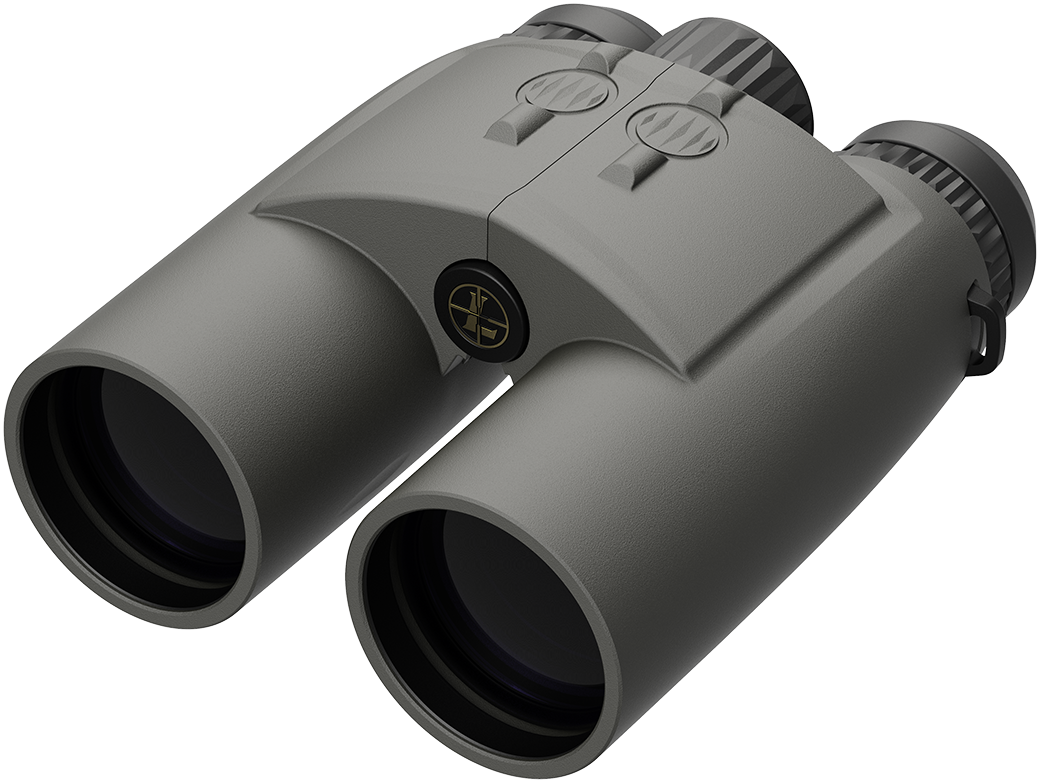
Explore this need in the finder →The Leupold BX-4 Range HD Gen 2 TBR/W 12x50 (part 185700) pairs a 12-power binocular with an integrated laser rangefinder and a red electronic display. It is for a viewer who wants greater magnification in the same instrument used to measure distance and access Leupold’s angle-compensated rifle or archery modes. It is not simply a brighter, easier version of the 10x42: the 12x50 has a narrower published scene, shorter eye relief, and unresolved weight and deer-range specifications.
Why pick 12x50 over the 10x42?
The exact U.S. page lists 12x magnification, 50 mm objectives, a 5.2-degree real field (279 feet at 1,000 yards), 14 mm eye relief, 4.2 mm exit pupil and 13-foot close focus. The sibling 10x42 is listed at 6.2 degrees or 334 feet, with 17 mm eye relief. The 12x50 therefore puts more magnification on a distant subject but shows less of the scene at once and offers less stated eye relief. If you are locating moving animals, scanning tree lines or wearing glasses, those differences deserve as much weight as the extra power.
Both sizes have the same published 4.2 mm exit pupil, so the larger objective does not automatically establish a brighter image. Higher power also tends to make hand movement more apparent; a tripod may help if you want prolonged viewing or a stable ranging position.
Ranging and ballistic modes require deliberate setup
This model is more than an optical pair with a distance display. Leupold’s linked manual lists line-of-sight range, scan, an inclinometer, a last-target function, a red OLED, and True Ballistic Range/Wind. It also documents Bow Mode and the Archer’s Advantage feature. For rifle use, the manual describes 25 selectable ballistic load groups and says the hold output depends on the distance, angle and selected group. You must choose a suitable profile for your equipment and verify the result; the screen cannot turn a mismatched setting into a trustworthy solution. Leupold describes wind output for a fixed 10 mph, 90-degree crosswind assumption, not a wind sensor measuring the current field conditions.
For archery, Archer’s Advantage uses user-entered setup information such as arrow weight, velocity and peep height. If that configuration work is not part of your intended routine, you may only need LOS distance—or may prefer ordinary binoculars with no electronic interface. The unit is standalone for its documented range and display functions; the exact specification page says no control-app compatibility.
Interpret maximum ranges cautiously
The manufacturer lists up to 4,000 yards on reflective targets and 2,200 on trees for this configuration. Those are target-dependent ceilings, not a promise that a small, dark or partially obscured subject will range that far. Aiming steadiness, surface, target size, angle and weather change the return. The deer-sized-target figure is especially unsettled: the detailed 12x50 specifications say 1,500 yards, the page’s shared descriptive copy says 1,300, and the linked manual table says 1,400. The assessment therefore leaves that field unknown instead of choosing the largest claim. It is not a meaningful advantage to recommend until Leupold reconciles its own materials.
Another pair of product-page fields is less visible but practical. The detailed table lists 3,000 battery actuations; the linked manual states more than 4,000. The manual also lists 39 ounces with a battery installed, while the exact page says 37 ounces without that qualifier. The two figures may use different bases, but no source explains the difference, so this profile does not use either value to pass a strict weight maximum. Carry a spare CR2 and do not build a pack limit around the 37-ounce figure until the manufacturer clarifies the configuration.
Fit, support and ruggedness limits
The stated 14 mm eye relief is shorter than on the 10x42. The manual describes three interchangeable Form-Fit eyecups, including a low profile intended for glasses, but a named eyecup option is not a guarantee that a particular frame clears the display or shows the whole scene. The published interpupillary adjustment is 60–77 mm, so it also starts at a wider minimum setting than the 10x42’s 56 mm. If several people will use it, measure fit and try viewing through the actual unit before making compatibility essential.
The BX-4 Range HD uses a rubber-armored magnesium-alloy body, and the linked manual identifies extra-low-dispersion objective glass. Leupold describes it as waterproof and fogproof, but does not publish an immersion depth or IP rating here. A built-in rotatable 1/4-20 port makes tripod compatibility explicit; it does not establish that an adapter or tripod comes in the package. The manual gives the electronic warranty as two years; verify current full warranty terms for the exact purchase, especially because the active laser/display is a separate ownership concern from the passive optics.
Who is this version for?
Choose the 12x50 if you have a clear need for the tighter 12x view and want to range without switching instruments. It can suit stationary or supported observation where the narrower view is acceptable. If you want a broader field for walking and quicker scanning, the 10x42 is the more natural sibling. If ranging is occasional rather than essential, compare a passive 12x50 such as the BX-3 Alpine HD 12x50 review; a separate rangefinder preserves the option to leave electronics behind. Neither path is universally better—the useful choice depends on whether integrated distance and configured ballistic output justify the added controls, battery and unresolved carry mass for your routine.
Both are laser-equipped ordinary binoculars, not solar viewers. The manual identifies a Class 1M laser, warns against activating the laser while aiming at someone’s eye, and says not to view the Sun through the instrument. Read the operating and safety instructions first. Consult Leupold’s exact 12x50 product page and the BX-4 Range HD Gen 2 manual; keep the conflicting deer range, weight and battery figures visible rather than treating them as settled.
Key specifications
Key details at a glance
| Magnification | 12× |
|---|---|
| Objective diameter | 50 mm |
| Real field of view | 5.2° |
| Eye relief | 14 mm |
| Exit pupil | 4.2 mm |
| Close focus distance | 13 ft |
More specifications and setup details
| ED glass confirmed for this exact model | Yes |
|---|---|
| Lens and prism coatings | The linked BX-4 Range HD Gen 2 manual identifies objective lenses with extra-low-dispersion glass. No source inspected here establishes a specific roof-prism phase or dielectric coating. |
| Water and fog protection | The manufacturer describes waterproof/fogproof construction without a stated immersion depth or IP rating. |
| Tripod use | The exact page confirms a built-in rotatable 1/4-20 tripod adapter port. It does not confirm a separate adapter or tripod in the standard package; adapter inclusion is unknown. |
| Published weight note | The exact product page lists 37 oz; the page-linked manual lists 39 oz with battery installed. These are not presented as the same measurement basis, and the exact operating weight remains unresolved. No independent weighing was performed. |
| Manufacturer-rated waterproof | Yes |
| Built-in image stabilization confirmed | No |
| Power source | CR2 |
| Integrated laser rangefinder | Yes |
| Onboard ballistic solution display | Yes |
| Maximum reflective-target range (manufacturer) | 4000 yd |
| Maximum tree range (manufacturer) | 2200 yd |
| Minimum range (manufacturer) | 12 yd |
Use the exact model’s instructions for operating limits, supplied equipment and version differences.
Sources for this review
Sources for this assessment
- Leupold exact BX-4 Range HD Gen 2 TBR/W 12x50 product page, part 185700
- Leupold BX-4 Range HD TBR/W Gen 2 operating manual (page-linked from both exact product pages; part 186606, artwork 186618)
- Leupold BX-4 Range HD Gen 2 Quick Reference Card, page-linked from exact product page
- Leupold official U.S. binocular directory, page 2, positions 4 and 5
- Official part-specific product image linked from the exact product page
- Dated narrow product-name SaferProducts.gov/CPSC query; empty response is not recall clearance

Choose your optical trade-off first.
Choose viewing purpose first, then magnification, objective size, scene width and any fit, weather or mounting constraint. A direct-Sun requirement is separate: only exact manufacturer-confirmed solar binoculars can pass it.