
On this page
Your needs, this model
Does it fit your priorities?
Is 12x52 the higher-power Alpine HD configuration you are trying to identify?
The exact page ties fixed 12x52 optics to Leupold part 181179 and lists a 261-foot field. It is discontinued, so include it only for an existing pair or exact used offer.
Explore this need in the finder →Does the 2026 catalog’s 15 mm eye-relief value or the exact PDP’s 16 mm figure fit your use—and will you verify the real glasses fit?
The exact product page lists 16 mm, while the 2026 Consumer Guide lists 15 mm for part 181179. Because the manufacturer sources disagree, the matching value stays unknown; check the exact instrument with your glasses.
Explore this need in the finder →Do you want its direct tripod port and waterproof wording, while selecting the adapter separately?
The exact page confirms a rotatable 1/4-20 port and manufacturer waterproof/fogproof language. It gives no numeric immersion rating and does not list the adapter among included accessories.
Explore this need in the finder →The Leupold BX-2 Alpine HD 12x52 is part 181179, the highest-magnification configuration in the four-size Alpine HD group. The exact U.S. page lists 261 feet at 1,000 yards, a 5.0-degree real field, 16 mm eye relief, a 4.3 mm exit pupil and 32 ounces; the 2026 catalog lists 15 mm and 859 g for this part, so eye relief and weight are unresolved across the maker’s sources. The maker now labels this exact model discontinued and no longer available for purchase. It is useful for identifying an older instrument or evaluating a clearly identified used pair, not as a current purchase recommendation.
The reach comes with a narrower view
Twelve power brings a subject closer than 10x or 8x, which can help when looking across a broad, open basin or inspecting a stationary distant feature. But the view is also the narrowest in this family: the published 261 feet at 1,000 yards compares with 279 feet for the 10x52, 342 feet for the 10x42 and 394 feet for the 8x42. The more tightly framed scene can take longer to acquire when you are searching for an animal or trying to follow something moving. It also makes your hand movement easier to see. This is a conventional passive optic with no built-in stabilization or integrated laser distance readout.
The 52 mm objective is shared with the 10x52, yet the 12x model’s listed exit pupil falls to 4.3 mm from 5.2 mm. That follows the objective-to-magnification ratio; it is not an independently measured brightness comparison. If you tend to use binoculars at dawn or in shade, do not treat “52 mm” as the only relevant number. The actual optical system and your eye position matter, and Leupold’s descriptive claims are not laboratory measurements.
Holding and mounting the instrument
The exact U.S. page lists 32 ounces and 6.5 inches, while the 2026 catalog lists 859 grams and 137 mm. Because those dimensions and weight do not reconcile and the manufacturer gives no measurement-basis explanation, treat the body as a larger 52 mm configuration but verify the exact unit rather than relying on a settled weight or length. The U.S. page lists 32 ounces versus 30.5 for the 10x52, but the 2026 catalog’s 859 g for this model conflicts with that page value. Do not rely on this weight comparison until the maker resolves its source discrepancy. The product page gives 16 mm eye relief, while the 2026 catalog says 15 mm; the numeric fit field stays unknown. The page lists a 57–76 mm interpupillary adjustment. Eyeglass wearers should test for a full view with their ordinary glasses rather than treating either source value as a comfort guarantee. The 57 mm minimum hinge setting is a useful fit check, not a complete face-fit assessment.
A rotatable 1/4-20 tripod port is confirmed on the exact page. That makes a separate compatible adapter and tripod a sensible possibility when you plan to hold on a distant view for a while. The package listing names a GO Afield harness, lens covers and a lens cloth; it does not list the tripod adapter. Do not interpret the port as adapter-in-box confirmation. If you intend to glass handheld, try the 12x power in person and compare it with the 10x52 before deciding that the added magnification is practical.
Weather protection, construction and setup
Leupold describes the BX-2 Alpine HD as waterproof and fogproof, and its product page identifies HD lenses, an Abbe-Koenig prism, rubber armor, twist-up eyecups and the Advanced Optical System. The manufacturer's 2021 launch description also presents the family as having a magnesium body and EXO-Armor. These are construction and protection claims, not an independent impact test or optical result. The exact product page provides no numeric submersion depth, duration or IP rating; waterproof wording is not a license for underwater use.
“High definition” should not be turned into an ED-glass claim without the exact source saying so. The page identifies an Abbe-Koenig prism but does not confirm a named phase-correcting coating or a complete lens-coating stack. Those details remain unknown for matching. Leupold links a general Rev N binocular manual from the page; it explains basic setup, focus and care but does not make performance claims for this model. Use the diopter procedure carefully and keep the lenses clean according to the maker’s directions.
How the other sizes compare
If you like the 52 mm objective but want a more forgiving view, the 10x52 is the first sibling to compare. Its exact U.S. page lists 30.5 ounces, 18 mm eye relief, a 279-foot field and a 5.2 mm exit pupil. The 12x52 page lists 32 ounces, 16 mm, 261 feet and 4.3 mm, but the catalog’s 859 g and 15 mm conflict with the 12x page. Do not treat the relative weight or eye-relief figures as settled. For a walking route where finding the subject is the difficulty, the 8x42 has a 394-foot page-listed field and a corroborated 24.3-ounce/689-gram weight. The 10x42 page lists 342 feet and 24.3 ounces, while the catalog’s 683 grams differs slightly; do not assume their exact weights are equal. There is no single best size independent of the outing and the viewer.
As a new purchase, this model should not be surfaced while earlier products are excluded. Leupold’s page itself says discontinued and no longer for sale; displayed historical price elements do not change that status. For an identified used instrument, confirm part 181179, test the hinge and focus, inspect both optical paths for damage, and confirm actual condition and included accessories. If a present-day 12x alternative is needed, compare exact current model pages on their own terms and do not transfer the Alpine HD’s field, weight or eye relief to another binocular.
Sources and limits
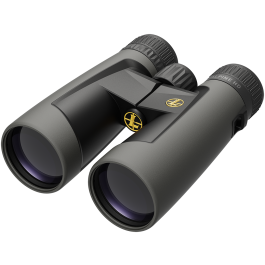
Sources: Leupold BX-2 Alpine HD 12x52, part 181179, the Leupold discontinued binocular directory, the 2026 Consumer Guide (printed binocular page 31) and the general owner manual linked by the product page. The image bytes are also linked on the 10x52 page and do not distinguish the two powers. Creation method, republication permission and current used offers remain unknown.
Key specifications
Key details at a glance
| Magnification | 12× |
|---|---|
| Objective diameter | 52 mm |
| Real field of view | 5° |
| Exit pupil | 4.3 mm |
| Close focus distance | 12.5 ft |
| Lens and prism coatings | Exact page identifies high-definition lenses and an Abbe-Koenig prism but does not establish ED glass or a complete coating stack; no independent optical testing is claimed. |
More specifications and setup details
| Tripod use | Exact page confirms a rotatable standard 1/4-20 port. It does not list a tripod adapter as included; choose and check a separate adapter and support. |
|---|---|
| Published weight note | Exact U.S. product page lists weight 32.0 oz; 2026 Consumer Guide lists 859 g (about 30.3 oz). The difference is unexplained, so the hard-match weight field is left unknown. |
| Manufacturer-rated waterproof | Yes |
| Built-in image stabilization confirmed | No |
| Integrated laser rangefinder | No |
| Direct 1/4-20 tripod thread confirmed | Yes |
Use the exact model’s instructions for operating limits, supplied equipment and version differences.
Sources for this review
Sources for this assessment

Choose your optical trade-off first.
Choose viewing purpose first, then magnification, objective size, scene width and any fit, weather or mounting constraint. A direct-Sun requirement is separate: only exact manufacturer-confirmed solar binoculars can pass it.