
On this page
Your needs, this model
Does it fit your priorities?
Do you specifically want the earlier 10x52 version rather than the lighter 10x42?
Part 181178 is a fixed 10x52. The exact page lists 30.5 ounces, 279 feet at 1,000 yards and 18 mm eye relief; set earlier models to yes only for comparison with an identified older or used pair.
Explore this need in the finder →Does 18 mm listed eye relief meet your screen, with a maximum instrument weight of 30.5 ounces?
The model table lists 18 mm and 30.5 oz. These specifications do not guarantee comfortable full-field glasses fit or packed-system weight.
Explore this need in the finder →Would the maker’s waterproof/fogproof wording and a direct tripod port fit your use with a separate adapter?
The exact page confirms waterproof/fogproof wording and a rotatable 1/4-20 port. Its named included accessories are a harness, lens covers and cloth; no numeric submersion rating or adapter-in-box is established.
Explore this need in the finder →The BX-2 Alpine HD 10x52, Leupold part 181178, keeps the same 10x magnification as the 10x42 but uses a 52 mm objective. Its page lists an 18 mm eye relief, 5.2 mm exit pupil, 9.2-foot close focus, 279-foot field and 30.5-ounce instrument weight. Leupold’s exact page marks this product discontinued and no longer available for purchase. This review is for recognizing a past model or assessing a specifically identified used pair.
Why choose 52 mm at 10x?
The larger objective is the point of this configuration. Leupold says moving from 10x42 to 10x52 increases the light getting to the eye, particularly useful in lower-light conditions. The published exit pupil supports a real geometric difference: 52 mm at 10x yields 5.2 mm, versus 4.2 mm for 42 mm at 10x. Neither number is a measured brightness test, and the objective size alone cannot guarantee what you will see at dawn or in shade. Lens coatings, alignment, eye fit, ambient light and individual vision all matter, so keep the manufacturer’s promise in context rather than treating it as a lab result.
The objective increase has a concrete carrying cost. The 10x52 is listed at 30.5 ounces and 6.6 inches long; the 10x42 is listed at 24.3 ounces and 5.5 inches. That is 6.2 additional ounces before a harness or case. The field narrows from 342 to 279 feet at 1,000 yards. If your normal outing involves long walks or finding moving birds quickly, that weight and tighter scene may matter more than the larger front lenses. If you mostly glass from a fixed overlook or want more eye relief, the 10x52 is easier to justify.
Focus, fit and support
Leupold lists 18 mm eye relief, 60–78 mm interpupillary distance and a 9.2-foot close-focus distance. Eighteen millimeters is longer than the 10x42’s 15 mm, but it is still a number to test with the glasses you wear: eye-cup travel, frame position and face shape determine the full field you actually see. The wider 60 mm minimum IPD is also a practical household screen. If someone sharing the binocular has a narrower distance between pupils, have them try the hinge fit before choosing it.
The exact page confirms a rotatable 1/4-20 port, so this binocular can be mounted with a suitable adapter and support. Leupold lists a GO Afield harness, lens covers and a cloth as included accessories but does not list the adapter in that package. Treat tripod mounting as an additional setup cost and compatibility check. For a stable fixed-position watch, the support can make the higher power easier to hold still; it does not turn the binocular into a stabilized or electronic rangefinding model.
Optical description and weather claims
Leupold’s page describes HD lenses, an Abbe-Koenig prism, magnesium housing, rubber armor, twist-up eyecups and the Advanced Optical System. These are maker-stated design features, not independent evidence of edge-to-edge sharpness, contrast, color fringing or transmission. The exact page does not confirm ED glass or a phase-coating specification, so neither is a safe essential filter. “HD” alone should not be expanded into a specific glass chemistry or coating stack.
The company describes this exact configuration as waterproof and fogproof. It does not publish a numeric immersion depth, duration or IP class, so that wording is not an underwater rating. The exact product page links Leupold’s general Rev N owner manual. That manual covers basic adjustments and care, not model-specific optical performance. The page names a harness, lens covers and a cloth; it does not establish that an actual pre-owned package still contains them.
Compare the other BX-2 sizes
Among the two 52 mm models, the 10x52 is the lower-power, wider-field option: 279 feet, 5.9 degrees, 18 mm eye relief and 30.5 ounces. The 12x52 moves to 12x, lists a 261-foot field, 5.0 degrees, 16 mm eye relief and 32 ounces. For that modest weight increase, it gives more apparent reach but less real scene width and a smaller 4.3 mm exit pupil. The 8x42 is the most forgiving scanning size, while the 10x42 preserves 10x reach in the lighter listed package. Those are different operating compromises, not a ranking of optical quality.
For new shopping, exclude this one by leaving earlier models off. Leupold’s product page and discontinued directory both identify part 181178 as discontinued; any date or price that still appears in cached page elements is not an active offer. Turn earlier models on only when comparing an existing instrument or specific used listing. Confirm the part number, inspect focusing and hinge action, evaluate the image through both barrels, and verify condition, accessories and seller terms before deciding. A current 10x50 or 10x42 may be a more available alternative, but it will not reproduce this exact 10x52 configuration.
The 2026 Consumer Guide table and exact U.S. product page also diverge on linear field and length: the page lists 279 ft at 1,000 yd and 6.6 in, while the catalog gives 85 m at 1,000 m and 137 mm; both list 5.9° real field. The 30.5 oz U.S. page weight is consistent with the catalog’s 865 g. Because the maker does not explain the field/length basis, the review quotes source-specific values and does not use the metric field or length as settled fit facts.
Sources and limits
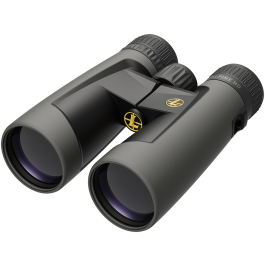
Sources: Leupold BX-2 Alpine HD 10x52, part 181178, the official discontinued-binoculars directory, the 2026 Consumer Guide (printed binocular page 31) and the Leupold binocular owner manual. The exact 10x52 and 12x52 product pages link identical image bytes; those illustrations do not distinguish magnification. Photo/render method and republication permission are not disclosed, and no independent optical tests or current offers were found.
Key specifications
Key details at a glance
| Magnification | 10× |
|---|---|
| Objective diameter | 52 mm |
| Real field of view | 5.9° |
| Eye relief | 18 mm |
| Exit pupil | 5.2 mm |
| Close focus distance | 9.2 ft |
More specifications and setup details
| Manufacturer-published weight | 30.5 oz |
|---|---|
| Lens and prism coatings | Exact page identifies high-definition lenses and an Abbe-Koenig prism but does not establish ED glass or a complete coating stack; no independent optical testing is claimed. |
| Tripod use | Exact page confirms a rotatable standard 1/4-20 port. It does not list a tripod adapter as included; choose and check a separate adapter and support. |
| Published weight note | Exact product page weight is corroborated by the 2026 catalog after unit conversion; still instrument weight, not packed system weight. |
| Manufacturer-rated waterproof | Yes |
| Built-in image stabilization confirmed | No |
| Integrated laser rangefinder | No |
| Direct 1/4-20 tripod thread confirmed | Yes |
Use the exact model’s instructions for operating limits, supplied equipment and version differences.
Sources for this review
Sources for this assessment

Choose your optical trade-off first.
Choose viewing purpose first, then magnification, objective size, scene width and any fit, weather or mounting constraint. A direct-Sun requirement is separate: only exact manufacturer-confirmed solar binoculars can pass it.