
On this page
Your needs, this model
Does it fit your priorities?
Does this 8x/32 model meet the questionnaire's broad-scene field choice?
The exact source lists a 8.1° real field. The discontinued SKU is retained for comparison but cannot enter current purchase suggestions.
Explore this need in the finder →Does the exact model meet a 15 mm listed eye-relief floor?
The exact manufacturer data list 15 mm eye relief; that is a numeric comparison, not an individual glasses-fit guarantee. This SKU remains reference-only.
Explore this need in the finder →Does its published 8.2 ft focus figure fit a 9 ft maximum when waterproofing is essential?
The exact table lists 8.2 ft close focus and the manufacturer states waterproof construction; no rating depth or duration is stated. The discontinued model is excluded from current recommendations.
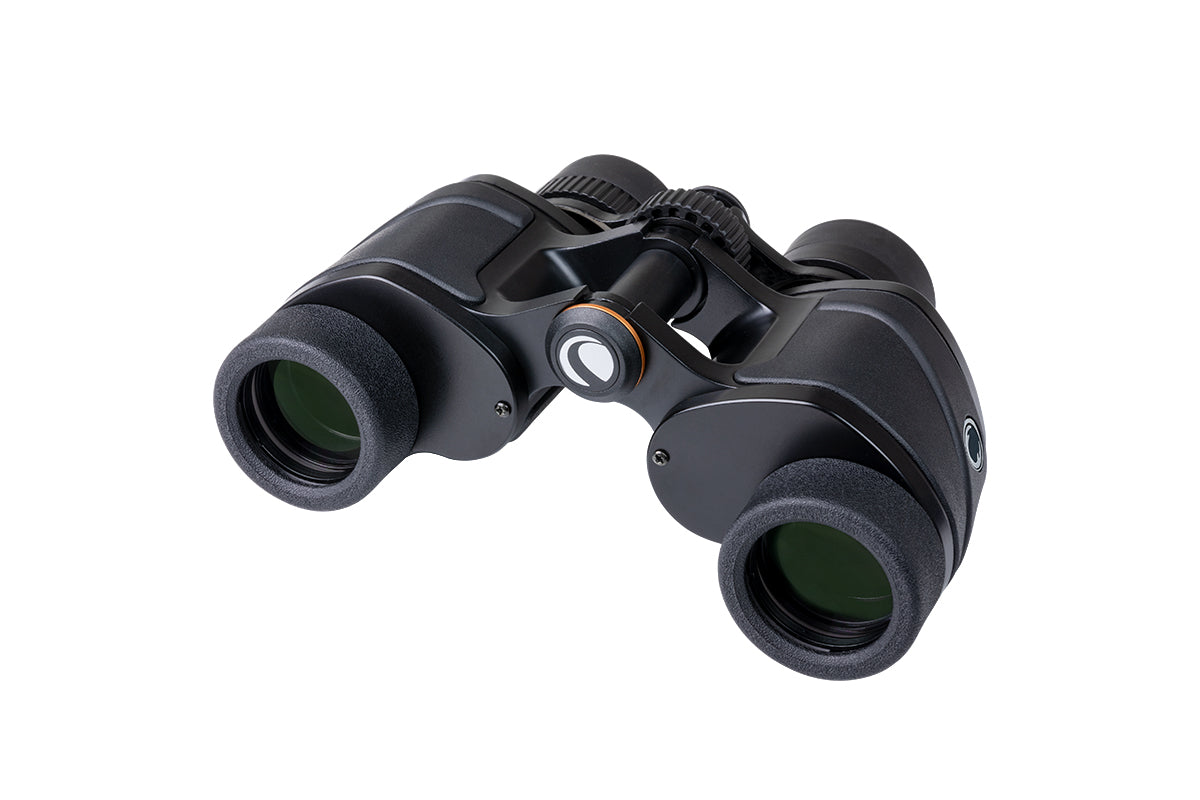
Explore this need in the finder →The Celestron Ultima 8x32 item 72251 is an 8-power Porro binocular with a listed 8.1° real field, 18.3-ounce weight and 8.2-foot close focus. Celestron’s dedicated U.S. collection labels the exact SKU discontinued and unavailable; it remains a reference for comparing an older small-objective design, not a current purchase recommendation.
A smaller Ultima with full-size handling
Eight power is a common balance for general viewing: it gives more apparent reach than the 6.5x32, while hand movement is usually less conspicuous than at 10x or 20x. Celestron lists an 8.1° angular field and 425 feet at 1,000 yards / 142 metres at 1,000 metres. These published linear widths refer to different target distances, and the manufacturer’s numbers are retained rather than recalculated. The field is fairly broad for a fixed 8x design on paper, which can help when sweeping a hillside or tracking a moving subject. A wide field does not compensate for a poor fit or guarantee edge sharpness, neither of which is independently tested here.
The 32 mm objectives keep the specified weight at 520 g (18.3 oz), the same listed mass as the 6.5x32. The dimensions are 110 × 165 × 48 mm. This smaller Porro option is lighter than the 8x42 Ultima, but still projects as a classic binocular rather than folding into the profile of many travel roofs. Its 4 mm exit pupil is the objective divided by magnification, and Celestron lists a relative-brightness index of 16. Those figures help describe the optical geometry; they are not measured brightness or a promise of dusk performance.
Eye relief is the meaningful compromise
Celestron lists 15 mm eye relief, shorter than the 18 mm on the 6.5x32 and 8x42 family options. That is a real spec difference for someone who wears glasses, but a number alone cannot determine whether the whole field is visible. Eyecup position and face geometry matter, so an in-person fit check is preferable when glasses are essential. The 50–74 mm interpupillary range and ±6 diopter adjustment are listed for this exact model. Its close focus is 8.2 feet, a useful but not exceptionally short distance for a conventional outdoor binocular; a dedicated close-viewing priority should compare a product with a shorter manufacturer figure.
The exact page describes a waterproof, nitrogen-filled body. Celestron does not provide a depth or duration rating; do not treat this claim as permission to submerge it. The package list names a case, neck strap, eyepiece covers and tethered objective covers. The page also marks the model tripod adaptable, while the shared Ultima manual describes a separate adapter. The adapter does not appear in the exact included-items list, so it should not be assumed to come with the binocular.
Setup, limits and alternatives
The Ultima family manual explains the normal adjustment sequence: bring the barrels together or apart until one circular image appears, focus the left eye using the center wheel with the right eye closed, then correct the right eye with its diopter ring. Set the eyecups for the eye position you use; glasses wearers generally keep fold-down eyecups lowered. Clean dust off first to avoid dragging grit over the coated glass. Never look at the Sun through an ordinary binocular.
Compared with the 6.5x32, this 8x model gives a tighter view, more magnification and shorter listed eye relief without a stated weight change. The 8x42 increases the objective size and eye relief but adds 3.6 oz and has a narrower 7.5° field. The 10x42 increases reach but narrows the scene further. For current buying, compare actively available 8x32 or 8x42 models by exact SKU: weight, waterproofing and eye relief are not interchangeable just because the magnification/objective label looks similar. The 72251 listing is retained for model identification and comparison only.
Sources: Celestron Ultima 8x32 item 72251; Ultima family manual.
Key specifications
Key details at a glance
| Magnification | 8× |
|---|---|
| Objective diameter | 32 mm |
| Real field of view | 8.1° |
| Field width at 1,000 m | 142 m |
| Eye relief | 15 mm |
| Exit pupil | 4 mm |
More specifications and setup details
| Close focus distance | 8.2 ft |
|---|---|
| Manufacturer-published weight | 18.3 oz |
| ED glass confirmed for this exact model | No |
| Lens and prism coatings | Celestron exact table lists Fully Multi-Coated optics, BaK-4 prism glass and prism coatings N/A. ED objectives and roof prism phase coating are not established for this Porro model. |
| Water and fog protection | Celestron labels the exact model waterproof and nitrogen filled. No depth/duration rating is published; this is not an underwater-use claim. |
| Tripod use | Celestron marks the model tripod adaptable. The Ultima manual calls for a separate binocular adapter; it is not listed in this exact package. |
| Published weight note | Manufacturer lists 18.3 oz (520 g); not independently weighed. |
| Manufacturer-rated waterproof | Yes |
| Tripod adapter in package | No |
Use the exact model’s instructions for operating limits, supplied equipment and version differences.
Sources for this review
Sources for this assessment

Choose your optical trade-off first.
Choose viewing purpose first, then magnification, objective size, scene width and any fit, weather or mounting constraint. A direct-Sun requirement is separate: only exact manufacturer-confirmed solar binoculars can pass it.