
On this page
An integrated adapter rod in the standard 20x80
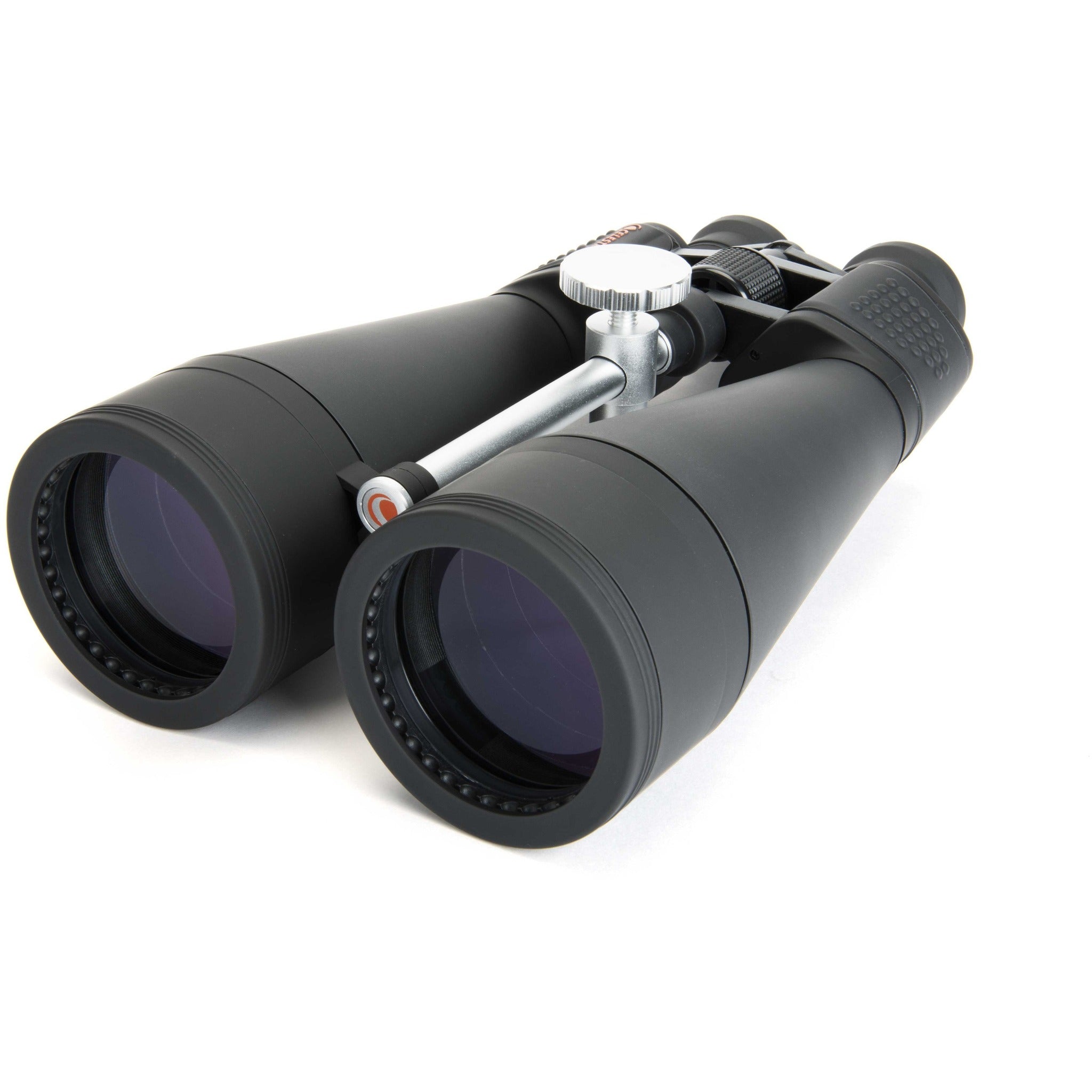
The standard SkyMaster 20x80 lists 75 oz and a 3.7° field, with an integrated adapter rod for a supported setup. It is the lightest of the exact 80 mm trio, but is water resistant rather than waterproof and needs a separate tripod.
Explore the needs this model fits
Your needs, this model
Does it fit your priorities?
Do you need the standard SkyMaster's 20x80 configuration for a stationary distant view?
Item 71018 is fixed at 20x with 80 mm objectives and a 3.7° / 195 ft per 1,000 yd real field. It offers greater nominal reach than the 15x70 but also weighs more and shows a narrower scene.
Explore this need in the finder →Can the integrated adapter rod meet your tripod requirement if waterproofing is also important?
The 71018 has an integrated adapter rod, but its specification table says Water Resistant, not waterproof. The adapter resolves one part of the setup; it does not make the model suitable when waterproofing is essential.
Explore this need in the finder →Will a 108-foot minimum-focus distance fit a long-distance brief?
It can fit only when you do not need focus closer than 108 feet. Celestron lists that closest-focus limit, so a 100-foot maximum excludes this model.
Explore this need in the finder →The Celestron SkyMaster 20x80 (item 71018) is for a stable, long-distance view where 20x magnification and 80 mm objectives matter more than carry weight or a broad scene. Celestron lists a 3.7° field, 18 mm eye relief and 75 oz instrument weight. Its tripod adapter rod is integrated into the binocular, but the tripod is a separate piece of the setup.
More reach comes with a narrower window
The standard SkyMaster 20x80 increases nominal power and objective diameter over the 15x70, but neither change makes it a universal upgrade. Celestron lists 195 feet at 1,000 yards (3.7°) for the 20x80, compared with 231 feet (4.4°) for its 15x70. That narrower scene and 20x magnification can be useful when you have a steady view of a distant target; they make sweeping for an unpredictable bird or reacquiring a moving subject more demanding. The 75 oz body also weighs 27 oz more than the 15x70. This is a stationary observing instrument to plan around, not a comfortable all-day walking optic for most people.
The exact table lists a 4 mm exit pupil and relative-brightness index of 16. Those numbers are manufacturer specifications, not a test of visual performance. Eighty-millimeter objectives do not cancel the small exit pupil created by 20x power, and the larger aperture alone does not tell you how the view will look in your conditions. Celestron describes this line for astronomy and long-range terrestrial use. If your main need is finding a broad section of sky or following a nearby subject, the lower-power 15x70 or a conventional 8x or 10x pair may fit better.
The mount is part of the instrument; the tripod is not
Unlike a product that only has a capped adapter port, the standard 71018 page specifically identifies an integrated tripod adapter rod. The series manual explains that large-aperture models with a built-in adapter on a reinforced bar attach directly to a photographic or video tripod, and it recommends a robust support for steady high-power viewing. The listing does not include a tripod. Build the whole system around the 75 oz binocular: check that the tripod head and mount can carry the instrument, position the rod for balance, and leave enough clearance to aim high without hitting the tripod.
The distinction matters if an adapter-in-box requirement changes your shortlist. The standard SkyMaster 15x70 lists a separate tripod adapter among its included items, while the 20x80 integrates the rod into the body. Both satisfy a requirement that the connection be supplied or built in, but they are not interchangeable packaging arrangements. Do not substitute the Pro ED 20x80 (item 72035) without comparing its exact facts: Celestron lists that version at 123.2 oz, with different field and eye-relief figures. The Pro ED label is not the same configuration.
Its minimum focus rules out close subjects
Celestron lists closest focus at 108 feet. This is not a general wildlife or feeder binocular, even if a distant animal is your intended target. At a 100-foot maximum-focus requirement, the 71018 should be excluded; its high power is a benefit only when the subject is far enough away and the support is steady. If you often switch between distant scenery and nearby details, select a model whose published minimum focus matches the nearer use rather than hoping the center wheel will overcome the optical limit.
Eye relief is listed at 18 mm, interpupillary distance at 56–72 mm, and the diopter adjustment at -4 to +8. The series manual explains adjusting the hinge to create one circular image, setting the left-eye focus with the center wheel and then adjusting the right eyepiece to compensate for the difference between eyes. The listing does not describe a locking diopter. With glasses, assess the view using the eyecup position you will actually use; the 18 mm number does not guarantee that every face sees the full field.
Keep its weather limits in view
The exact product table calls the 71018 “Water Resistant” and says it is not nitrogen filled. That is not a published waterproof rating, and the page does not establish a fogproof rating. Keep the pair out of immersion and harsh wet conditions, and dry it before storage. Celestron lists Multi-Coated optics and BaK-4 Porro prisms; the exact page does not confirm ED glass, fully multi-coated surfaces, phase coating or dielectric coating. Treat those features as unknown instead of borrowing them from a different SkyMaster family member.
Who should choose this standard 20x80?
It suits a viewer willing to carry a 75 oz instrument to a fixed location, set up a stable tripod, and use high power for long-distance or astronomical observing. Its integrated rod removes the need to add a binocular adapter, but not the need for support. Choose the standard 15x70 if a wider field, lower listed weight and in-box adapter suit you better. Consider the 20x80 Pro ED only if the materially different package, optics and weight meet your own needs. If you need a handheld pair for motion, close focus, compact travel or a confirmed waterproof rating, compare a smaller model instead of forcing this large binocular into the wrong use.
Celestron includes caps, a rainguard, case, strap, cloth and manual in the standard 71018 package; the rod is integrated. The linked manual covers basic focus, eye spacing, diopter setting, tripod use and care. It warns against viewing the Sun or projecting sunlight through the instrument; do not fit a regular filter or eclipse glasses behind the eyepieces as a substitute. Dust should be removed gently before cleaning, and a drop can put the optical alignment out. The Used Outlet U71018 page identifies the same 20x80 configuration and repeats the same specification table, while describing the item as gently used; its photograph is not a record of the condition of any particular used unit.
Exact-model evidence: Celestron SkyMaster 20x80 item 71018, its Used Outlet U71018 listing, and the SkyMaster Series manual linked from both pages.
Key specifications
Key details at a glance
| Magnification | 20× |
|---|---|
| Objective diameter | 80 mm |
| Real field of view | 3.7° |
| Field width at 1,000 m | 65 m |
| Eye relief | 18 mm |
| Exit pupil | 4 mm |
More specifications and setup details
| Close focus distance | 108 ft |
|---|---|
| Manufacturer-published weight | 75 oz |
| Lens and prism coatings | Celestron lists Multi-Coated optics and BaK-4 Porro prisms. The exact page does not identify ED glass, phase coating, dielectric coating, or state that every optical surface is fully multi-coated; those features remain unconfirmed. |
| Tripod use | Celestron identifies an integrated tripod adapter rod. The linked series manual explains that large-aperture models with a reinforced built-in adapter attach directly to a robust photographic/video tripod. The product package does not include a tripod. |
| Manufacturer-rated waterproof | No |
| Tripod adapter in package | Yes |
Use the exact model’s instructions for operating limits, supplied equipment and version differences.
Sources for this review
Sources for this assessment
Choose your optical trade-off first.
Choose viewing purpose first, then magnification, objective size, scene width and any fit, weather or mounting constraint. A direct-Sun requirement is separate: only exact manufacturer-confirmed solar binoculars can pass it.
Your needs, this model
Binoculars with a tripod adapter supplied or integrated
Choose it when: The exact 20x80 has a built-in support rod rather than relying on a separately boxed adapter.
Binoculars with a tripod adapter supplied or integrated →80 mm binoculars: compare three 20x80 setups
Choose it when: Of the three exact 80 mm matches, the standard SkyMaster has the lowest listed instrument mass and the widest published field.
80 mm binoculars: compare three 20x80 setups →