
On this page
Your needs, this model
Does it fit your priorities?
For waterproof 10x42 viewing when stabilization is optional, what current alternative fits?
Nikon Monarch M7 10x42 is a distinct current waterproof 10x42 alternative if stabilization is optional. It weighs 680.3 g and has no image stabilization; the Canon’s 1,110 g stabilized L IS WP is discontinued and excluded.
Explore this need in the finder →Can any current profile meet waterproof 10x42 plus built-in stabilization?
Canon combines both features in its exact discontinued identity, but lifecycle excludes it from current matches. The M7 is an alternative only if built-in stabilization is not essential.
Explore this need in the finder →How should the apparent-field discrepancy affect a comparison?
Canon’s table and English manual report 59.2° apparent under ISO 14132-1:2002; a separate feature bullet states 65°. Keep the conflict visible and use the technical-table value for strict comparison. This exact listing is discontinued.
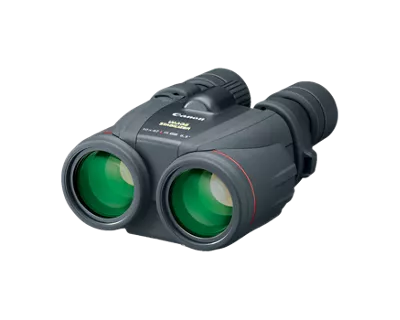
Explore this need in the finder →The Canon 10 x 42 L IS WP combines 10x magnification, 42 mm objectives, optical Image Stabilization and a waterproof body. Canon lists 6.5 degrees of real field, a 4.2 mm exit pupil, a tripod socket and a substantial 1,110 g body before batteries. The exact U.S. page also says discontinued and no longer available, despite residual “In Stock” wording. This review is a model reference, not a present-day buying recommendation.
A wide, stabilized view with a conspicuous carry cost
Ten power is a familiar compromise for watching distant birds, wildlife or a stage without giving up too much scene width. Canon’s technical table gives this model a 6.5-degree real field and a 59.2-degree apparent field using the stated ISO method. One feature bullet on the same product page calls its wide-angle rating 65 degrees. The English manual’s technical table also uses 59.2 degrees. Because Canon publishes both figures, compare models with the technical ISO value and treat the 65-degree bullet as a different or unexplained presentation, not as a separate verified optical advantage.
The 42 mm objectives produce a listed 4.2 mm exit pupil, and Canon describes the L-series optics as using four UD elements and a doublet field flattener. Those are design facts, not a promise of a particular resolution or edge performance from an independent test. The tradeoff is weight: about 1,110 g without two AA cells. That is a lot to carry through a long hike. A tripod socket is provided, which makes a supported watch or astronomy session possible, but mounting does not turn it into a small travel binocular.
Stabilization adds control—and another routine
Canon specifies a vari-angle-prism stabilizer with a correction angle of plus or minus 0.8 degrees. The manual describes two ways to operate it: hold the button for stabilization only while pressed, or press and release for about five minutes of continuous operation. Stabilization can make hand-held 10x viewing more settled, but Canon warns that severe shaking may remain. It also turns off after the binocular hangs facing down for more than ten seconds, unless the button is held while observing downward.
The system uses two AA cells. The manual’s continuous-use estimates vary sharply with chemistry and temperature: alkaline cells are listed at about 2.5 hours at 25°C but only ten minutes at minus 10°C; Ni-MH and lithium estimates differ. These are Canon test conditions, not a guaranteed field duration. Without batteries the optics remain usable as ordinary binoculars, but stabilization is unavailable. The manual also lists alkaline batteries in the box, plus a case, binocular strap, case strap, objective caps and eyepiece caps. A 52 mm filter attaches separately; it is not part of the stated standard accessories.
Waterproof, but not for underwater use
Here Canon makes an explicit distinction that the 12 x 32 IS cannot meet: the 10 x 42 L IS WP is described as waterproof. The manual is equally clear that waterproof does not mean underwater use. It explains that the battery chamber’s O-ring and contact surface must be clean and correctly seated; grit, hair or a damaged seal can allow water in. Canon recommends seal service on a schedule, more often in sandy or dusty conditions. This is a useful ownership advantage only if the owner maintains the seal and follows the rinse-and-dry instructions; it is not a license to immerse the binoculars or change batteries while wet.
The 16 mm listed eye relief, adjustable eyecups and 57–75 mm interpupillary range help with fit, but no one figure guarantees a full view through every pair of glasses. Focus reaches about 2.5 m. The body measures 137 x 175.8 x 85.4 mm. Those dimensions and 1.11 kg weight matter as much as the stabilized image if you will hold it for a full outing.
Which questionnaire choices change the answer?
This model is distinctive when 10x, a 42 mm objective, stabilization and an explicit waterproof claim are all desirable. It is a poor answer to a lightweight-carry requirement, and the batteries, seal checks and service are part of ownership. If weather protection matters more than stabilization, the Nikon Monarch M7 10x42 is a useful contrast: its listed body weight is about 680 g and it is waterproof, but it does not provide image stabilization. If stabilization and compact carry matter more than a 42 mm objective, a smaller stabilized model changes the low-light and field tradeoffs rather than duplicating this Canon.
For a current recommendation, do not let a stale stock label override Canon’s discontinued/no-longer-available notice. The relevant questionnaire questions are whether waterproofing is essential, whether powered stabilization is essential, how much weight you will carry, and whether 16 mm of stated eye relief is enough for your own eyewear. Canon’s exact page and English manual establish waterproof construction but no immersion depth or duration, so underwater use must remain excluded. The unresolved apparent-angle presentation should also stay visible in comparisons instead of being silently “corrected.”
Key specifications
Key details at a glance
| Magnification | 10× |
|---|---|
| Objective diameter | 42 mm |
| Real field of view | 6.5° |
| Apparent field of view | 59.2° |
| Field width at 1,000 m | 114 m |
| Eye relief | 16 mm |
More specifications and setup details
| Exit pupil | 4.2 mm |
|---|---|
| Manufacturer-published weight | 39.15 oz |
| Lens and prism coatings | Canon specifies two UD elements on each side, Super Spectra coating and a field-flattener design; UD is kept as Canon’s terminology, not converted to an unsupported generic ED checkbox. |
| Manufacturer-rated waterproof | Yes |
| Built-in image stabilization confirmed | Yes |
| Image-stabilization method | Optical correction by vari-angle prisms |
| Power source | AA; alkaline, lithium or NiMH chemistry has different manufacturer-stated runtimes |
| Batteries required to power stabilization | Yes |
Use the exact model’s instructions for operating limits, supplied equipment and version differences.
Sources for this review
Sources for this assessment
Choose your optical trade-off first.
Choose viewing purpose first, then magnification, objective size, scene width and any fit, weather or mounting constraint. A direct-Sun requirement is separate: only exact manufacturer-confirmed solar binoculars can pass it.