
Leupold model comparisons
Leupold BX-5 Santiam HD 8x42, 10x42, 10x50, 12x50 and 15x56 compared
Leupold’s BX-5 Santiam HD family spans a wide-view 8x42 through a high-power 15x56. Choosing among them is mainly a question of field width, magnification, carry weight, eye relief and whether you want a tripod adapter in the package. The specification table does not establish measured optical quality.
Start with how the binocular will be used
For walking, scanning a tree line or following a moving subject, the 8x42 is the broad-view option: 377 feet at 1,000 yards and 23.6 ounces. The 10x42 raises power while staying close in weight at 24.3 ounces; the trade is a narrower 341-foot field. Both list a 5-foot close focus, and both are more manageable as general carry pairs than the larger 50 mm and 56 mm configurations.
If you want to preserve 10x magnification but favor a larger objective, compare the 10x50. It lists a 304-foot field, 31.5 ounces and 19.3 mm eye relief. That extra objective comes with a 7.2-ounce increase over the 10x42, a longer body and a longer listed close-focus distance of 11.4 feet. The maker describes the image as bright; that sentence is not an independent low-light result. Use the objective and exit-pupil figures as geometry, not a promise that one model will look brighter to every viewer.
The 12x50 is the step for more subject enlargement across open ground. It lists a 272-foot field, 32.1 ounces and 16.6 mm eye relief. Its weight is close to the 10x50, but the extra two powers make hand movement more visible and narrow the view. If you are deciding between those two, choose based on whether more reach is worth the lost field and shorter listed eye relief.
The 15x56 is the long-range outlier. It weighs 45 ounces, measures 8.2 inches and lists 231 feet of field. Leupold says its standard package includes a binocular tray tripod adapter; the other four exact product pages list strap, case, lens covers and cloth without confirming that tray. That practical bundle difference supports a tripod-oriented plan, but the tray’s separate part number is not stated. Check that it fits the tripod head you intend to use.
Fit figures are screening tools
The listed eye relief varies from 16.6 mm on the 10x42 and 12x50 to 19.3 mm on the 10x50. The 8x42 lists 18.5 mm and the 15x56 lists 18 mm. A higher figure can be a reason for a glasses wearer to compare models, but it does not guarantee a complete field of view. Try the eyecups with the glasses you will actually wear. The stated hinge ranges are 58–78 mm for the 8x42 and 58–74 mm for the other four; these are not a substitute for setting the hinge to each user’s eyes.
The close-focus specifications separate the family in a different way. Both 42 mm models list five feet, the 15x56 lists 9.8 feet and the two 50 mm configurations list 11.4 feet. If nearby subjects matter, do not assume the bigger objective or higher power will help; compare that stated minimum focus first. These are manufacturer values, not a claim that each individual unit has been independently measured.
Shared features, different unknowns
Each exact page describes an open-bridge roof-prism design, phase-coated prisms, fully multi-coated lenses, DiamondCoat 2, Guard-Ion, twist-up replaceable eyecups, central focusing, a direct 1/4-20 tripod port and waterproof/fogproof construction. Those are the manufacturer’s product claims. The pages do not identify ED glass, list a numeric water-immersion or IP rating, or show independent optical-test data. “HD” does not answer the ED-glass question. None of these product pages confirms image stabilization or a rangefinder.
All five pages link the general Leupold binocular owner manual, which explains hinge adjustment, focusing and care. It is setup guidance rather than an optical test for these models. Read it before cleaning, and remove loose dust before touching a lens. For the four smaller models, the exact page does not confirm a tripod adapter in the package even though each has a built-in thread. The 15x56 page is the exception because it specifically names the tray adapter.
Useful same-format comparison
If your shortlist has narrowed to a 10x42, compare this Santiam with Leupold’s BX-4 Pro Guide HD Gen 2 10x42. Their exact product pages list 341 versus 314 feet of field, 24.3 versus 25 ounces, 16.6 versus 17 mm eye relief and 5 versus 9.3 feet of close focus. Those differences can matter for framing and nearby objects. They do not establish that the BX-5 has a sharper image, and there is no independent comparison test here.
A good decision sequence is simple: pick 8x for a broad moving scene, 10x42 for 10-power carry, 10x50 for 10-power with a larger objective and more eye relief, 12x50 for additional reach without jumping to the largest body, or 15x56 if long-distance viewing and a supplied tripod tray justify the weight. Then test fit and stability. If hand movement or glasses fit are deal-breakers, an in-person look is more useful than inferring comfort from a table.
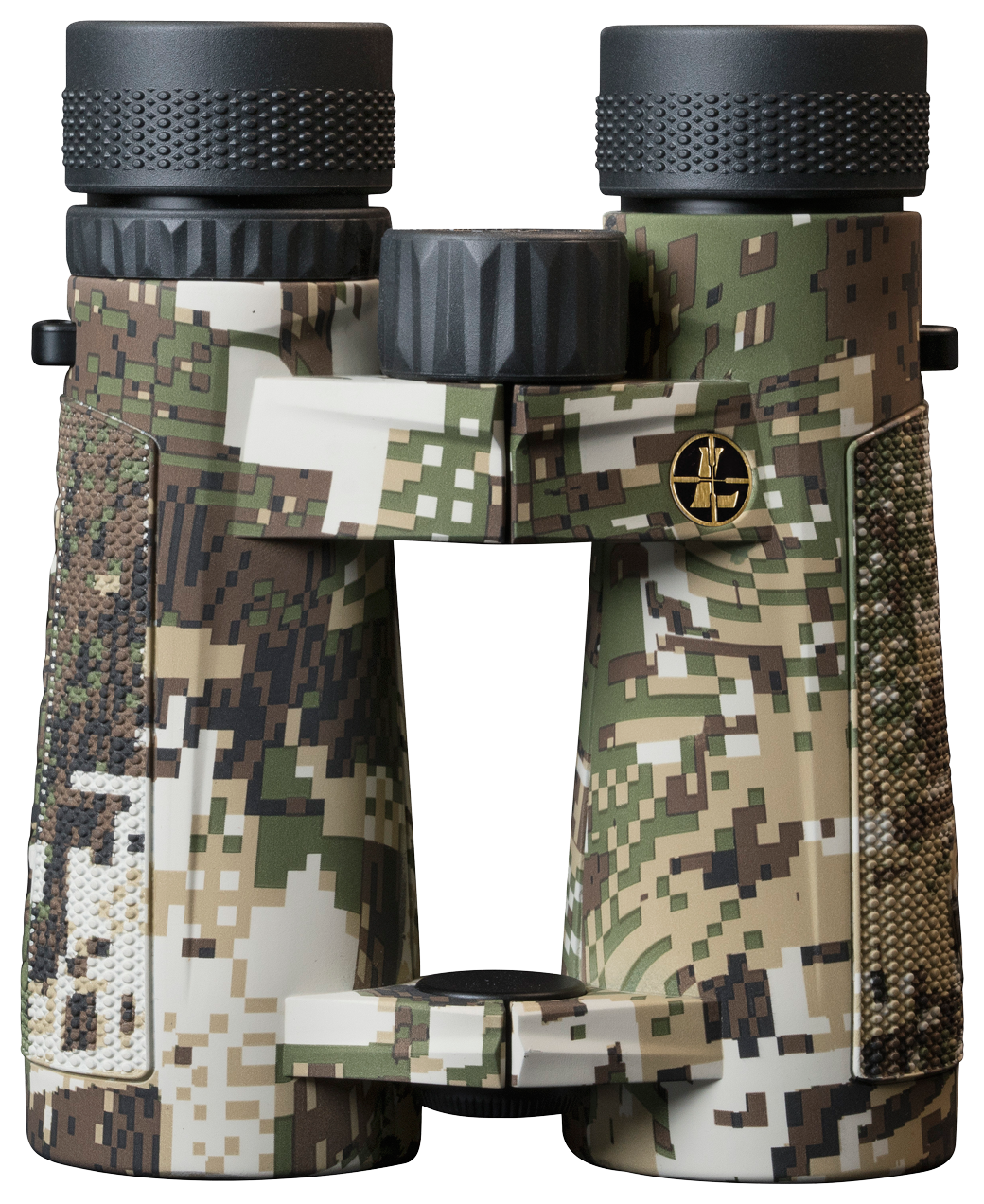
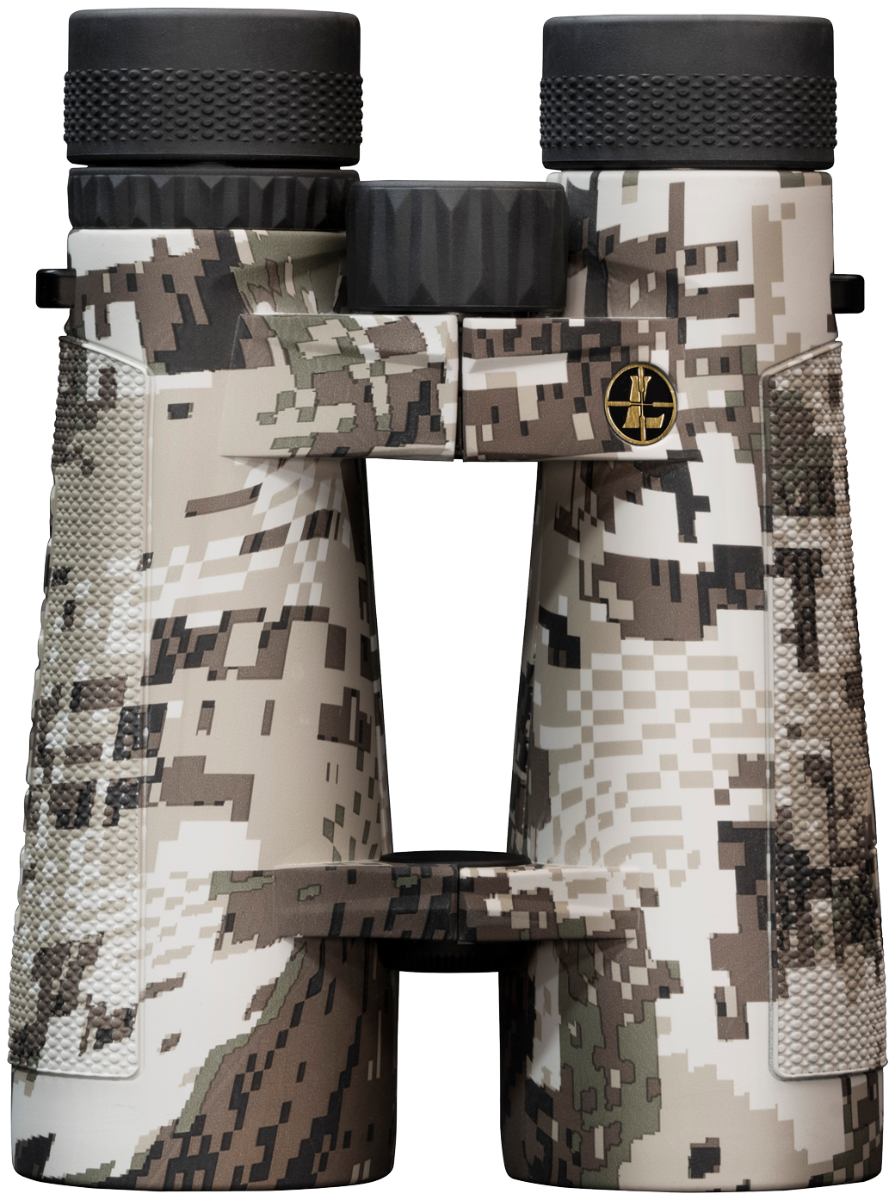
Two historical Optifade Subalpine finish variants
Leupold lists a discontinued Optifade Subalpine BX-5 Santiam HD 10x42 part 174484 and a 12x50 part 175857. The exact 10x42 page carries the same published optical measurements as the Shadow Gray 174483. In the official 2019 BX-5 table, B finish parts 174484 and 175857 are paired with the same 10x42 and 12x50 specification rows, respectively, as the A finish parts 174483 and 175856. They are exterior finish variants, not extra powers. Both exact Subalpine pages say discontinued; camouflage is not an optical or weather-proofing upgrade.
Manufacturer references: the exact 8x42, 10x42, 10x50, 12x50, 15x56 and the Optifade 10x42 / Optifade 12x50 U.S. product pages; the 2019 manufacturer catalog; and the linked general binocular owner manual.